Author: Vitaliy Dadalyan

How Fleets Can Implement Gamification into Safety Training

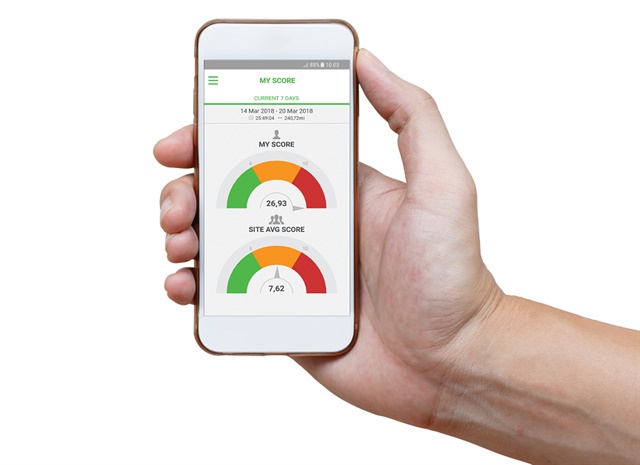
Gamification takes training and adds an element of competition in order to spark behavior changes. Photo: Mix Telematics

">

In training circles there is a lot of buzz about gamification. Gamification is taking something that isn't typically a game – for instance, safe driving techniques – and adding an element of competition in order to incent a behavior change.

Typically, this is done within a peer group, so drivers are competing against each other, either individually or within a team. In the fleet management world, this means making safe driving into a competition, complete with prizes.

But how do you implement Gamification into your fleet's training?

1. Determine your goal(s).

We suggest using the SMART method: goals that are Specific, Measurable, Achievable, Results-focused, and Time-bound. An example might be: decrease average idling time across the fleet to less than 10 per minutes per vehicle per day, within 90 days. Most fleet goals revolve around safe driving, fuel efficiency and Hours of Service (HOS), and specific factors that drivers have control over such as speeding, harsh accelerations and idling. While you can have more than one goal, if you're just starting out we recommend implementing one at a time. And we recommend a time period of at least 90 days – enough to change bad behavior patterns.

2. Collect baseline data.

In order to measure improvements, first you need to collect baseline data. If your goal were to reduce idling, you'd collect data on idling in the fleet. We recommend at least 30 days' of control data, without notifying drivers so the data presents a realistic picture of what's currently going on.

3. Refine your goals, based on the control data.

Are they achievable in the timeline you've set? Make sure. Also consider that you may have to weight certain factors in your scoring. For idling for instance, you don't ...Read the rest of this story

How Fleets Can Implement Gamification into Safety Training

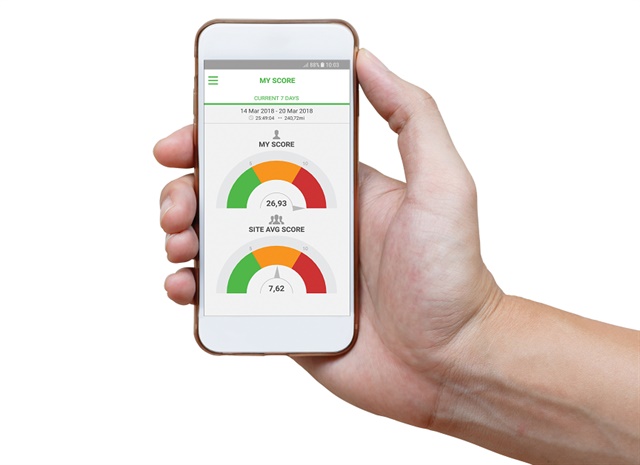
Gamification takes training and adds an element of competition in order to spark behavior changes. Photo: Mix Telematics

">

In training circles there is a lot of buzz about gamification. Gamification is taking something that isn't typically a game – for instance, safe driving techniques – and adding an element of competition in order to incent a behavior change.

Typically, this is done within a peer group, so drivers are competing against each other, either individually or within a team. In the fleet management world, this means making safe driving into a competition, complete with prizes.

But how do you implement Gamification into your fleet's training?

1. Determine your goal(s).

We suggest using the SMART method: goals that are Specific, Measurable, Achievable, Results-focused, and Time-bound. An example might be: decrease average idling time across the fleet to less than 10 per minutes per vehicle per day, within 90 days. Most fleet goals revolve around safe driving, fuel efficiency and Hours of Service (HOS), and specific factors that drivers have control over such as speeding, harsh accelerations and idling. While you can have more than one goal, if you're just starting out we recommend implementing one at a time. And we recommend a time period of at least 90 days – enough to change bad behavior patterns.

2. Collect baseline data.

In order to measure improvements, first you need to collect baseline data. If your goal were to reduce idling, you'd collect data on idling in the fleet. We recommend at least 30 days' of control data, without notifying drivers so the data presents a realistic picture of what's currently going on.

3. Refine your goals, based on the control data.

Are they achievable in the timeline you've set? Make sure. Also consider that you may have to weight certain factors in your scoring. For idling for instance, you don't ...Read the rest of this story

Spending Bill Stretches ELD Exemption for Livestock Haulers

When it rains, it doesn't always pour. At least not always for everyone in trucking. Livestock haulers will get a respite from complying with the electronic logging device rule if the omnibus funding measure making its way across Capitol Hill this week becomes law.

Tucked into the gargantuan bill is a provision that declares that “the use of electronic logging devices by operators of commercial motor vehicles… transporting livestock” will not be required during federal fiscal year 2018, which runs from Oct. 1 2017 to Sept. 30 2018.

That means that the most recent ELD exemption covering livestock haulers issued by the Federal Motor Carrier Safety Administration will get stretched by over three six months

But missing from the bill's 2,232 pages is a measure long pushed for by trucking interests that would prevent individual states from mandating meal and rest break for commercial drivers.

Reacting to that fact, Joe Rajkovacz, director of Governmental Affairs & Communications for the Western States Trucking Association, told HDT thatWe are disappointed that Congress has once again ‘kicked the can down the road' related to clarifying congressional intent over preempting state laws related to meal and rest break issues by not including language to resolve this issue once and for all.”

The $1.3 trillion package was approved by the House on March 22. The Senate must pass the Consolidated Appropriations Act of 2018 by midnight on March 23 to avert another shutdown of the federal government.

As it stands now, the omnibus bill includes more than $21 billion for infrastructure projects across the country, including transportation, energy, water, and cyber, according to the House Appropriations Committee.

“The bill provides an increase of $10.6 billion above the fiscal year 2017 enacted level to begin to rebuild the nation's aging infrastructure,” the committee stated in a ...Read the rest of this story