How Fleets Can Implement Gamification into Safety Training
By Pete Allen
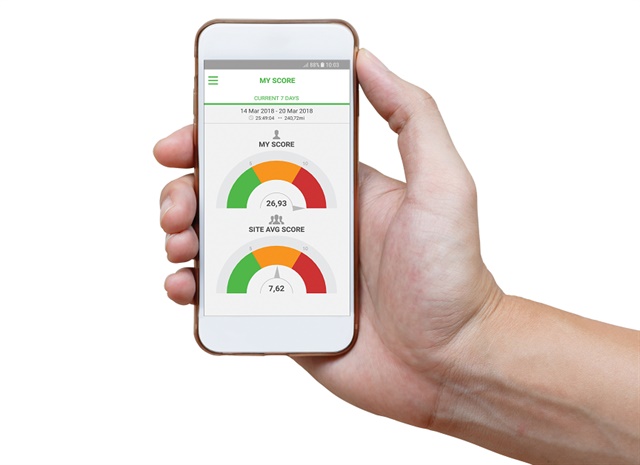
Gamification takes training and adds an element of competition in order to spark behavior changes. Photo: Mix Telematics
“>
In training circles there is a lot of buzz about gamification. Gamification is taking something that isn’t typically a game – for instance, safe driving techniques – and adding an element of competition in order to incent a behavior change.
Typically, this is done within a peer group, so drivers are competing against each other, either individually or within a team. In the fleet management world, this means making safe driving into a competition, complete with prizes.
But how do you implement Gamification into your fleet’s training?
1. Determine your goal(s).
We suggest using the SMART method: goals that are Specific, Measurable, Achievable, Results-focused, and Time-bound. An example might be: decrease average idling time across the fleet to less than 10 per minutes per vehicle per day, within 90 days. Most fleet goals revolve around safe driving, fuel efficiency and Hours of Service (HOS), and specific factors that drivers have control over such as speeding, harsh accelerations and idling. While you can have more than one goal, if you’re just starting out we recommend implementing one at a time. And we recommend a time period of at least 90 days – enough to change bad behavior patterns.
2. Collect baseline data.
In order to measure improvements, first you need to collect baseline data. If your goal were to reduce idling, you’d collect data on idling in the fleet. We recommend at least 30 days’ of control data, without notifying drivers so the data presents a realistic picture of what’s currently going on.
3. Refine your goals, based on the control data.
Are they achievable in the timeline you’ve set? Make sure. Also consider that you may have to weight certain factors in your scoring. For idling for instance, you don’t …Read the rest of this story
