Navistar to End 9/10 Liter Engine Production by 2018

Navistar to End 9/10 Liter Engine Production by 2018

<img width="150" src="http://www.automotive-fleet.com/fc_images/news/m-navistar-n9-1.jpg" border="0" alt="

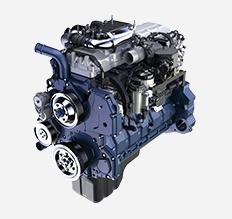
Navistar's N9 Engine Photo: Navistar

" >

Navistar's N9 Engine Photo: Navistar

" width="250" height="235">

Navistar has announced that it is ceasing production of its medium-duty 9- and 10-liter engines at the company's Melrose Park, Ill., facility by the second quarter of 2018.

The change is part of Navistar's transformation of the Melrose Park facility into a technical center that conducts truck and engine testing and validation as well as used truck sales and reconditioning. The majority of engines produced at the facility are 9- and 10-liter engines used in International Class 6 and 7 vehicles, however, alternative engines are currently offered in all applications.

The cessation of engine manufacturing at Melrose Park is expected to affect about 170 employees and reduce Navistar's operating costs by about $12 million annually. The company will take an approximate charge of $43 million as a result of the action, including around $8 million in cash related charges.

The company says that a significant portion of hourly workers at Melrose Park are retirement-eligible and assistance and opportunities for retraining will be offered.

“Ceasing production of engines at Melrose Park is a difficult decision, but represents another important step on our journey to strengthening the company's competitiveness,” said Persio Lisboa, Navistar chief operating officer. “Our N9/10 engine family was updated in 2014 and since then has served as a competitive niche offering for specific medium-duty vehicles. As we approach future regulatory requirements, the low volume nature of the platform could not justify further product development investments on it.”

Navistar reintroduced the option of a 6.7 liter Cummins engine in 2013 and a 9-liter Cummins engine in 2016. The Cummins engines that are used in the medium duty Class 6/7 segment are manufactured in Indiana and North Carolina, while Navistar's big bore engine plant, which makes engines for Navistar's Class 8 trucks, is in Alabama.

“Ending production anywhere is a difficult ...Read the rest of this story

Earnings Watch: YRC Worldwide Profit Falls, Heartland Profit Slips

Profit for less-than-truckload provider YRC Worldwide Inc. fell nearly 30% in the second quarter from a year earlier, despite increased tonnage per day moved at both its national and regional operations.

Net income totaled $19 million, or 57 cents per share, compared to net income of $27.1 million or 83 cents per share a year earlier. Revenue rose to $1.26 billion from $1.21 billion but operating income slid to $50 million from $57.2 million.

In the first six months of the year, the Kansas-based company posted a net loss of $6.3 million compared to net income of $15.1 million in the first half of 2016.

“Following a couple of challenging quarters, the second quarter 2017 results include our efforts to return YRC Freight's year-over-year revenue per hundredweight, excluding fuel surcharge, to positive territory,” said CEO James Welch. “The consolidated quarterly results were also favorably impacted by our plan to streamline overhead costs, an increase in volume driven by an improving industrial economy and a decrease in liability claims expense.”

The consolidated operating ratio for second quarter 2017 was 96 compared to 95.3 for the same period in 2016.

The operating ratio at YRC Freight was 96.5 compared to 96.2 in the second quarter 2016 (which included an $11.2 million gain on property disposals). The regional segment's second quarter 2017 operating ratio was 94.6 compared to 93.2 in the prior year.

Compared to a year earlier, second quarter 2017 tonnage per day increased 2.7% at YRC Freight and 3.6% at the regional segment.

At YRC Freight, excluding fuel surcharge, second quarter 2017 revenue per hundredweight increased 1.1%. Revenue per shipment was essentially flat, down 0.1% compared to the same period in 2016. Including fuel surcharge, revenue per hundredweight increased 2.2% and revenue per shipment increased 1%.

At the regional segment, excluding fuel surcharge, second quarter 2017 revenue per ...Read the rest of this story
Class 8 Truck Orders Rebound in July

Class 8 truck orders are expected to increase in July compared to the previous month and previous year, according to preliminary numbers from ACT Research and FTR.

Truck orders are expected to increase by 5% over June's number and by 79% compared to July 2016, according to FTR.

Orders have increased for the second month in a row and the market is stable but moving in a positive direction, said FTR.

Total Class 8 orders in the past year have totaled 224,000 units. A positive freight environment has tightened capacity and the equipment orders are starting to reflect this change, according to FTR.

“This is a great sign to see orders rising, even slightly, in mid-summer,” said Don Ake, vice president of commercial vehicles at FTR. “This is the beginning of a positive trend that we expect to continue the rest of this year, right into 2018. The Class 8 market is starting to move upward and orders are forecasted to accelerate in the fall.”

Medium-duty Class 5-7 truck orders have not fared as well, dropping in July to a 13-month low after averaging more than 22,100 units per month for seven months straight, according to ACT Research. However, July orders were still slightly better than in the same month a year ago.

Related: What Will the Class 8 Market Look Like in 2017?

Follow @HDTrucking on Twitter

...Read the rest of this story

Trucking still projected to benefit from wider Panama Canal

The expanded canal should eventually help create more outbound lanes in East Coast states, according to one motor carrier.

There still seems to be a lot of optimism surrounding the benefits the $5 billion-plus Panama Canal expansion project can deliver to trucking – especially in terms of a shift in freight flows from the U.S. West Coast to the U.S. East Coast, though said shift is taking a while to develop.

read more

...Read the rest of this story