EPA Proposal to Exempt Gliders from GHG Regs Draws Criticism in Hearing
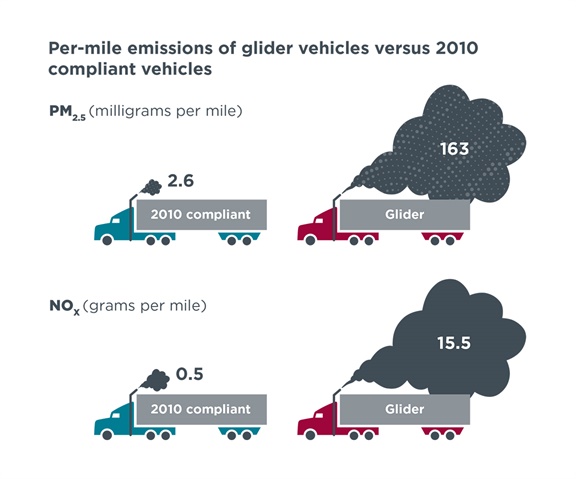
This ICCT graphic shows per-mile emissions of glider vehicles vs. EPA-2010 trucks. Results derived from
This ICCT graphic shows per-mile emissions of glider vehicles vs. EPA-2010 trucks. Results derived from testing conducted by EPA’s National Vehicle & Fuel Emissions Laboratory. Results reflect a 95% weighting of highway activity and 5% weighting of transient activity for a test vehicle with a combined weight of 60,000 pounds.
“>
Opponents of the Environmental Protection Agency’s proposal to roll back the glider kit portion of its greenhouse gas emissions regulations testified Monday that the agency is ignoring its own research and that excepting gliders will put truck and engine makers at a significant competitive disadvantage.
A public hearing in Washington, D.C., Monday, was scheduled to gather comment on the EPA’s recent proposed rulemaking to eliminate provisions affecting glider kits within the Phase 2 Greenhouse Gas Emissions and Fuel Efficiency Standards, which start to take effect in January.
The Phase 2 rules as written would allow glider kits only for their original purpose, which was seen as reclaiming powertrains from wrecked trucks and reusing them in new bodies and chassis. But the EPA announced earlier this fall a proposal to drop the glider kit portion of the regulation.
Rachel Muncrief, the heavy-duty program director for the International Council on Clean Transportation and a participant in Monday’s hearing, called them “zombie trucks,” writing in a recent blog post, “Scott Pruitt’s EPA is bringing the oldest and dirtiest diesel engines back from the dead—but disguising them in a shiny new host body. How? In the form of the innocuous-sounding glider truck.”
The EPA’s proposal to undo the glider kit portion of the GHG regs “would undermine investments made in the industry, encourage the use of older, less efficient technologies, and increase smog-forming pollution that harms public health,” said Pat Quinn, executive director of the Heavy Duty Fuel Efficiency Leadership Group. This “informal …Read the rest of this story
