Bicyclists Were the Original Advocates for Good Roads
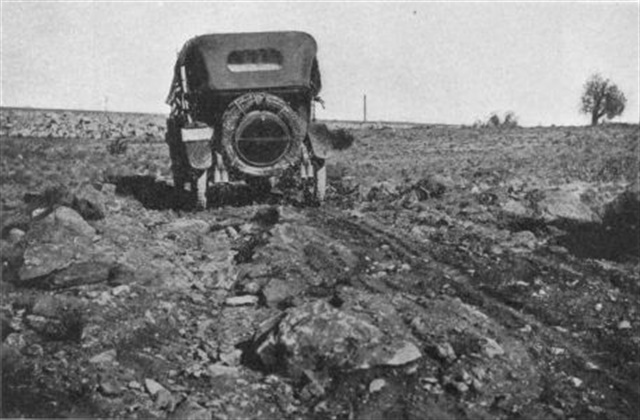
Rutted dirt was the rule on rural roads, like this one in Arizona. Rains made them muddy quagmires. Tall wheels with narrow tires worked well in these conditions. Photos: America on the Move
“>
Rutted dirt was the rule on rural roads, like this one in Arizona. Rains made them muddy quagmires. Tall wheels with narrow tires worked well in these conditions. Photos: America on the Move
“>
“Infrastructure” was once an arcane word known to civil engineers and not many other people. But it has recently worked its way into news stories and, more importantly, into the language of lawmakers, especially those in the U.S. Congress.
Something may well come out of this new interest, and the realization that crumbling concrete and rutted asphalt ain’t the modern and efficient way to go (not to mention aging water mains, sewers, electrical grids, capacity strapped rail lines, and everything else that makes a 21st Century civilization function).
In more primitive times, travel by carriage and freight wagon — forerunners to today’s cars, trucks, and tractor-trailers — usually meant fighting deep ruts and being mired in mud because most streets and roads were bare dirt. Exceptions were cobblestone and wood-block streets in major cities, privately operated turnpikes paved with wooden planks, logs (known as corduroy) or crushed stone (macadam), and the National Road (the first federally funded highway, dating to 1817.
In cities, copious amounts of horse and mule manure lay about, generating stench and drawing flies that upset the sensibilities of ladies and gentlemen. Women and sometimes men carried perfumed kerchiefs to mask the odor, and it’s likely that respiratory diseases were a more serious result.
Most travel of any distance was by train, as the railroads quickly expanded to meet demand and capture healthy and lucrative business from shippers and passengers. But people wanted more freedom.
By the 1920s, a Good Roads movement pressured local, state and federal politicians to raise money and make major improvements, including grading and paving, and marking and mapping road networks. Major corporations like General …Read the rest of this story
