Author: Vitaliy Dadalyan

GHG Phase 2: Trucking Industry Reactions

<img width="150" src="http://www.automotive-fleet.com/fc_images/articles/m-wabash-aeroskirt-1-1.jpg" border="0" alt="

Trailers for the first time are included in the fuel economy/GHG regs. Photo: Wabash

">

Trailers for the first time are included in the fuel economy/GHG regs. Photo: Wabash

">

Final "Phase 2" greenhouse gas/fuel economy rules for medium- and heavy-duty trucks were released earlier this month by the White House, the EPA and the National Highway Transportation Safety Administration.

They will cover semi-trucks, large pickups and vans, and all types of buses and work trucks in model years from 2021-2027. When the standards are fully phased in, tractors in a tractor-trailer combination are expected to achieve up to 25% lower carbon dioxide emissions and fuel consumption than an equivalent tractor in 2018.

These rules will dictate what kinds of equipment you can buy and how that equipment will operate in the real world. Early industry reactions tended to be [mostly] upbeat and positive, reflecting a determination to roll up the sleeves and deal with trucking's latest reality.

Here are several reactions compiled by HDT from around the North American trucking industry:

Truck & Engine Makers

Martin Daum, President and CEO, Daimler Trucks North America: "The United States is facing significant challenges regarding GHG reduction as well as its continued dependence on foreign oil. DTNA will continue to work closely with the EPA, NHTSA, and our partners to develop new solutions that will have a positive environmental impact and fuel efficiency gains for our customers that are harmonious with the Phase Two standards.

"We will build upon our existing industry leadership and continue to set the global standard in efficiency and environmentally-friendly business solutions. DTNA supports regulations which reduce GHG emissions as well as diesel consumption. As we have stated through the collaborative debate on the Phase Two rule, the final rule needed to provide clear, long-term targets for the entire vehicle, not just the engine. It also needed to provide enough time and flexibility for the OEMs and ...Read the rest of this story
3 Trends in the Spot Freight Market

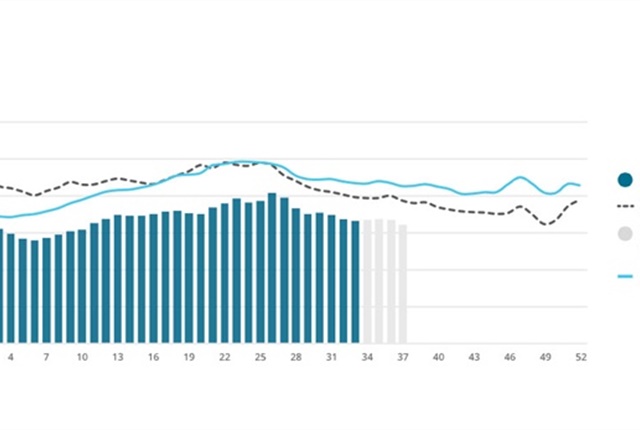
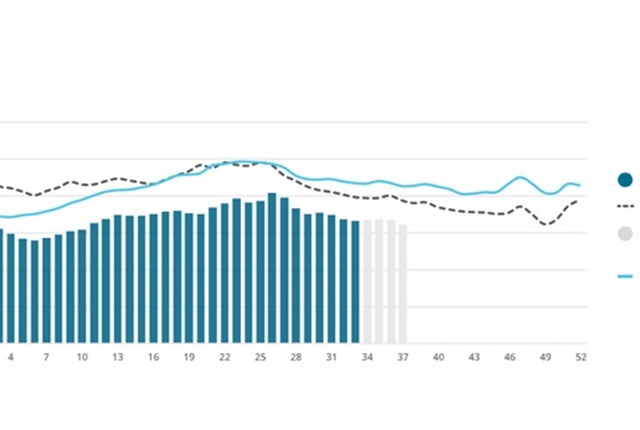
As FTR and Truckstop.com apply "big data" analysis to spot market pricing, Noel Perry, FTR transportation economist, offers some insights into the volatility of spot pricing and how spot prices correlate with contract pricing.

1. Spot prices have been rising more than contract prices.

The data being analyzed starts in the first quarter of 2008, just before the big downturn. Since the bottom of that recession, contract prices have averaged a 1% quarter over quarter growth (annualized). Even with the big decline last year, spot prices have averaged 2%. This is consistent with the big move of random freight from the edges of contracts into the spot market, Perry notes. Volume has built, and so have rates.

"I expect this trend to peak in 2019 with the coming crisis in regulatory drag," Perry says. "After that is unclear."

2. Spot prices are way more volatile.

This is no surprise, Perry says. The spot market is defined as the home of swings in random demand. The capacity pressure indices calculated by Truckstop.com and DAT both swing widely in almost lockstep. It follows that price changes swing widely.

The standard deviation of spot rate changes since the bottom of the last recession is five times larger than that of contract rates. "In case you have forgotten your college stat definitions, that means spot rate growth varies five times more than contract rate growth," he says.

3. Both spot and contract pricing lag changes in capacity utilization.

With spot prices, the lags between market events and price response are short, perhaps up to a quarter, Perry says. The response is not instantaneous because truckers and shippers take time to realize that a change is required. There are also some small delays in the statistics. As big data (and forecasting tools) emerge, this lag should be shortened because market decision makers will ...Read the rest of this story

The case for speed limiters: More political than technical?

Is the Dept. of Transportation “cherry picking” research to support the rulemaking to require speed limiters in heavy-duty commercial vehicles? At least one source—and one that is often cited as providing evidence to support the rule—raises a number of concerns the DOT glosses over, or ignores altogether, including speed differentials, driver fatigue, fuel efficiency, and the overall cost-benefit analysis.

read more

...Read the rest of this story

CIMC to Boost Container Chassis Marketing, Distribution

CIMC, which claims to be the largest provider of container chassis in the world, has announced a new marketing and distribution initiative that will extend its lineup of products to trailer dealers throughout North America.

Frank Sonzala, CEO of CIMC Intermodal Equipment (CIE), made the announcement concurrent with appointing Trevor Ash as director of sales - North America Dealers. Ash comes to CIE from a leading heavy equipment distributor specializing in heavy lift and intermodal systems.

“We will be working very closely with our existing network of CIMC Vanguard trailer dealers to ensure that they have every opportunity to add the CIMC intermodal line to their offering for customers," Ash said. "We also have numerous territories available outside of our Vanguard network where we will be actively recruiting qualified dealers."

The new dealer program marks a shift in CIE's focus from direct sales to dealer service and support. CIE production and parts support are based in facilities located on both coasts of the U.S., in South Gate, Calif., and Emporia, Va.

CIMC Intermodal Equipment is part of the CIMC Vehicles group of companies. CIMC and CIE is the largest provider of container chassis in North America.

The CIE line offers tandem and tridem container chassis from 20 feet to 53 feet, including slider and combo models.

Follow @HDTrucking on Twitter

...Read the rest of this story

Luber-finer University Offers Quick Online Filtration Courses

Luber-finer University, an interactive online training program from the filtration manufacturer, is available for distributors and point-of-sale associates who work in the heavy-duty equipment industry.

The comprehensive training tool, which can be accessed from any internet-connected device, educates users about Luber-finer filters, the filters' competitive advantages and describes the science behind filtration technologies.

“This one-of-a-kind, user-friendly training tool allows Luber-finer to make our extensive expertise in the filtration market easily accessible to our partners,” said Layne Gobrogge, director of heavy-duty marketing for Champion Laboratories, Luber-finer's parent.

“In addition to providing users with a solid foundation about the basics of filtration, the training simplifies the more technical aspects of filtration technology.”

Luber-finer University was designed to be approachable, engaging and interactive, he said. The training modules educate users about heavy duty filtration and Luber-finer's filtration products; teach users about the science of filtration; debunk industry myths; and provide actionable sales tools

Interactive content os presented in media-rich formats including videos, 3-D product viewers, "click-to-flip" presentations and more. They organized in short 15- to 30-minute units, allowing users to pace their learning at a speed that works for them

More than 1,000 people have already enrolled in Luber-finer University training since its launch in July. Requests to enroll in Luber-finer University should be submitted to Luber-finer's team of regional sales managers. Visit luber-finer.com/contact/regional-manager-locator.aspx to obtain contact information.

Follow @HDTrucking on Twitter

...Read the rest of this story

Orange EV Approved for Calif. Incentives

<img width="150" src="http://www.automotive-fleet.com/fc_images/news/m-orangeev-1-2.jpg" border="0" alt="

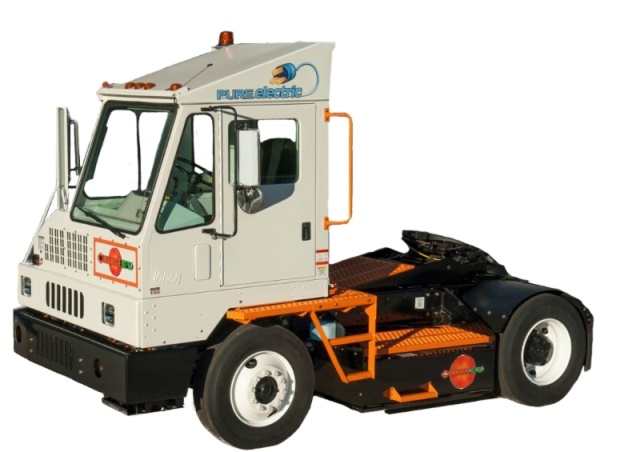
Orange EV Class 8 pure-electric heavy-duty terminal truck. (PHOTO: Orange EV)

">

Orange EV Class 8 pure-electric heavy-duty terminal truck. (PHOTO: Orange EV)

">

Orange EV announced that California fleets can save at least $95,000 per truck on the purchase of brand new T-Series pure electric terminal trucks with the extended-duty battery pack.

Orange EV electric terminal trucks have been operating up to 24-plus hours per charge at sites from single-shifts to 24x7 use in railroad intermodal, LTL freight, manufacturing, retail distribution, waste management, and warehouse container handling. Businesses and organizations with fleets in California can get a preliminary voucher amount of $95,000 per truck, increasable up to $120,000 and stackable with other incentive programs to lower initial purchase price.

Businesses and organizations with fleets in California can get a preliminary voucher amount of $95,000 per truck, increasable up to $120,000 and stackable with other incentive programs to lower initial purchase price.

“California HVIP vouchers dramatically simplify and speed up the process of obtaining funds, thereby accelerating vehicle deployment,” said Mike Saxton, Orange EV chief commercial officer. “Orange EV's T-series and the corresponding voucher amount are all pre-approved, eliminating uncertainty and enabling fleets to execute deployment plans without having to go out-of-pocket for the additional capital.”

The voucher request including purchase terms & conditions is a total of four pages long; vouchers can be approved within days. Participating fleets commit to operating trucks in California for a minimum of three years, after which they may redeploy vehicles as needed. HVIP funds are paid directly to Orange EV thus directly reducing the capital fleets need to purchase T-Series trucks.

Orange EV has consistently been the first OEM approved, funded and delivering commercially available terminal trucks under incentive programs that can pay more than half of vehicle purchase price. The balance can be financed, further reducing initial cash outlay and helping fleets pay the balance from savings in large expense ...Read the rest of this story

MiX Telematics Announces Free Add-On

MiX Telematics, a global provider of fleet and mobile asset management solutions, announced a new, free add-on to its MiX Fleet Manager solution: MiX Insight Agility.

The new solution creates a data cube that's accessible via Microsoft Excel and automatically updated with fresh fleet data. By enabling fleet managers to pull together multiple data sources in one place, MiX Insight Agility helps:

Easily create and customize reports, graphs, and dashboards.Explore their data in new ways, to find deeper, actionable insights that help further improve safety and efficiency.Create more compelling reports that colleagues will read and understandSave hours of time in compiling reports each month.

“MiX customers asked for more ways to analyze their fleet data, and we delivered,” said Skip Kinford, president and CEO at MiX Telematics Americas. “Feedback on MiX Insight Agility from our fleet customers around the world has been enormously positive, with customers reporting that it saves their teams hours of work each month.”

To learn more about MiX solutions, including MiX Fleet Manager and MiX Insight Agility, visit www.mixtelematics.com.

MiX Telematics Launches MiX Fleet Manager

Follow @HDTrucking on Twitter

...Read the rest of this story