Author: Vitaliy Dadalyan

New Report Recommends Improvements to CSA Scoring System
A congressionally mandated study of way CSA scores are determined recommends improvements, ranging from better collection of data on things such as driver compensation and vehicle miles traveled by state, to replacing the system with a method using “item response theory,” also known as latent trait theory.

The Safety Measurement System is used to identify commercial motor vehicle carriers at high risk for future crashes. It's the heart of FMCSA's Compliance, Safety, Accountability enforcement regime, known as CSA. The review of SMS was written into the Fixing America's Surface Transportation (FAST) Act of 2015.

The resulting study by the National Academies of Sciences, Engineering, and Medicine recommended that over the next two years, FMCSA should develop a “more statistically principled approach” for the task, based on an item response theory (IRT) model. Also known as latent trait theory, it's an approach that has been used for policy decisions in other areas such as hospital rankings, according to the panel.

FMCSA uses information collected primarily during roadside inspections to identify motor carriers that are operating unsafely and therefore theoretically at higher risk for future crashes. These carriers are subject to interventions from FMCSA, such as warning letters and investigation.

Since it rolled out in 2010, the report noted that the system has been criticized for, among other things:
• Using highly variable assessments
• Not accounting for crashes where the motor carrier is not at fault
• Including carriers that have very different tasks in the same peer groups
• Using measures that are sensitive to effects from one or more individual states
• Using measures that are not predictive of a carrier's future crash frequency
• Using measures that are not reflective of a carrier's efforts to improve its safety performance over time.

The National Academies panel reported, “We have found, for the most part, that the current SMS implementation ...Read the rest of this story
UPS Wants to Reduce Emissions by 12% in 8 Years

<img width="150" src="http://www.automotive-fleet.com/fc_images/news/m-ups-cng-truck-1.jpg" border="0" alt="

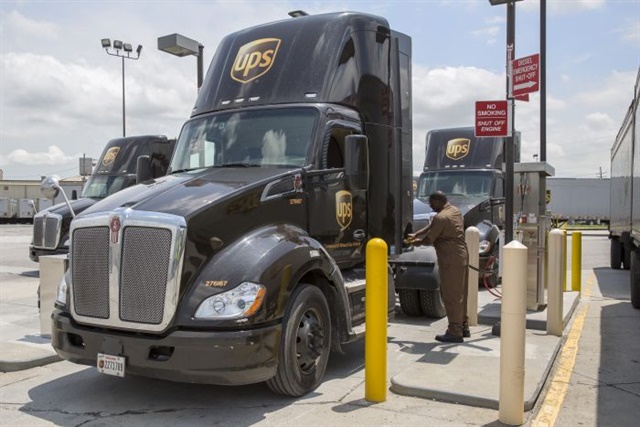
A UPS CNG tractor refueling. Photo: UPS

">

A UPS CNG tractor refueling. Photo: UPS

">

UPS outlined new sustainability goals in its latest Corporate Sustainability Report, pledging to reduce emissions from global ground operations 12% by 2025.

The company decided on its goal using a methodology approved by the Science Based Targets Initiative, a group that champions science-based sustainability efforts aimed at improving a company's profitability and competitiveness.

“Because of our size and scale, we know our commitments can shape markets, advance technologies, and be a catalyst for infrastructure investments,” said David Abney, UPS chairman and CEO. “We rely on the ingenuity of our employees, suppliers and technology partners to help us reach goals that will transform the shipping industry and spur innovation.”

By 2020, the company plans to choose alternative fuel or advanced technology vehicles for one out of every four vehicles it purchases. That will help the company meet another goal to make 40% of all ground fuel used come from sources other than conventional gasoline or diesel by 2025, up from 19.6% in 2016.

UPS has already launched several green initiatives and currently operates more than 8,300 alternative fuel and advanced technology vehicles globally. The company's fleet uses a variety of vehicle types to achieve its green goals including, electric, hybrid electric, hydraulic hybrid, compressed natural gas, liquefied natural gas, propane, and lightweight composite body vehicles.

Since 2009, UPS says that it has invested more than $750 million in alternative fuel and advanced technology vehicles and fueling stations globally.

UPS also has a goal that 25% of the electricity it consumes will come from renewable energy sources by 2025, a significant increase from 0.2% in 2016.

Related: UPS Invests More Than $90M In Natural Gas

Follow @HDTrucking on Twitter

...Read the rest of this story

PeopleNet adds Continental TPMS to platform

ContiPressureCheck provides insight into a fleet's tire pressure, company notes.

PeopleNet recently noted that it is integrating the tire pressure monitoring system (TPMS) developed by Continental, dubbed the ContiPressureCheck (CPC) system, to fleets that have deployed its technology platform in their trucks. This allows both drivers and back-office personnel to continuously monitor the real-time pressure and temperature of their tires, noted Eric Witty, vice president of product for PeopleNet

read more

...Read the rest of this story

Ram rolls out new 2018 model luxury pickup

The new 2018 Ram Limited Tungsten Edition is being touted as yet another example of the OEM's strategy to continue its “aggressive pace” in the luxury light truck market. Available in the third quarter of 2017, Ram Limited Tungsten trim will be offered on the Ram 1500, Ram 2500 and Ram 3500 single- and dual-rear-wheel; Crew Cab and Mega Cab (Heavy Duty); four-wheel drive and two-wheel drive; and short- and long-wheelbase models.

read more

...Read the rest of this story