Author: Vitaliy Dadalyan

How Nine Energy Service is Coaching Drivers With In-Cab Video

<img width="150" src="http://www.automotive-fleet.com/fc_images/articles/m-mix-vision-2.jpg" border="0" alt="

Photo: MiX Telematics

" >

Photo: MiX Telematics

" width="300">

The upcoming ELD mandate is causing most U.S. fleets to re-evaluate their telematics strategies, and Nine Energy Service is no exception.

We are an oilfield services company operating a fleet of light- and heavy-duty trucks throughout the U.S. and Canada. We have experienced tremendous growth in the company, both organically and through strategic acquisitions, and the ELD mandate was a good impetus for updating and standardizing our fleet management solutions across all of our operations.

Nine's executive team was very keen to go beyond just basic compliance and invest in a holistic platform that would also help us improve safety and efficiency. This included integrating in-cab video capabilities. Video is a crucial part of the safety puzzle for several reasons:

First, we wanted to proactively address driving behaviors, to keep our drivers and those traveling on the roadways with them safe.In order to do this, we needed visibility into what happens on the road and in the cab to help formulate training and guide the way we work with our drivers.These videos are a fantastic resource for teaching moments for both management and employees on how to improve behavior and promote safe driving.

We made integrated in-cab video a requirement for our ELD search, and after evaluating several options, we implemented MiX Telematics' platform in early 2017.

Video as a coaching tool

We view in-cab video as a crucial coaching and education tool. When a driving incident is triggered, fleet managers are alerted and video is automatically appended to the driver's scorecard. When we identify a pattern of potentially unsafe driving behavior, we can share the video footage with drivers and coach them, either individually or as a group. We've made it clear to drivers that the main objective is to improve safety for them.

An example of how we might use video to ...Read the rest of this story
Rush Truck Centers Opens new Denver Locations

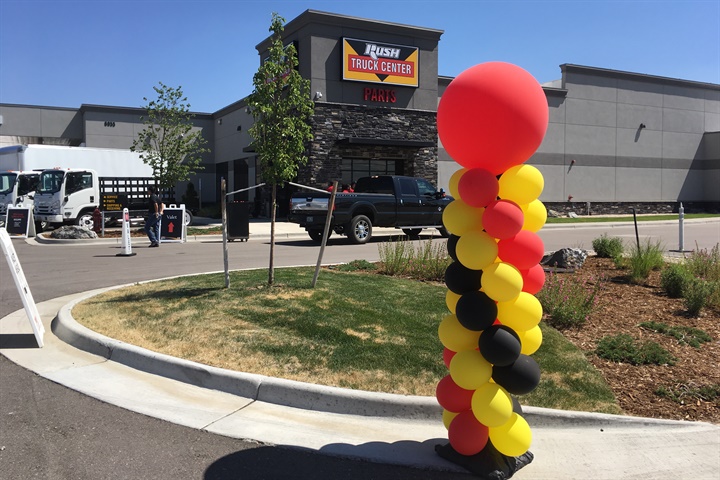
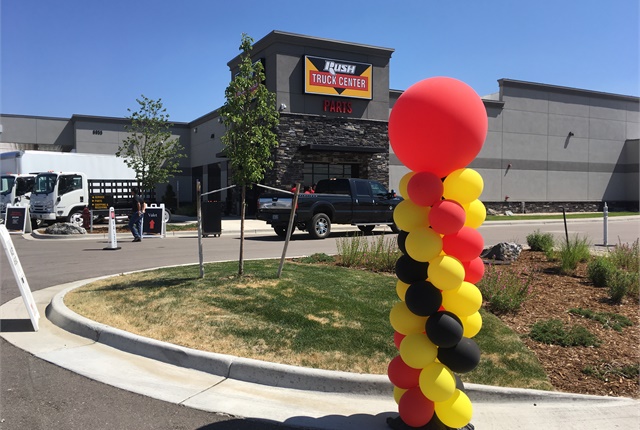
COMMERCE CITY, COLORADO -- Rush Truck Centers has officially opened its two newest locations in the Denver area. The Peterbilt/Isuzu shop is located at 6955 East 50th Ave. in Commerce City, on Denver's northeast side, directly across the street from the company's newest Ford Medium duty-truck center. Both facilities are brand new from the ground up and replace previous facilities located in the area. Both the new operations opened for business in April.

The 83,000 square-foot Peterbilt/Isuzu facility sits on 13.5 acres and features 69 service bays including dedicated CNG/LNG bays. There are 140 employees on staff, including 55 full-time technicians -- but Rush has immediate openings for 10 more. RushCare 24/7 Mobile Service is also available at the new Denver location with 10 trucks in service now and more to come. The new Ford shop consists of 12,500 square feet sitting on 4 acres.

Rush Truck Centers first teamed with Ford in 2006, and the new Denver facility brings the total number of joint operations to seven, including Oklahoma City, Dallas, Orlando, Whittier, Cincinnati and Las Vegas.

Rush added Isuzu to its medium-duty lineup in 1986, and Isuzu trucks are now offered at 22 locations nationwide.

Rush Truck Centers has been operating in the Denver area since 1997, but Rusty Rush, chairman of the board, president and CEO of Rush Enterprises said the previous locations in city were less than ideal for the volume of business the company was doing there. He welcomed staff and suppliers to the new operation saying the new facility was finally up to company standards.

"I'm very happy to finally be able to provide a facility that is up to the quality of work you all do around here," he said. "The important thing to remember is I can build all the buildings I want, but ...Read the rest of this story

HMDA to Hold Annual Breakfast Briefing at NACV Show

Persio Lisboa, executive vice president and COO of Navistar, will be the keynote speaker of the 26th annual Heavy Duty Manufacturers Association Breakfast and Briefing, to be held during the new North American Commercial Vehicle Show in Atlanta.

In an expanded program format from HDMA's previous events at the Mid-America Trucking Show, Lisboa will be preceded with a TED-talk style series of presentations, featuring executive experts speaking on the status of the major industry trends of vehicle electrification, advanced driver-assistance systems, vehicle and freight efficiency, as well as a major customer viewpoint on its adoption of advanced technology.

The event will last three hours from 6:30 a.m. to 9:30 a.m. on Wednesday, Sept. 27, 2017. NACV will take place at the Georgia World Congress Center. HDMA is the commercial vehicle division of the Motor & Equipment Manufacturers Association.

"This is a great time to be part of the heavy-duty trucking industry," said Lisboa. "Technology-based innovation offers tremendous benefit. I'm looking forward to engaging with the HDMA and its members on our opportunities to shape the future together."

Included in the purchase of reserved tables or individual tickets to the breakfast is entry to an industry networking reception the prior evening, following the NACV show hours on Sept. 26.

Breakfast and Briefing was first held in 1990 at the Mid-America Trucking Show in Louisville, Kentucky, and sold out for 15 years straight. Registration for this year's event will be open on July 3.

"The supplier community views the HDMA Breakfast and Briefing as a show of support for the new commercial vehicle show in Atlanta," said HDMA 2017 Chairman Tim Musgrave, president and CEO of Pressure Systems International, "and we've put together an expanded program to showcase industry trends that are critically important to technology providers and suppliers in the commercial vehicle industry."

For more information:

Aerodynamic Devices Can Translate Into Fast Fuel Savings

<img width="150" src="http://www.automotive-fleet.com/fc_images/articles/m-nussbaum-aero-1.jpg" border="0" alt="

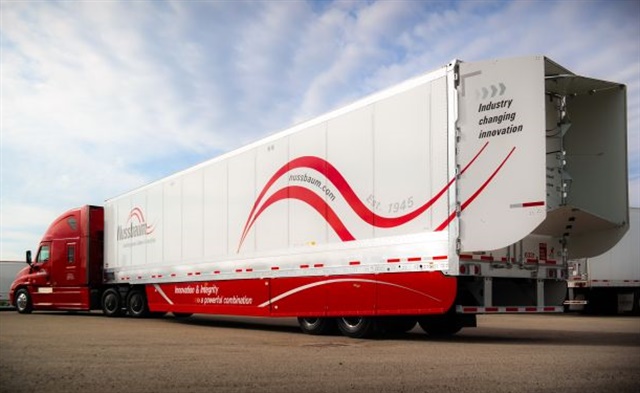
This trailer owned by Illinois-based Nussbaum Transportation has both an aerodynamic “boat tail” from Stemco TrailerTails and extra-long trailer side fairings it developed with Wabash. Photo: Nussbaum Transportation

">

This trailer owned by Illinois-based Nussbaum Transportation has both an aerodynamic “boat tail” from Stemco TrailerTails and extra-long trailer side fairings it developed with Wabash. Photo: Nussbaum Transportation

">

Adding aerodynamic devices to smooth airflow over the vehicle at highway speeds is a (relatively) cheap and easy way for fleets to improve fuel economy in long-haul tractor-trailer applications. But calculating fuel savings and return on investment for aerodynamics can be notoriously tricky. Moreover, not every aerodynamic device on the market today is appropriate for all applications. Luckily, several recent, high-profile studies have made it easier for fleet managers to identify the best devices for their applications and to determine both fuel savings and a realistic ROI timeline.

A particularly valuable information packet was recently released by SmartWay Canada, and it takes an extremely deep dive into the science of tractor-trailer aerodynamics. But on an elemental level, the principles of clean vehicle design can be readily understood by anyone who's ever stuck their hand outside the window of a car moving at highway speeds: Air is a mass that creates resistance to the objects moving through it. Surfaces with sleek, rounded edges move through this air mass more efficiently. Engines moving vehicles through the air mass don't have to work as hard — and therefore burn less fuel.

There is also a secondary component to vehicle aerodynamics beyond the ability to simply slip through the air mass efficiently. And that is the science of dealing with low-pressure pockets in the vehicle profile as air passes over it. Again, the science dealing with this problem can be complex. But the overall concept is easy to grasp: Nature abhors a vacuum. If an area on a vehicle is generating a lower-pressure pocket, air moving past it will naturally try to fill that void to equalize overall pressure. This ...Read the rest of this story

Commentary: Will Electric Trucks Charge Ahead?

<img width="150" src="http://www.automotive-fleet.com/fc_images/articles/m-jack-roberts-2-1.jpg" border="0" alt="

Jack Roberts

" >

Jack Roberts

" width="185" height="243">

Until very recently, “cutting edge” was a term not usually associated with American truck fleets. Even in the hallowed halls at the American Trucking Associations' Technology & Maintenance Council, discussions on emerging technology are often sprinkled with a great deal of caution or even outright pessimism. The technology in and of itself is fascinating, its members will often tell you. But they get paid to make sure freight gets delivered and trucks keep running. And new technology can get really scary fast then you're looking at things through that particular prism. So, it's only natural that many fleet managers look upon electric trucks with skepticism.

Still, the trend lines are plainly visible. There is a lot happening in the electric commercial vehicle space right now, with Nikola to Tesla here in the States, Mitsubishi Fuso and Hino in Japan, Mercedes-Benz in Germany, and now Scania in Sweden.

Electric trucks are already here in small numbers, and several P&D fleets, FedEx, and UPS, in particular, are aggressively evaluating their performance today. At a minimum, it seems reasonable to assume that electric trucks will be attempting to break into the American market in an even bigger way soon — quite possibly within the next couple of years.

And interestingly, we're now seeing electric drivetrains being combined with other alternative fuels to create new hybrid propulsion systems for trucks. Scania is the “other” Swedish truck manufacturer over in Europe: The one that doesn't sell trucks here in the States. But its approach to electric trucks is interesting because the company is not limiting itself to one particular technology path. It has embraced a wide range of new EV technologies, including “conventional” battery-powered vehicles, buses that recharge wirelessly, tractors that connect to an overhead power line — even a new hybrid system that runs ...Read the rest of this story

ATA Joins ‘Our Roads, Our Safety’ Outreach Program

American Trucking Associations has joined the Federal Motor Carrier Safety Administration, AAA, and the American Bus Association, to unveil the Our Roads, Our Safety Partnership, aimed at reducing highway fatalities.

Our Roads, Our Safety is an outreach program focused on producing strong, collaborative highway safety messages through innovative strategies to deliver them to targeted audiences. All of the groups involved share a goal of reducing the number of crashes on U.S. roads, specifically, crashes involving large commercial vehicles.

“ATA, through our Share the Road highway safety program, has been educating the motoring public about safety for more than three decades, and we are excited to expand our partnership with FMCSA and other highway users,” said Chris Spear, ATA president and CEO. “The trucking industry is committed to reducing vehicle accidents, and to meet its safety goals, investing more than $9.5 billion on safety each year in the form of training, technology and developing safety messages like we've done in the Our Roads, Our Safety partnership.”

To reach audiences, the Our Roads, Our Safety campaign is developing a series of safety videos, advertisements, infographics and social media content to spread safety tips and reminders throughout the country.

The first Our Roads, Our Safety video covers commercial vehicle blind spots. Coalition partners developed the animation to provide viewers with a simple explanation of safe and unsafe maneuvers surrounding commercial vehicles. The animation highlights safe zones around a truck and asks drivers to only pass commercial vehicles on the driver's side, if possible.

Our Roads, Our Safety is also launching a nationwide social media campaign to generate positive awareness about highway safety. The campaign aims to spread a safety message among critical demographics in key states to amplify visibility and further reduce highway crashes.

“At ATA, we feel it is our duty to work alongside allies in the ...Read the rest of this story