Author: Vitaliy Dadalyan

Navistar to End 9/10 Liter Engine Production by 2018

<img width="150" src="http://www.automotive-fleet.com/fc_images/news/m-navistar-n9-1.jpg" border="0" alt="

Navistar's N9 Engine Photo: Navistar

" >

Navistar's N9 Engine Photo: Navistar

" width="250" height="235">

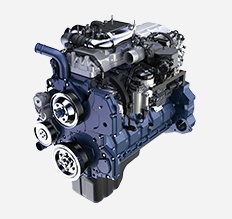
Navistar has announced that it is ceasing production of its medium-duty 9- and 10-liter engines at the company's Melrose Park, Ill., facility by the second quarter of 2018.

The change is part of Navistar's transformation of the Melrose Park facility into a technical center that conducts truck and engine testing and validation as well as used truck sales and reconditioning. The majority of engines produced at the facility are 9- and 10-liter engines used in International Class 6 and 7 vehicles, however, alternative engines are currently offered in all applications.

The cessation of engine manufacturing at Melrose Park is expected to affect about 170 employees and reduce Navistar's operating costs by about $12 million annually. The company will take an approximate charge of $43 million as a result of the action, including around $8 million in cash related charges.

The company says that a significant portion of hourly workers at Melrose Park are retirement-eligible and assistance and opportunities for retraining will be offered.

“Ceasing production of engines at Melrose Park is a difficult decision, but represents another important step on our journey to strengthening the company's competitiveness,” said Persio Lisboa, Navistar chief operating officer. “Our N9/10 engine family was updated in 2014 and since then has served as a competitive niche offering for specific medium-duty vehicles. As we approach future regulatory requirements, the low volume nature of the platform could not justify further product development investments on it.”

Navistar reintroduced the option of a 6.7 liter Cummins engine in 2013 and a 9-liter Cummins engine in 2016. The Cummins engines that are used in the medium duty Class 6/7 segment are manufactured in Indiana and North Carolina, while Navistar's big bore engine plant, which makes engines for Navistar's Class 8 trucks, is in Alabama.

“Ending production anywhere is a difficult ...Read the rest of this story
Navistar to end 9/10 engine production

Company said it will end production of medium-duty 9/10L engines by 2018 and will continue transformation of Melrose Park facility.

Navistar announced that it will cease all engine production at its plant in Melrose Park, IL, by the second quarter of fiscal 2018. The company said it will continue the facility's transformation into Navistar's technical center, including truck and engine testing and validation as well as used truck sales and reconditioning, continuing the process that started in 2010.

read more

...Read the rest of this story

Class 8 Truck Orders Rebound in July

Class 8 truck orders are expected to increase in July compared to the previous month and previous year, according to preliminary numbers from ACT Research and FTR.

Truck orders are expected to increase by 5% over June's number and by 79% compared to July 2016, according to FTR.

Orders have increased for the second month in a row and the market is stable but moving in a positive direction, said FTR.

Total Class 8 orders in the past year have totaled 224,000 units. A positive freight environment has tightened capacity and the equipment orders are starting to reflect this change, according to FTR.

“This is a great sign to see orders rising, even slightly, in mid-summer,” said Don Ake, vice president of commercial vehicles at FTR. “This is the beginning of a positive trend that we expect to continue the rest of this year, right into 2018. The Class 8 market is starting to move upward and orders are forecasted to accelerate in the fall.”

Medium-duty Class 5-7 truck orders have not fared as well, dropping in July to a 13-month low after averaging more than 22,100 units per month for seven months straight, according to ACT Research. However, July orders were still slightly better than in the same month a year ago.

Related: What Will the Class 8 Market Look Like in 2017?

Follow @HDTrucking on Twitter

...Read the rest of this story

Trucking still projected to benefit from wider Panama Canal

The expanded canal should eventually help create more outbound lanes in East Coast states, according to one motor carrier.

There still seems to be a lot of optimism surrounding the benefits the $5 billion-plus Panama Canal expansion project can deliver to trucking – especially in terms of a shift in freight flows from the U.S. West Coast to the U.S. East Coast, though said shift is taking a while to develop.

read more

...Read the rest of this story

Cummins Launches Smartphone-Based ELD Solution

<img width="150" src="http://www.automotive-fleet.com/fc_images/news/m-zed-connect-image-1.jpg" border="0" alt="

Photo: Zed Connect

">

Photo: Zed Connect

">

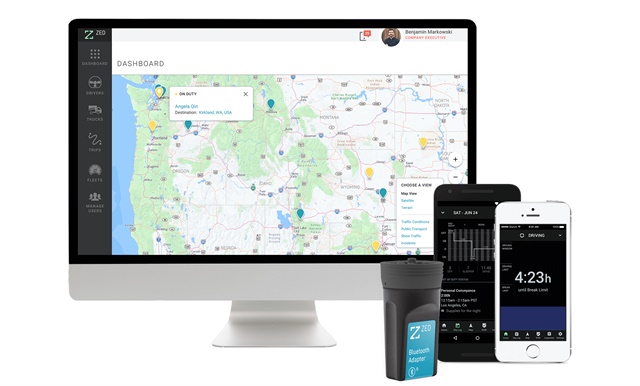
Cummins has launched a new fleet software company called Zed Connect and announced its first product, Zed ELD – a smartphone based electronic logging solution.

Zed ELD is designed to be a simple and low-cost electronic logging device solution aimed at small- and mid-sized fleets looking to meet the upcoming ELD mandate. The plug-and-play solution includes such features as ELD, visual inspection reporting, and commercial routing.

The Zed ELD was designed with input from drivers, fleet managers and owners, according to Cummins, and includes a one-time fee for Bluetooth-enabled hardware connecting to the vehicle.

“Zed Connect is developing products and services that will provide outstanding benefits for companies across the industry,” said Tom Linebarger, chairman and CEO of Cummins. “Their first product offering, Zed ELD, is an intuitive smartphone-based ELD solution that fills the void for fleets that need a way to easily and inexpensively log hours electronically.”

Zed Connect's leadership team is led by president and CEO Skip Kinford. Kinford has gained experience in technology solutions, business development, and global sales while serving in leadership roles with MiX Telematics, inthInc Technology Solutions, and Mobileye.

“Cummins' deep relationships within the on-highway market and its leadership in integrated solutions make this an exciting partnership for ZED Connect,” said Kinford. “We view this opportunity as a way to collaborate with an industry leader to solve mutual customers' problems.”

For more information, click here.

Follow @HDTrucking on Twitter

...Read the rest of this story

FMCSA Clarifies Issuance of Commercial Learner’s Permits

<img width="150" src="http://www.automotive-fleet.com/fc_images/news/m-driverstalkfmcsa-3-1.jpg" border="0" alt="

Photo: FMCSA

">

Photo: FMCSA

">

Guidance just issued by the Federal Motor Carrier Administration clarifies that a state may accept applications for commercial learner's permits and administer the general knowledge test to individuals who are not domiciled there.

Per the agency's notice published in the Federal Register for Aug. 3, the guidance was issued to clarify that FMSCA had not meant to limit the extending of this out-of-state consideration to applicants who had served in the military.

Based on the new guidance, states that choose to administer the general knowledge test must transmit the test results “directly, securely, and electronically” to the applicant's state of domicile and that state must agree to accept the test results and issue the commercial learner's permit.

The agency stated that while “the guidance is in answer to general knowledge testing as addressed in FMCSA regulations, we note that this regulatory guidance is consistent with the agency's October 13, 2016, final rule, which amended the CDL regulations to ease the transition of military personnel into civilian careers driving commercial motor vehicles.”

Related: Two New Rules Would Help Ease Truck Driver Shortage

Follow @HDTrucking on Twitter

...Read the rest of this story

Intermodal Recovery Strengthens During Second Quarter

<img width="150" src="http://www.automotive-fleet.com/fc_images/news/m-ajp-0297.jpg" border="0" alt="

Intermodal service providers again demonstrated clear gains in the intermodal sector. Photo: Jim Park

">

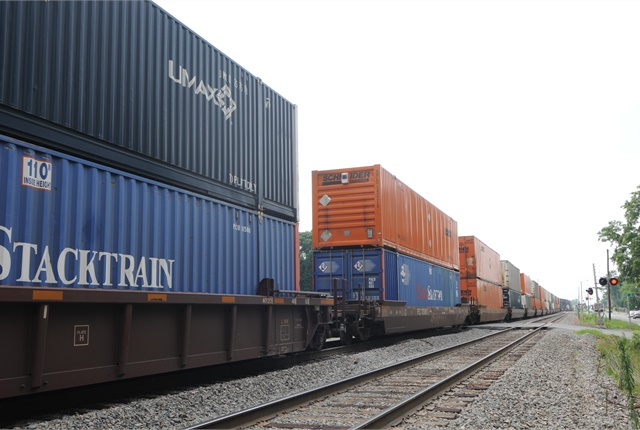
Intermodal service providers again demonstrated clear gains in the intermodal sector. Photo: Jim Park

">

Total intermodal freight volumes gained 4.5% in the second quarter of the year, the strongest growth in nearly three years, according to new figures from the Intermodal Association of North America.

International freight once again was the primary driver, rising 5.6%. Domestic containers and trailer volumes increased 3.2% and 3.9%, respectively.

"Growth in the second quarter indicates that economic conditions continue to improve for all segments of the intermodal market,” said Joni Casey, president and CEO of IANA. “Year-to-date performance is a healthy 3.3%, notwithstanding a weak year-over-year comparison for the second quarter."

Intermodal service providers again demonstrated clear gains in the intermodal sector. While highway loads declined 3.4%, intermodal volumes were up 5.8% for the quarter. The net result was a 0.6% improvement over the same period last year.

The seven highest-density trade corridors, accounting for 63.4% of total intermodal volume, collectively were up 4% in the second quarter. The Trans-Canada lane led the way with an 11.4% expansion, while the Midwest-Northwest, down by 0.6%, experienced the only decline. The remaining five corridors' growth in the second quarter ranged from a 1.3% to 4.6% improvement.

Of these seven lanes, five stood out in terms of directional activity, accounting for 42.9% of the three-month results. The Southwest-Midwest direction took the lion's share with 10.6%. Western Canada-Eastern Canada and the Eastern Canada-Western Canada both came in at 9.2%, while the Midwest-Southwest route added 7.4%. The final in the top five, the Northeast-Midwest, accounted for 6.5%.

Related: The Long and Short of Truckload Today

Follow @HDTrucking on Twitter

...Read the rest of this story