Author: Vitaliy Dadalyan

Q. Can you define the various duty status categories?
A. There are four driver duty status categories: driving, on-duty, sleeper berth, and off-duty.

Driving time is defined as the time the driver actually spends behind the wheel of a truck in operation. Driving time is recorded automatically by the ELD and cannot be edited or changed to non-driving time.

On-duty time is the time a driver is working for a fleet. It includes activities such as time at a fleet terminal or shipper location, time spent inspecting or servicing the vehicle, driving time, time loading and unloading the vehicle, training time, etc. Time spent resting in the vehicle is not considered on-duty time.

Off-duty time is when the driver is “relieved of all duty and responsibility for performing work,” according to Federal Motor Carrier Safety Administration (FMCSA) regulations. The driver must be free to pursue other activities of his or her choosing during this time.

Sleeper berth is time the driver spends in the sleeper getting some or all of the mandated 10 consecutive hours of off-duty time. The sleeper berth can also be used to extend the 14-hour limit. If the driver is in the berth for at least 8 consecutive hours, that time “does not count as part of the 14 hours and therefore, allows [the driver] to extend the time which [he or she] can use their maximum 11 hours of driving,” according to the FMCSA regulations.

Follow @HDTrucking on Twitter

...Read the rest of this story
Q. What is the key information that ELDS will be required to collect?

A. There are questions surrounding what data electronic logging devices (ELDs) will automatically record while a vehicle is being driven.

Under the ELD mandate, an ELD will be required to record the following information:

DateTimeLocationEngine hoursVehicle miles

The ELD will also collect identification information about the driver, authenticated user, and motor carrier.

When the vehicle is in motion, location data will be recorded at 60-minute intervals. Data will also be recorded when the truck is turned off and when the engine is shut down. It will also record at changes of duty status for personal use or during yard moves.

Location data will be recorded according to latitude and longitude, and not street addresses, within one mile of the truck's actual location. The data does have to show the approximate distance and direction of an identifiable location, such as a nearby city or town with a state designation.

The ELD will automatically go into driving mode and begin recording once the vehicle is moving at 5 miles per hour.

Follow @HDTrucking on Twitter

...Read the rest of this story
Volkswagen Acquires More Navistar Shares in Series of July Trades

<img width="150" src="http://www.automotive-fleet.com/fc_images/news/m-int-lt-1-1.jpeg" border="0" alt="

Volkswagen has been a major shareholder in International since purchasing a $250 million stake in the company last year. Photo: International

">

Volkswagen has been a major shareholder in International since purchasing a $250 million stake in the company last year. Photo: International

">

Volkswagen has quietly purchased a significant number of shares in Navistar International Corporation, parent company of International Truck and Engine, during the month of July, according to reports in various international financial news sources.

Volkswagen has been a major shareholder in International since purchasing a $250 million stake in the Lisle, Ill., company in September of last year and the two companies have collaborated on diesel engine technology for commercial trucks for over a decade.

According to a report in the financial journal Week Herald, Volkswagen acquired 43,501 shares of International stock on Monday, July 17th at an average price of $29.25 per share, for a total transaction of $1,272,404.25. That transaction was followed closely by four additional Navistar stock purchases by Volkswagen in July, ultimately netting the German car and truck manufacturer an additional 341,663 shares in the company for approximately $9,991,085. All told, Volkswagen invested approximately $11,263,489 in Navistar International stock last month.

According to additional reporting by the United Kingdom's Press Herald, as of July 21, 2017, Volkswagen owns approximately 16.4 million shares of Navistar International stock, which is approximately 17% of the company's overall market capitalization.

Related: Navistar to End 9/10L Engine Production by 2018

Follow @HDTrucking on Twitter

...Read the rest of this story
Navistar to end engine production at Melrose Park plant

Company said it will end production of engines by 2018 and will continue transformation of Melrose Park facility.

Navistar announced that it will cease all engine production at its plant in Melrose Park, IL, by the second quarter of fiscal 2018. The company said it will continue the facility's transformation into Navistar's technical center, including truck and engine testing and validation as well as used truck sales and reconditioning, continuing the process that started in 2010.

read more

...Read the rest of this story

Craftsmen Utility Trailer Opens Iowa Location

Craftsmen Utility Trailer, a Utility trailer dealership, has completed development its new facility in Davenport, Iowa.

The Davenport facility is located on 14 acres of land, near two truck stops and several truck dealers with space for trailer parking. The lot can accommodate 300 trailers and showcases new and used Utility 3000R reefers, 4000D-X Composite, 4000AE Combo Flatbeds and other specialty trailers.

“We acquired this location in 2015 to better serve our customers,” said Lou Helmsing, president of Craftsmen Utility Trailer. “The facility that we were leasing from the prior owner was very small and did not allow any room for growth, so we decided to build a new facility that would offer a much-improved experience for our customers.”

The 22,500-square foot facility includes a driver's waiting room, a 4,000-square-foot parts warehouse and showroom, and a service center with 12 service bays.

“Our service department is open on two shifts, offering both Express Service and Mobile Service. Our fleet of fully-equipped service trucks is ready to provide emergency road service and on-site repair,” said Helmsing.

For more information, click here.

Related: HDT's 2017 Trailer Update

Follow @HDTrucking on Twitter

...Read the rest of this story
Navistar to End 9/10L Engine Production by 2018

<img width="150" src="http://www.automotive-fleet.com/fc_images/news/m-navistar-n9-1.jpg" border="0" alt="

Navistar's N9 Engine Photo: Navistar

" >

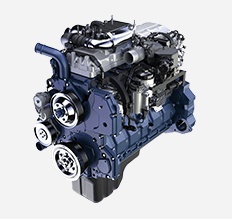
Navistar's N9 Engine Photo: Navistar

" width="250" height="235">

Navistar announced on Aug. 3 that it will cease production of its medium-duty 9L and 10L engines at the company's Melrose Park, Illinois, facility by the second quarter of 2018.

The change is part of Navistar's transformation of the Melrose Park facility into a technical center that conducts truck and engine testing and validation as well as used truck sales and reconditioning. The majority of engines produced at the facility are 9- and 10-liter engines used in International Class 6 and 7 vehicles. Alternative engines are currently offered in all applications.

“Ceasing production of engines at Melrose Park is a difficult decision, but represents another important step on our journey to strengthening the company's competitiveness,” said Persio Lisboa, Navistar chief operating officer. “Our N9/10 engine family was updated in 2014 and since then has served as a competitive niche offering for specific medium-duty vehicles. As we approach future regulatory requirements, the low-volume nature of the platform could not justify further product development investments on it.”

Navistar reintroduced the option of a 6.7L Cummins engine in 2013 and a 9L Cummins engine in 2016. The Cummins engines that are used in the medium-duty Class 6/7 segment are manufactured in Indiana and North Carolina, while Navistar's big-bore engine plant, which makes engines for Navistar's Class 8 trucks, is in Alabama.

The cessation of engine manufacturing at Melrose Park is expected to affect about 170 employees and reduce Navistar's operating costs by about $12 million annually. The company will take an approximate charge of $43 million as a result of the action, including around $8 million in cash-related charges.

Related: Navistar Pins Q2 Loss on New Vehicle Sales, Used Trucks

Follow @HDTrucking on Twitter

...Read the rest of this story

Earnings Watch: YRC Worldwide Profit Falls, Heartland Profit Slips

Profit for less-than-truckload provider YRC Worldwide Inc. fell nearly 30% in the second quarter from a year earlier, despite increased tonnage per day moved at both its national and regional operations.

Net income totaled $19 million, or 57 cents per share, compared to net income of $27.1 million or 83 cents per share a year earlier. Revenue rose to $1.26 billion from $1.21 billion but operating income slid to $50 million from $57.2 million.

In the first six months of the year, the Kansas-based company posted a net loss of $6.3 million compared to net income of $15.1 million in the first half of 2016.

“Following a couple of challenging quarters, the second quarter 2017 results include our efforts to return YRC Freight's year-over-year revenue per hundredweight, excluding fuel surcharge, to positive territory,” said CEO James Welch. “The consolidated quarterly results were also favorably impacted by our plan to streamline overhead costs, an increase in volume driven by an improving industrial economy and a decrease in liability claims expense.”

The consolidated operating ratio for second quarter 2017 was 96 compared to 95.3 for the same period in 2016.

The operating ratio at YRC Freight was 96.5 compared to 96.2 in the second quarter 2016 (which included an $11.2 million gain on property disposals). The regional segment's second quarter 2017 operating ratio was 94.6 compared to 93.2 in the prior year.

Compared to a year earlier, second quarter 2017 tonnage per day increased 2.7% at YRC Freight and 3.6% at the regional segment.

At YRC Freight, excluding fuel surcharge, second quarter 2017 revenue per hundredweight increased 1.1%. Revenue per shipment was essentially flat, down 0.1% compared to the same period in 2016. Including fuel surcharge, revenue per hundredweight increased 2.2% and revenue per shipment increased 1%.

At the regional segment, excluding fuel surcharge, second quarter 2017 revenue per ...Read the rest of this story