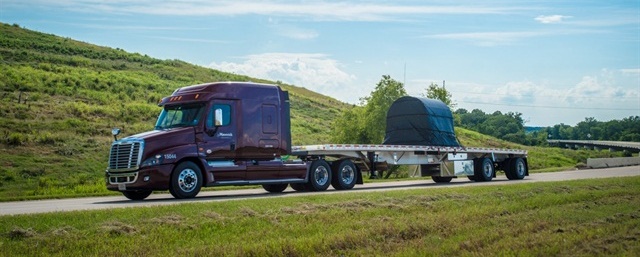
Maverick boosts pay for flatbed, glass division drivers
Martinez
" >Martinez
" width="175" height="175">President Trump's nominee for Administrator of the Federal Motor Carrier Safety Administration said in Senate testimony that he will not delay implementation of the electronic logging device mandate that starts to kick in on Dec. 18, less than seven weeks from now.
Replying to Sen. Ted Cruz's (R-TX) query as to whether FMCSA “should delay the implementation of the mandate prior to Dec. 18” specifically “in light of the cost” estimated to implement it of $2 billion, Martinez said that while “regulatory reform should be an ongoing process,” it is “legally required” that the December deadline to implement the ELD mandate be met.
In his Oct. 31 testimony before the Senate Committee on Commerce, Science and Transportation on his nomination to head FMCSA, Martinez went on to state that, if confirmed, he would “look forward to working with industry and all stakeholders, safety advocates and particularly the impacted sectors of commerce.
“I've heard that this rule could cause serious hardship to some small independent truckers, particularly those working in the agricultural sector,” he explained, “so, I'd want to meet with those involved in those areas who oppose the rule to learn more about their concerns. The goal is to not cripple commerce. The goal is to make our roadways safer. That is our mission and that's in everything we approach… through that lens of safety.
“So, first and foremost,” Martinez added, “[I would] abide by the law, but also have an open door policy and work with all the impacted stakeholders.”
Martinez is currently Chief Administrator of the New Jersey Motor Vehicle Commission. His previous experience includes serving as Chairman of the Governors Traffic Safety Committee in New York.
In his opening statement, Martinez related his bona fides to lead the federal safety-enforcement agency. “As the former motor vehicle commissioner and ...Read the rest of this story
Photo: Maverick Transportation
">Photo: Maverick Transportation
">The Alliance for Driver Safety & Security (aka the Trucking Alliance) announced on Nov. 1 that its member carriers have adopted four truck-safety technologies that the AAA Foundation for Traffic Safety has concluded are critical to reducing large truck crashes and saving lives.
The Trucking Alliance noted that a new AAA Foundation report, "Leveraging Large Truck Technology and Engineering to Realize Safety Gains," examined the costs and safety benefits of installing these four advanced safety technologies in large trucks:
Lane Departure Warning Systems, “which detect when the vehicle drifts out of its lane and warn the driver”Video-based Onboard Safety Monitoring, “which utilizes in-vehicle video cameras and sensors”Automatic Emergency Braking Systems, “which detect when the truck is in danger of striking the vehicle in front of it and brake automatically if needed” Air Disc Brakes [on tractors], “which are superior to traditional drum brakes”While the AAA Foundation's report acknowledges that “many large commercial fleets have begun equipping trucks with these advanced safety technologies,” the Trucking Alliance said it is the first U.S. carrier-based organization to adopt these technologies as conditions for membership.
“These technologies can make the highways safer for our drivers and the public and why the Trucking Alliance carriers are installing them on new trucks,” said Steve Williams, president of the Trucking Alliance and Chairman/CEO of Little Rock-basedMaverick USA. “The AAA Foundation report shows how these automated technologies can help commercial drivers and motorists avoid accidents and return home safely to their families.”
The AAA Foundation report found that by installing automatic braking systems and air disc brakes on all new trucks, 7,705 accidents, 92 deaths and 4,200 injuries could be avoided. The report also projected that if onboard cameras and lane departure warning systems were installed on all new and existing commercial trucks, ...Read the rest of this story

The Truckload Carriers Association and the Motor Carrier Insurance Education Foundation launched a certification program dedicated to improving insurance performance, called the Motor Carrier Insurance Risk Management Program.
The eight-part online course will inform participants on making better insurance purchasing decisions and instruct them on how to improve practices and see better results. Participants will earn the designation of Certified Motor Carrier Risk Specialist upon completion of the lessons and exam.
The course covers a wide variety of topics, including the types of coverage needed, key strategies for obtaining a sound insurance program, and the considerations that go into how coverage is provided. Participants will also learn how to become a better insured and how to best be prepared for critical situations with potential major financial implications.
“By making the commitment to be more knowledgeable purchasers of insurance for their motor carriers, professionals are not only showing their dedication to their own career development, but also to the success and profitability of their companies,” said Ron Goode, TCA's director of education.
“How important is insurance to your trucking company?” asked M. Thomas Ruke Jr., president of Insurance Business Consultants and founder of MCIEF. “It becomes very important when you have to rely on the promise of protection in your insurance policies. Then the promise in the policy might be the most important promise made to your company.”
The Motor Carrier Insurance Risk Management Program features interactive modules, with keywords and phrases linked to additional information about the topic, and quizzes to help serve as checkpoints for understanding. It is the second certification program from Truckload Academy, with the Certified Fleet Manager Program also offering credentialing opportunities.
Both programs are available at a discount for TCA members and can be purchased from TCA's online learning platform, the Truckload Academy On-demand. Once purchased, participants have ...Read the rest of this story
Photo: PIT Group
">Photo: PIT Group
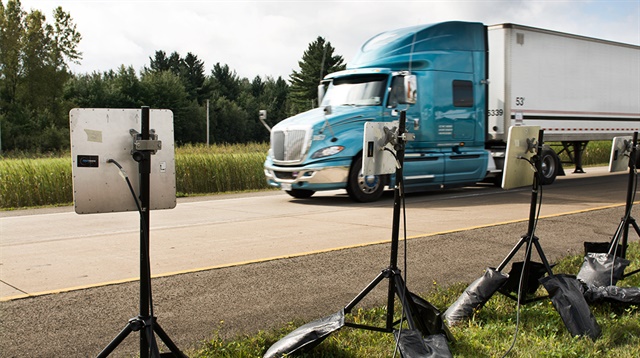
">Driver fuel efficiency and safety training is only effective if it includes refresher courses, according to results from a recent PIT Group study on driver training.
The study found that in-vehicle technologies can reinforce good practices and address weaknesses of drivers, ideally in real time.
“While vehicle technology designed to improve fuel economy continues to advance, driver training is the element that has the largest impact on fuel consumption,” said Yves Provencher director, market and business development at PIT Group. “Our studies show that various ways to train drivers, including classroom, in-cab and simulator training, all have their advantages.”
PIT Group is a research and engineering group focused on improving fleet maintenance and operations in the North American transportation industry.
Provencher also pointed out that learned lessons won't stick without monitoring behaviors that impact fuel use and safety. Refresher training and in-vehicle coaching technologies help to reinforce those lessons and maintain skills needed to improve safe and efficient operation.
In one study on fuel efficiency performance, PIT Group compared 47 control and 38 test long-haul drivers before and after simulator training that focused on specific elements, including speed, boost pressure, braking, acceleration, and rpm. Initial baseline performance measures were established over a period of two months before test drivers were trained. After training, evaluations were performed at one, three, six and nine months.
“The largest impacts on fuel consumption in long-haul operations were the use of cruise control, proper acceleration and maintaining the correct engine and road speed,” said Provencher. “With close monitoring and communication with drivers, including frequent reminders of how efficiently they were performing, the test data show that long-haul drivers operating a truck an average of 156,000 miles per year could save 2,640 gallons of fuel annually.”
The study also found that fuel-saving technologies have a noticeable effect on efficiency. Drivers with ...Read the rest of this story