Author: Vitaliy Dadalyan

Ryder’s Scott Perry Goes to Nikola

<img width="150" src="http://www.automotive-fleet.com/fc_images/news/m-nikola-one-15-1.jpg" border="0" alt="

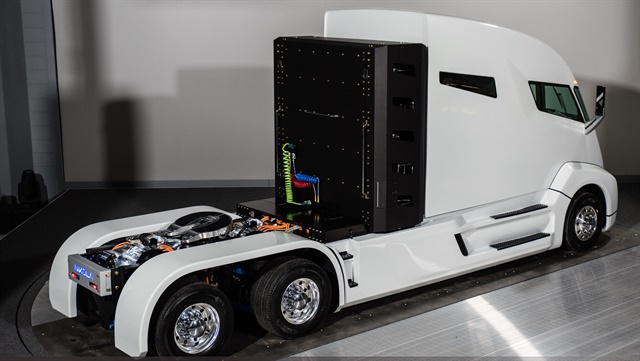
Perry will help bring the Nikola fuel-cell truck to market. Photo: Nikola Motor

">

Perry will help bring the Nikola fuel-cell truck to market. Photo: Nikola Motor

">

Scott Perry, who's been with Ryder System for more than 25 years, has joined Nikola Motors as chief operating officer, where he will help bring the company's fuel-cell-electric Class 8 truck to market.

Perry most recently was chief technology and procurement officer for Ryder's Fleet Management Solutions division, where among other things he was responsible for Ryder's Advanced Vehicle Technology strategy team. He brings real-world trucking and technology expertise to Nikola. His career with Ryder spans more than two decades, with extensive experience in vehicle maintenance operations, carrier and transportation management and warehouse operations.

Less than a year ago, Ryder announced it would provide sales, service and warranty coverage for Nikola as the company looks to build a support network for its hydrogen fuel cell, electric-drive, Class 8 truck.

At the time, Perry noted that it was a similar strategy to what Ryder did when it introduced natural gas into its fleet six years earlier. Indeed, under Perry's leadership, Ryder in recent years has positioned itself as a leader in testing and providing alternative fuel and drivetrain vehicles to its customers. Just in the past year, in addition to the Nikola deal, it was named the exclusive distributor of the new Chanje electric van, announced it will distribute Workhorse's new electric delivery vehicles, and has been piloting a new hybrid tandem drive axle.

Perry has been with Ryder since 1990, when he started working for the company's Integrated Logistics business while completing his undergraduate degree.

Nikola also announced that Kim Brady is joining its team as chief financial officer. Recently senior managing director with SOLIC Capital Advisors LLC, he brings over 20 years of experience in investment banking, private equity, and corporate restructuring.

Related:

ATRI: Only a Fuel Tax Hike Can Deliver on Infrastructure Promise

<img width="150" src="http://www.automotive-fleet.com/fc_images/news/m-fuelingjimpark-1-1.jpg" border="0" alt="

Photo: Jim Park

">

Photo: Jim Park

">

It will take nothing less than an increase in the federal tax on motor fuels if President Trump's vision for a trillion-dollar investment in the nation's infrastructure is ever to be realized. That's the stark conclusion of a new report just issued by the American Transportation Research Institute.

Titled “A Framework for Infrastructure Funding,” the ATRI report found that the “only meaningful mechanism for attaining the [Trump] administration's vision for a large-scale infrastructure program is through a federal fuel tax increase.”

Authored by Jeffrey Short, ATRI senior research associate, the report also determined that the inefficiency of other funding mechanisms-- including mileage-based user fees and increased tolling-- will “fall far short of the needed revenue stream without placing undue hardship on system users.” In addition, the report argues for indexing the fuel tax to inflation going forward.

The nonprofit industry research outfit said in a statement that “a federal fuel tax increase will incentivize states to generate multi-million dollar matches to the new federal funds, ultimately moving the United States closer to the infrastructure investment goals proposed by both Congress and the President.”

ATRI also said the report details what will happen if Congress does nothing but kick fuel tax can down the road again. As it is, the federal fuel tax has not been raised in more than two decades.

“While the trucking industry contributes more than $18 billion in federal user fees each year, growing traffic congestion and freight bottlenecks now cost the industry more than $63 billion annually,” the group stated. “The report also indicates that growth of e-commerce will likely slow as freight deliveries fail to meet the real-time demands of U.S. consumers.”

In the report, author Short calls the federal motor fuels tax “a successful model for assessing a road user charge” and notes ...Read the rest of this story

Spot Truckload Market Volume Jumps, Rates Move Higher

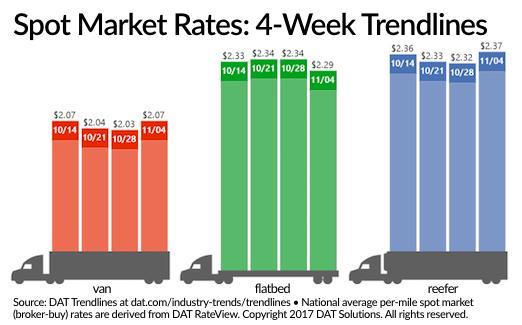
The availability of spot truckload freight gained 4.8% and the number of trucks posted slipped 3.2%, while rates remained unseasonably high, for the week ending Nov. 4, according to DAT Solutions and its network of load boards.

National average spot van and reefer rates jumped after receding for three straight weeks while the flatbed rate declined after two months of steady increases. However, national average spot rates remain above seasonal norms:

Van: $2.07 mile, up 4 cents from last weekFlatbed: $2.34 per mile, down 5 cents from the week beforeReefer: $2.36 per mile, up 5 cents from the previous week

(All rates cited include fuel surcharges.)

The number of van load posts increased 7% as retail freight enters the truckload distribution pipeline. Combined with a 4% decline in the number of trucks posted, this sent the van load-to-truck ratio up from 5.9 to 6.3 van loads per truck.

The van ratio has declined since hitting a peak of 7.0 loads per truck during the final week in September but is more than double what it was last year at this time.

Tighter capacity pushed spot market van rates higher across much of the country, as average outbound prices rose on 58 of the top 100 van lanes. Los Angeles remained the number one market for van load volume where the average outbound rate gained 11 cents to $2.49 per mile last week.

With holiday goods moving through the cold chain, the number of spot reefer load posts increased 18% last week. The reefer load-to-truck ratio increased from 9.7 to 11.8 loads per truck as available capacity fell 3%.

Of the top 72 reefer lanes, 39 had rising rates. Among the markets showing strength over the past week:

Green Bay, $3.72 per mile, up 12 centsChicago, $3.33 per mile, up 14 centsElizabeth, New Jersey, $2.20 per mile, up 6 centsLos ...Read the rest of this story

Senate Committee Gives Martinez Thumbs Up to Head FMCSA

<img width="150" src="http://www.automotive-fleet.com/fc_images/news/m-fmcsaraymondmartinezwww-nj-gov-1-2.jpg" border="0" alt="

Martinez Photo: NJ.gov

">

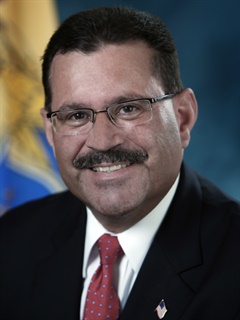
The Senate Commerce Committee has advanced the nomination of Raymond Martinez as Administrator of the Federal Motor Carrier Safety Administration to the full Senate for a vote on his confirmation. The committee approved the action by a voice vote on Nov.8.

Martinez, President Trump's pick to head the agency, had acquitted himself well the week before during his confirmation hearing, drawing no opposition from senators on the committee who questioned him.

At that time, the nominee voiced his support for upholding the electronic logging device rule that kicks in starting next month. He said that “first and foremost” he would “abide by the [ELD] law, but also have an open door policy and work with all the impacted stakeholders.”

Martinez Photo: NJ.gov

">Martinez also told the committee that his experience as a motor vehicle and traffic safety official in New York and New Jersey, respectively, has led him to hold the view that “promulgating regulations should be done with the best information available, and must be viewed by stakeholders as reasonable, rational and fair.”

If confirmed, he will succeed Daphne Jefferson as the nation's top truck-safety official. Jefferson, who holds the post of deputy administrator, has served as FMCSA's acting administrator since the departure of T.F. Scott Darling III, who served as the agency's administrator under President Obama.

HDT reported on Nov. 2 that FMCSA is expected to soon name Louisiana Motor Transport Association Executive Director Cathy Gautreaux as the agency's next deputy administrator.

Related: FMCSA Nominee Martinez Committed to ELD Rule

Follow @HDTrucking on Twitter

...Read the rest of this story

FMCSA’s Jefferson Named 2017 Influential Woman in Trucking

<img width="150" src="http://www.automotive-fleet.com/fc_images/news/m-daphne-jefferson-1.jpg" border="0" alt="

Daphne Jefferson Photo: FMCSA

" >

Daphne Jefferson Photo: FMCSA

" width="250" height="296">

Daphne Jefferson, deputy administrator of the Federal Motor Carrier Safety Administration, has been presented the seventh annual Influential Woman in Trucking award by the Women In Trucking Association and Freightliner Trucks.

The winner was announced at the WIT Accelerate! Conference & Expo in Kansas City, Missouri, and Jefferson was presented with the award by Mary Aufdemberg, chairwoman of WIT and an executive with Daimler Trucks North America.

"As the female demographic grows in our industry, more and more women are gaining recognition for their outstanding leadership and professionalism," said Aufdemberg. "Women In Trucking is an important organization and I am proud to be part of this community and honored to present this award to Daphne Jefferson."

As deputy administrator of the FMCSA, Jefferson is the senior career official responsible for truck and bus safety on our nation's roadways. In 2016 she received the Presidential Rank Award for Meritorious Service, the government's top award for excellence in civil service.

Read our interview with last year's winner – Q&A: Ramona Hood of FedEx Supply Chain

“The Pew Research Center did a study about women and leadership. Even though women are as capable as men in positions of power, barriers continue to persist," Jefferson said. "As a public servant on the regulatory side of the trucking industry, I try every day to remove the barriers and dispel any myths about women in this industry and in leadership."

The Influential Woman in Trucking award recognizes women in the trucking industry who make or influence key decisions, have a proven record of responsibility, and mentor and serve as a role model to other women. The award was developed in 2010 as a way to honor female leaders in trucking, and to attract and advance women within the industry.

The finalists of the 2017 Influential Woman ...Read the rest of this story