Why You Should Pay Attention to Trailer Alignment
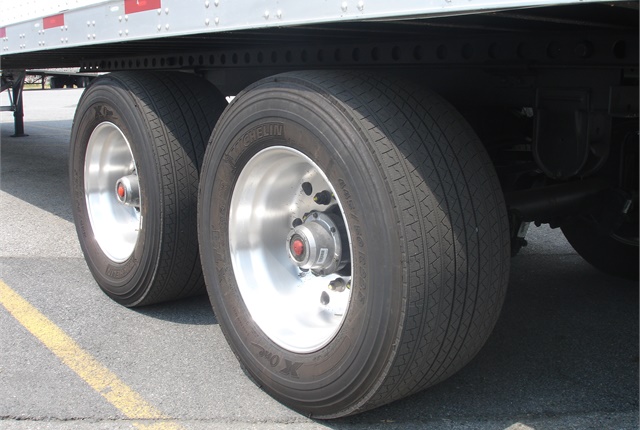
Trailer alignment is more important than ever when you run wide-base tires. HDT file photo
“>
Trailer alignment is more important than ever when you run wide-base tires. HDT file photo
“>
Proper trailer axle/wheel alignment is critical to maximizing tire life, and it’s only become more important with the use of wide-base single tires on trailers for fuel economy and weight savings.
Achieving alignment with today’s sophisticated laser alignment equipment provides for a more accurate process than past methods for achieving alignment.
The introduction of wide-based tires to the trucking industry created a need to pay even closer attention to the manufacturer’s alignment recommendations. The construction of wide-based tires varies from manufacturers with their different types and specifications.
The tread face of the radial tire reacts differently on wide-based tires, so it is more susceptible to wear when not aligned properly. Alignment is critical to preventing tire scuff, or wear across the face/footprint of the tire. The footprint across the face, or portion of the tire’s tread that touches the road surface, should be rolling in-line with the direction of the vehicle (travel of the trailer). Dog tracking occurs when one or more of the trailer’s axles are not aligned properly. Both axles should track true with the trailer to prevent premature tire tread wear.
Proper maintenance of suspension components is critical to establishing and maintaining alignment to maximize tire life. Even though your trailer manufacturer sets the alignment, it can change because of operating characteristics. The more severe your application, the more often routine maintenance will be required.
The importance of inspecting suspension components, bushings and fasteners during routine maintenance checks can’t be overlooked. Worn bushings on air ride suspensions are a leading cause of loss of initial manufacturer’s alignment. In addition, ensuring proper torque on U-bolts and track bar/rods on mechanical suspensions during routine maintenance intervals is crucial as well. Excessive wheel end play can also cause premature tire wear.
