TMC Panel Educates Fleets on Real-World Electric Truck Operation
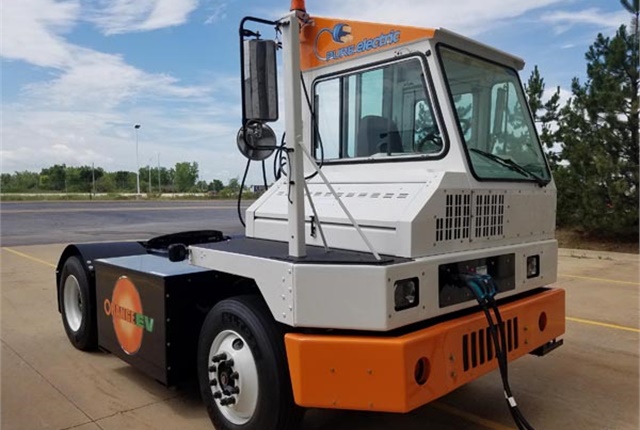
A policy of “opportunity charging” that has drivers putting trucks on charging devices during lunch, breaks and other downtimes is a key component in keeping the trucks’ state of charge high for longer periods of time. Photo: Orange EV
“>
A policy of “opportunity charging” that has drivers putting trucks on charging devices during lunch, breaks and other downtimes is a key component in keeping the trucks’ state of charge high for longer periods of time. Photo: Orange EV
“>
ORLANDO, FL – Electric trucks are much simpler to maintain and operate than diesel units. But that doesn’t mean there aren’t challenges for fleets that elect to evaluate and/or operate them. A session this week at the Technology & Maintenance Council Fall Meeting offered advice and answers for fleets considering electric trucks for their applications.
Opening presenter Mike Saxton, chief commerical officer for electric truck manufacturer OrangeEV, said that “range anxiety” concerns aside, his company has all-electric yard trucks operating for more than 24 hours on a single charge. However, he added that a policy of “opportunity charging” — a policy that has drivers putting trucks on charging devices during lunch, breaks and other downtimes — is a key component in keeping the trucks’ state of charge high for longer periods of time. Furthermore, Saxton added, most fleet facilities today, as well as existing structures that could be converted into a fleet facility, already have the necessary electrical capacity to handle charging electric trucks.
Saxton said all-electric truck drivetrains last significantly longer than comparable diesel drivetrains, and that a truck’s battery pack should last as long as the life of the truck itself in most operating conditions.
“Lithium-ion batteries do degrade over time with repeated charges,” he explained. “However, it takes about 2,000 charges before your battery capacity degrades — usually about 80%. You won’t notice this as a drop-off in performance. But you will notice you’re having to charge the truck more often.” But, he added, it generally takes between 7 and 10 years before this become an issue.
One potential limiting factor that …Read the rest of this story
