Skip to content
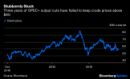
(Bloomberg Opinion) -- Saudi Arabia should give up trying to manage the global crude market and return to the pump-at-will policy it briefly adopted in 2014 under its longest serving oil minister Ali Al-Naimi.In the mercantilist world in which we now live, where decisions are based on narrow national interest, it makes no sense for the world's lowest-cost oil producer to subsidize shale and prop up other high-cost suppliers.Of course when it does, oil prices will crash just as they did in 1986 when the country finally abandoned fixed official selling prices. And then, in the aftermath, global investors will get in a flap about all things Saudi: the IPO of the kingdom’s state oil company, the financing required to fund a young and under-employed population, Mohammed bin Salman’s ambitious Vision 2030 plan to transform the economy away from its dependence on oil.Despite the risks, it’s time to admit that market management...
(Bloomberg) -- Terms of Trade is a daily newsletter that untangles a world embroiled in trade wars. Sign up here. A senior Chinese official called for governments around the world to work more closely together to regulate emerging technologies, while taking a veiled swipe at the U.S. for undermining collaboration.“The foundation for an open and shared-by-all internet is unstable,” Huang Kunming, a member of the Politburo, which is comprised of China’s 25 most-senior officials, said at a technology forum on Sunday. “Some countries restrain and suppress companies from other countries using cyber security as an excuse. Such moves cast uncertainty and even antagonism over cyberspace,” he said, without naming the U.S.Technology has come increasingly to the fore of a confrontation between the U.S. and China that began with trade and has since spread to 5G mobile networks and artificial intelligence. Washington has lobbied countries to not use gear from Huawei Technologies Co. in...
Every star in the sky—including our own sun—will eventually run out of the fuel it burns to shine so bright. When it happens to a particularly massive star, the end is spectacular. At some point, as the fusion process begins to create heavier and heavier elements, the core of the star becomes too densely packed to survive. The star collapses in on itself, cannibalized by the overwhelming power of gravity. And then it explodes, ejecting a tsunami of matter and energy, creating a shockwave that threatens anything in its immediate vicinity. I'm not saying it's a perfect metaphor for WeWork. But it kind of works, right? The supernova-style saga of the co-working unicorn continued this week, with two of the company's closest allies now said to be offering competing $5 billion lifelines that could help keep WeWork afloat. And WeWork's nightmarish past two months are also having wide-reaching impacts on the...
It’s another big week for the global financial markets, Corporate earnings, Brexit, trade and economic data in Focus. It’s also Draghi’s last media show…...
Mortgage rates were on the rise in the week ending 17th October. 30-year fixed rates rose by 12 basis points to 3.69%, reversing an 8 basis point fall in the week prior. In spite of the uptick, 30-year rates held close to levels last seen in early November of 2016, according to figures released by Freddie Mac....
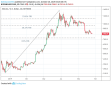
It’s back into the red for the majors. Bitcoin would need to recover to $8,000 levels to support a rebound later in the day....
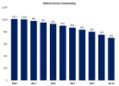
A look at the railroad's 3rd-quarter results Continue reading......