Skip to content
Asian stocks edged higher on Monday as Chinese shares reversed early losses due to hopes for progress in resolving the U.S.-China trade war and expectations for greater investment inflows into Hong Kong. MSCI's broadest index of Asia-Pacific shares outside Japan rose 0.19%. Chinese shares rose 0.13%, while Japan's Nikkei rose 0.28%....
Q3 2019 Alfa SAB de CV Earnings Call...
(Bloomberg) -- UBS Group AG is cutting about 40 jobs in Asia Pacific as part of a global push to trim costs and combine its trading units, according to a person familiar with the matter.The staff reductions are roughly split between UBS’s markets and investment-banking teams with a majority at the level of vice president or below, the person said, asking not to be identified because the details aren’t public. The Asian divisions -- led by Hong Kong-based Taichi Takahashi and David Chin -- will see smaller cuts than those planned in Europe because UBS sees the region as a growth driver, they said.UBS has embarked on a sweeping overhaul of its investment bank, reshuffling senior management and combining trading operations in changes that may ultimately eliminate hundreds of positions, people with knowledge of the plan said earlier. Citigroup Inc., Deutsche Bank AG and HSBC Holdings Plc are also cutting staff...
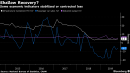
(Bloomberg) -- China’s policy makers are preparing for two key policy meetings in the coming weeks with fresh evidence that sooner rather than later, the number for gross domestic product growth will start with a 5.Data released Friday showed an economy expanding at just 6.0%, the slowest in almost three decades, and with broad investment growth too tepid to rely on an upturn down the road.People’s Bank of China Governor Yi Gang responded to the data not by hinting at much greater stimulus in the pipeline, but by reminding investors that China’s focus remains on keeping its heavy debt load under control.Yi’s comments may set the scene for a meeting of the Politburo, the Communist Party’s top leaders, and the ensuing Fourth Plenum of the Party’s Central Committee, a broader gathering that may mull longer-term questions of economic policy. While those events could produce a shift away from the current targeted,...
Oct.20 -- Ben Wellings, senior lecturer in politics and international relations at Monash University, discusses Brexit negotiations, his expectations from the DUP and what Boris Johnson has really accomplished with his deal. Wellings speaks on “Bloomberg Daybreak: Asia.”...
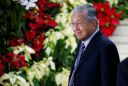
Malaysian Prime Minister Mahathir Mohamad said on Monday his exports-reliant country could be hit with trade sanctions amid rising protectionism highlighted by the U.S.-China tariff war. Mahathir did not mention the source of possible sanctions on the Southeast Asian country but said he was disappointed that proponents of free trade were now indulging in restrictive trade practices on a "grand scale". "Unfortunately, we are caught in the middle," he told a conference in the capital Kuala Lumpur, referring to the U.S.-China trade war....
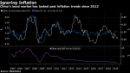
(Bloomberg) -- Sign up for Next China, a weekly email on where the nation stands now and where it's going next.Soaring pork prices in China are walloping the country’s inflation-adjusted bond yields, now in danger of turning negative for the first time in seven years.Home to half of the world’s hogs, China’s been hit hard by African swine fever -- more than 200 million pigs have been culled this year. That’s sent the price of pork, a key element in Chinese cuisine, soaring and in turn drove the consumer price index to breach 3% gains in September. Given the 3.19% yield on 10-year government bonds Monday, that means less than a 0.2% return for bondholders after accounting for inflation.While extraordinarily low yields -- adjusting for inflation or not -- have become the norm across the developed world, it’s rare in emerging markets. By contrast with China, South Korea’s 10-year bonds offer...