Lending credence to the theory of a quarter-end wave boosting Tesla Inc's (NASDAQ: TSLA) performance, CEO Elon Musk is marshaling the troops for one last push that could buoy what is widely believed to be an otherwise weak quarter.Musk's Rallying Cry: For many reasons, Tesla's execution worldwide is concentrated on the final week of the second quarter that ends June 30, Electrek reported, quoting an internal email sent by Musk to the electric vehicle manufacturer's employees."It is very important that we go all out through end of June 30 to ensure a good outcome. Wouldn't bring this up if not very important," Musk reportedly said in the email.Tesla's Quarter: Tesla has contended with both supply and demand side disruptions in the quarter. The raging COVID-19 pandemic has forced consumers to tighten their purse strings, dimming the sales outlook for premium vehicles such as the ones sold by the company.The company also...
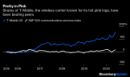
(Bloomberg Opinion) -- As Japan’s SoftBank Group Corp. unloads about 200 million shares of T-Mobile US Inc., more investors get a chance to own a top-performing stock that had been hogged by insiders. SoftBank’s fire sale isn’t a knock on T-Mobile, but rather a reluctant move by billionaire Masayoshi Son to shore up his own troubled conglomerate. Indeed, his loss will be someone else’s gain. Son took control of Sprint Corp. in 2013 and then spent years pursuing a merger between the beleaguered wireless carrier and its stronger rival, T-Mobile. He finally got his way thanks to the Trump administration’s lax regulators at the Justice Department and Federal Communications Commission. Their focus on America’s standing in the so-called race to 5G, the next generation of wireless connectivity, overshadowed the antitrust concerns. Sprint officially became part of T-Mobile in April, handing SoftBank ownership of about 25% of the combined company; another 44% is owned by Deutsche Telekom AG. Until this week, that left only a small...
The U.S. Department of Energy plans to invest up to $100 million over five years to fund two new DOE National Laboratory-led consortia to advance hydrogen and fuel cell technologies research and development. ...
(Bloomberg Opinion) -- Dell Technologies Inc.’s magical merry-go-round of financial engineering is spinning once again.The corporate computing giant is examining options for its majority stake in software-company VMware Inc. that include a spinoff of the holdings, the Wall Street Journal reported late Tuesday. VMware shares soared roughly 10% on the news in after-market trading, valuing Dell’s 81% stake at around $55 billion. To understand why Dell would contemplate a transaction like this, you only have to look at Dell’s own market value, which despite a rise of its own on the news of the possible spinoff amounted to only about $40 billion. Put another way, Dell isn’t getting full value for either its ownership of VMware or its own computing and data-storage business that took in around $80 billion of revenue in the most recent fiscal year. And it wants to remedy that. But for all of shareholders’ early enthusiasm, a spinoff of the VMware...
(Bloomberg) -- Carnival Corp. is the latest cruise line to lose its investment-grade credit ratings after S&P Global Ratings downgraded the company Tuesday.S&P slashed the company’s long-term rating by three levels to BB-, from BBB-, saying the cruise line’s credit metrics are likely “to remain very weak through at least 2021” as it begins to slowly resume its operations. The cut from S&P hands the company a second high-yield credit rating, meaning its debt will leave investment-grade credit indexes.Moody’s Investors Service cut the company to junk in May. In a statement Tuesday, it downgraded Carnival’s unsecured credit ratings by one notch to Ba2, the second-highest junk rank. It also rated Carnival’s planned term loan Baa3, the lowest investment-grade rating. S&P graded the new loan BB+, or one step lower.Carnival’s recovery will be much slower in 2021 due to the fact the cruise line plans to return to normal operations in phases,...
Apple Inc. (NASDAQ: AAPL) kickstarted its virtual Worldwide Developer's Conference Monday, and an analyst at BofA Securities sifted through the announcements to analyze their ramifications for the semiconductor sector.Intel Logged Out of Macs: Apple's decision to replace Intel Corporation (NASDAQ: INTC)-based CPUs with custom ARM processors is a modest headwind to the chip giant, as Mac processors account for roughly 3.5% of Intel's sales, analyst Vivek Arya said in a note.The analyst noted that support for Intel-based Macs will last for the foreseeable future.Apple's plan to switch is a long-term negative but it is unlikely to be replicated in the remaining 90% of the PC market, given ARM-based PCs' struggle for establishing compatibility with the PC ecosystem dominated by x86-based applications, he said. Arya also feels adoption of new ARM-based PCs in late calendar year 2020 and the first-half of 2021 could be slow, as users wait for Apple to fix...