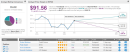
Plant-based meat innovator Beyond Meat (BYND) has been one of Wall Street’s biggest standouts of 2020, with shares skyrocketing over 100%, thanks to strong retail figures.Beyond’s increasing presence on consumers’ shopping lists has caught the eye of Credit Suisse analyst Robert Moskow, who is singing a different tune after new data was published.“Contrary to our initial view, Beyond may emerge as a net beneficiary of the pandemic in the near-term due to strong demand in retail channel (48% of sales) and in the long-term due to rising consumer interest in healthier foods,” Moskow said.According to a Hunter consumer survey, since the pandemic’s onset, the percentage of people tucking into healthier food has grown by 20%. Evidently, more people are becoming aware of the benefits of a healthy lifestyle, particularly as it pertains to the body’s ability to combat illness.Moskow believes that after the pandemic’s demise, the trend will have a direct...
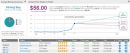
Anyone following the market in 2020 will be aware of the massive gains made by biotechs fighting the coronavirus. For companies in search of a vaccine or treatment, valuations have soared dramatically, as investors have piled in on the hope one can bring a viable solution to market.Among those making headlines, vaccine specialist Novavax (NVAX) has earned its place as one of 2020’s star performers. Based on a 1,658% year-to-date increase, there’s no doubt regarding its success.Yet, Cantor analyst Charles Duncan argues there are more gains on the way. In fact, the 5-star analyst has just increased his price target for the vaccine player by almost 100%.In addition to reiterating an Overweight rating, the price target moves from $45 to $88. There’s upside of "only" 25%, should Duncan’s target be met over the next 12 months. (To watch Duncan’s track record, click here)Novavax is one of the companies developing an experimental...
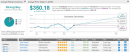
(Bloomberg) -- T-Mobile US Inc. priced its shares at $103 apiece in a $20 billion-plus deal that will let co-owner SoftBank Group Corp. offload a stake in the wireless carrier, according to people familiar with situation.The mobile-phone company, controlled by Germany’s Deutsche Telekom AG, laid out plans for the stock sale on Monday, but hadn’t yet set a price for the shares. Nearly 200 million shares are changing hands as part of the complex transaction.SoftBank agreed to pay T-Mobile $300 million as part of the transaction and will cover all fees and expenses related to the deal. The company became a co-owner of T-Mobile with Deutsche Telekom after the carrier took over Sprint Corp. earlier this year in a $26.5 billion merger.At $103, the shares are selling at a nearly 4% discount to T-Mobile’s $107.16 closing price on Tuesday. They have gained 37% this year.The deal, along with SoftBank plan to...
The late, great, Neil Peart wrote, in Tom Sawyer, “He knows changes aren’t permanent, but change is.” His words are an apt description of our modern world, an ever-changing landscape of pending tech. Right now, the shiny new change is 5G.Even the coronavirus couldn’t fully derail the coming build-out of the new 5G networks. It only delayed it. China and Korea are leading the world right now in bringing 5G networks online, with the US expanding its own new systems and Europe lagging behind. In the US, most urban areas have at least partial 5G connectivity online, and the major service providers are working to connect those centers.For investors, the key here will be finding companies that are primed to gain as 5G expands. It’s tempting to invest directly in the service providers; AT&T, Verizon, and T-Mobile/Sprint, the three largest wireless providers, are all heavily invested in 5G networks. But they...