California’s Zero Emissions Vehicle Dreams

California’s Zero Emissions Vehicle Dreams

<img width="150" src="http://www.automotive-fleet.com/fc_images/articles/m-zev-1.jpg" border="0" alt="

California's Air Resources Board says zero-emissions technology is already available for delivery vehicles such as package vans and medium-duty trucks. Photo: First Priority GreenFleet/EVI

">

California's Air Resources Board says zero-emissions technology is already available for delivery vehicles such as package vans and medium-duty trucks. Photo: First Priority GreenFleet/EVI

">

With the 2010 Environmental Protection Agency emissions regulations behind, and the trucking industry currently gearing up to integrate the first phase of new greenhouse gas emissions regulations going into effect in January, fleet managers may have thought they'd heard the last from the California Air Resources Board for a while.

But CARB is back with a new slate of initiatives designed to explore zero-emission vehicle technology. At the moment, these proposals are focused on evaluating the current state of ZEV technology, exploring the potential for increasing the effectiveness and efficiency of these technologies in the future, as well as looking at other, non-vehicle means of further improving air quality in California. While there are currently no laws or regulations associated with this new CARB effort, industry experts fear that they may soon lead to all-new environmental mandates that specifically target diesel-powered trucks and will make it much more difficult — and expensive — to move freight in the Golden State.

Many fleets find virtually any proposal emanating from CARB difficult to swallow.

The agency itself enjoys a special status among the state's agencies, according to Mike Tunnell, director, energy and environmental affairs for the American Trucking Associations, who notes that the agency is made up of political appointees who take their marching orders directly from the governor's office.

“California is a lot different than most parts of the country,” Tunnell explains. “For starters, Gov. Jerry Brown is determined to reduce petroleum use in the state. And every state-wide office in California is held by a Democrat. So the agency definitely gets a serious push to regulate vehicle emissions from the executive office right on down the line to the legislature to ...Read the rest of this story

Climbing the Data Mountain

<img width="150" src="http://www.automotive-fleet.com/fc_images/articles/m-rolf-lockwood-10-3.jpg" border="0" alt="

Rolf Lockwood

" >

Rolf Lockwood

" width="185" height="245">

Managing data is utterly essential to the successful maintenance of a truck fleet in 2016. That's a given. But knowing it is one thing – doing it is quite another.

That was the issue tackled by a panel discussion I put together and moderated at the inaugural Canadian Fleet Maintenance Summit in Toronto recently. In a session entitled “The Electronics Revolution and Trucking of the Future,” panelists spoke of ways that data can help address challenges. And the benefits of all that retrievable information aren't limited to big outfits.

“Small fleets can behave as big ones if they embrace the tools that the dealers and the OEM have today,” said Skip Yeakel, principal engineer and government/industry/academia link at Volvo Trucks. He referred to his company's Uptime Center and the way it diagnoses issues remotely as an example. It's there for everyone.

Even though larger fleets have more resources to explore raw data, smaller operations can still look at single reports or receive alerts, added Larry Jordan, vice president of product management at Zonar Systems in California. These are the details that can help avoid breakdowns and delays.

“In a perfect world, I'd like to see a truck tell me what's wrong with it,” said Kirk Altrichter, vice president fleet services for Ohio's Kenan Advantage Group and former chairman of the American Trucking Associations' Technology & Maintenance Council.

The biggest challenge is sifting through the reams of available data to find hidden info nuggets, he said. Gathering the data can be a problem, and there can certainly be too much of a good thing. Altrichter learned that the hard way after once asking to be alerted about any monitored fault codes.

“We ended up turning it off quite quickly,” he said. The goal instead is distinguishing between the codes that require immediate ...Read the rest of this story
FTR: Mixed forecast for truck and trailer production

Production projected to trend down for 2017, though recoveries expected for both segments by 2018.

Class 8, medium-duty, and trailer production rates are all expected to be knocked lower this year and next, according to analysis issued by research firm FTR during its annual transportation conference in Indianapolis this week.

However, by 2018, production rates for all of them are expected to start recovering, the firm's experts said.

read more

...Read the rest of this story

Twist & Lock Speeds Up Wheel Cover Installation

RealWheels Corporation's new line of Twist & Lock Aero Covers is designed to streamline the installation and removal of the cover.

The Twist & Lock mounting system features a large-diameter, spring-loaded top plate that provides quick and secure cover mounting. The engineering team at RealWheels has developed a bracket design to work on all trucks and trailers that have dual or wide-base wheels.

RealWheels stainless steel covers are now redesigned for the Twist & Lock Bracket. The cover is also available in clear polycarbonate and black ABS.

RealWheels' covers are engineered to reduce drag by closing off the deep well cavity of the wheel with Smartway testing showing a fuel cost savings of up to 2%.

Follow @HDTrucking on Twitter

...Read the rest of this story

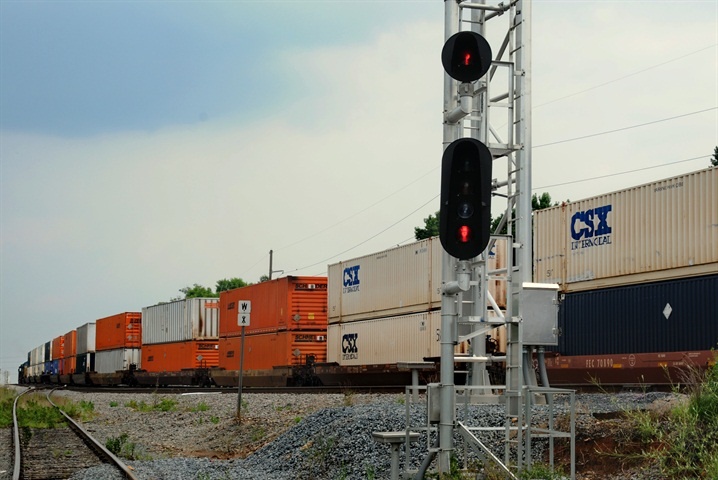
Intermodal Volume Unexpectedly Weak in July

FTR's Intermodal Competitive Index fell more than three points from June to a reading of 0.6 in July, a large drop that nearly brought the ICI into negative territory.

Any reading below zero indicates a less-than-ideal environment for intermodal, while readings above zero are relatively favorable.

Intermodal volume was unexpectedly weak across the board in July with ISO container movements trailing behind import trends. Domestic intermodal was also anemic, according to FTR. Lower diesel prices were a factor in the decline in intermodal volume.

“Intermodal definitely is traversing a rough patch at the moment, with issues on both the international and domestic sides of the house,” said Larry Gross, partner at FTR and author of Intermodal Update. “Nevertheless, there is reason to believe that July's numbers may have somewhat overstated the problem, since July 2016 had two fewer working days than July 2015 – a 9% difference.”

FTR expects to see a modest rebound into positive territory for the rest of the year, with a significant improvement waiting until 2017 as capacity tightens as a result of the ELD Mandate.

The ICI was designed to build on FTR's Trucking Conditions Index and Shippers Condition Index, which take the temperature of other important aspects of the trucking industry. The ICI combines different factors, including relative rates versus truck, industry capacity versus demand, fuel prices and intermodal service levels.

Figures above 0 indicate favorable conditions for intermodal to compete with trucking. Figures above 10 show extremely favorable conditions that result in substantial truck and intermodal conversion. Negative numbers indicate less aggressive modal share gains for intermodal and potentially reduced share.

Related: For-Hire Freight Movements Hit New Record High Level

Follow @HDTrucking on Twitter

...Read the rest of this story