DOT Proposes V2V Rule for Cars; Could One for Trucks Be Far Behind?

DOT Proposes V2V Rule for Cars; Could One for Trucks Be Far Behind?

<img width="150" src="http://www.automotive-fleet.com/fc_images/news/m-dotv2vconnectedvehicles-2.jpg" border="0" alt="

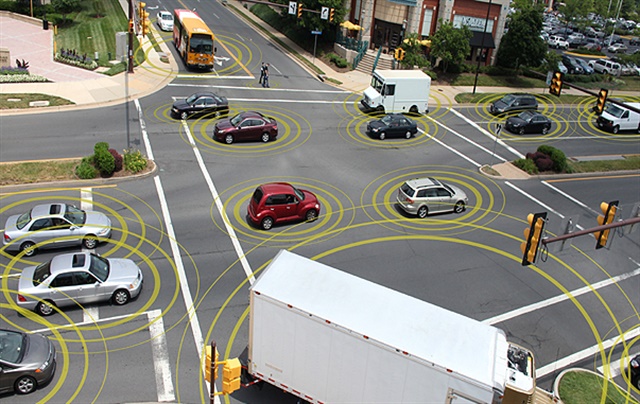
Artist rendering of connected vehicles on the road Image: U.S. Department of Transportation

">

Artist rendering of connected vehicles on the road Image: U.S. Department of Transportation

">

While the National Highway Traffic Safety Commission issued a proposed rule on Dec. 13 aimed at getting vehicle-to-vehicle (V2V) communication technology on all new light-duty vehicles, NHTSA Communications Director Bryan Thomas confirmed for HDT that there is “no [similar] rulemaking as of yet” in the works for commercial vehicles.

Thomas noted that “research is ongoing and we see great potential” in V2V technology for medium- and heavy-duty trucks and buses as well. Per a NHTSA fact sheet on the light-duty proposal, the agency is “working with industry” on continuing research “to adapt the technology for these vehicles.”

V2V is a companion technology for autonomously driven vehicles, including platooned trucks that are electronically linked while operating on the road.

At an October news briefing, Chris Spear, president and CEO of the American Trucking Associations, said that the lobby was determined to make sure trucking has “a seat at the table” along with the automotive industry when policies are developed to allow and further vehicle automation.

“The technology is here and will grow rapidly,” Spear said on the show floor of ATA's Management Conference & Exposition. “Suppliers are already creating connected and automated technology.” But he added that trucking is “a different animal than the car side,” so ATA is aiming to ensure the industry's voice is heard as federal policymaking develops.

Spear then pointed out that the first federal guidelines for the testing and deployment of autonomous vehicles, released by the Department of Transportation in September, were developed with almost no input from the trucking industry.

Asked on Dec. 13 to review the current landscape for a V2V commercial-vehicle rulemaking, ATA Executive Vice President of Advocacy Bill Sullivan told HDT that a lot has changed since Spear spoke out less than ...Read the rest of this story

DOT advances deployment of connected vehicle technology

Proposed rule would mandate vehicle-to-vehicle (V2V) communication on light vehicles, allowing cars to “talk” to each other to avoid crashes

Citing an “enormous potential” to reduce crashes on U.S. roadways, the U.S. Dept. of Transportation issued a proposed rule that would advance the deployment of connected vehicle technologies throughout the U.S. light vehicle fleet.

read more

...Read the rest of this story
FMCSA Keeping Controlled Substance Random Testing Rate

The Federal Motor Carrier Safety Administration has announced that the controlled substances random testing rate for regulated motor carriers will remain at 25% for 2017.

In 2016, FMCSA lowered the minimum annual drug testing rate from 50% to 25% following three straight years (2011, 2012, 2013) of drug testing data that indicated that the positive rate for controlled substances was less than 1%. Federal regulations allow the agency to lower testing rates when positive rates are under 1% for two consecutive years.

“We will continue to monitor the data closely, and should the positive rate for drug use rise above the 1% threshold in the upcoming 2015 survey, the national random testing rate requirement will be immediately increased to 50%,” said Scott Darling, FMCSA administrator.

FMCSA's Drug and Alcohol Testing Survey measures the percentage of CDL drivers who test positive for drugs and/or alcohol as a result of random and non-random testing. In 2014, FCMSA required carriers to randomly test 50% of their CDL drivers for drugs and 10% for alcohol.

According to the survey, for random drug and alcohol testing conducted in 2014 (the most recent data available):

The estimated positive usage rate for drugs in 2014 was 0.9%. For 2012 and 2013, the estimated positive usage rate for drugs was estimated to be 0.6% and 0.7%, respectively.The estimated violation rate for alcohol usage (the percentage of drivers with a blood alcohol content (BAC) of 0.04 or higher) in 2014 was 0.08%. For 2012 and 2013, the alcohol usage violation rates were 0.03% and 0.09%, respectively.

“For the safety of everyone traveling on our highways and roads, no driver should ever get behind the wheel under the influence of drugs or alcohol,” said Darling. “Commercial motor vehicle companies must comply with the crucial safety responsibility of conducting rigorous drug and alcohol testing programs ...Read the rest of this story

Caruma Offers Video Telematics for Commercial Vehilces

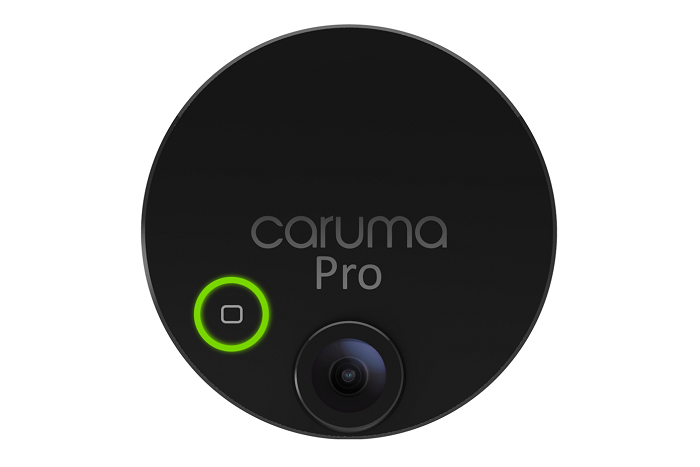
The Caruma Cam Pro is a video-based safety system designed to sense and alert drivers to dangers or distractions to help avoid accidents.

It uses two cameras to provide video from inside the vehicle and the vehicle's environment, detecting and recording events such as texting while driving, drowsiness, obstructions in the vehicle's path, lane departure, and unsafe following distance.

Defined events will trigger the system to provide real-time feedback to drivers. The video and data are then sent to Caruma's cloud where it is analyzed and processed into visual data and statistical information. The information provides fleet managers with a more complete, context-rich picture that can help improve driver behavior and safety.

Caruma Cam Pro combines computer vision, artificial intelligence, and sensor fusion into an open, connected car platform to provide Advanced Driver Assistance System and Driver Monitoring System capabilities. Through a partnership with inthinc Technology Solutions, the video analytics are integrated inthinc's telematics solution to bring the features to a wide range of commercial vehicle applications.

"The top concerns for commercial fleet managers are safety and cost containment," said Todd Follmer, CEO of inthinc Technology Solutions. "Our relationship with Caruma gives us access to the latest artificial intelligent vision technology and significantly boosts our current market-leading technology. This will only further our ability to safeguard drivers and maximize vehicle efficiencies."

Follow @HDTrucking on Twitter

...Read the rest of this story