<img width="150" src="http://www.automotive-fleet.com/fc_images/articles/m-powertrain-1-2.jpg" border="0" alt="
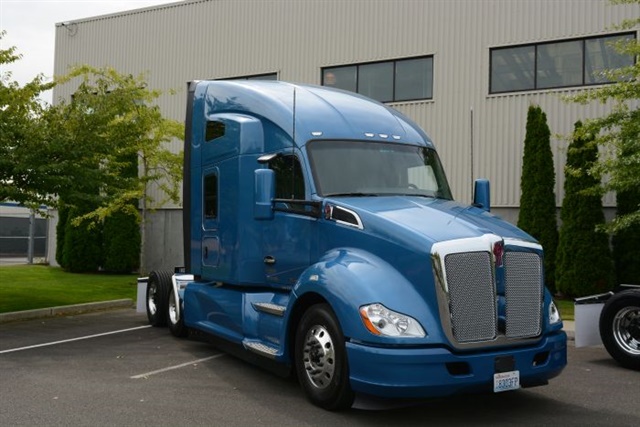
The test truck was a 2017 Kenworth T680 with a 76-inch high-roof sleeper. Photos: Jim Park
">
The test truck was a 2017 Kenworth T680 with a 76-inch high-roof sleeper. Photos: Jim Park
">Paccar, parent company of both Kenworth and Peterbilt, recently announced its updated engine lineup for 2017 and a new proprietary drive axle that takes the standard position in both data books. The axle represents another step toward a fully vertically integrated powertrain, though it still lacks a homegrown transmission.
I had a chance to drive a couple of trucks at Kenworth's Research and Development center in Renton, Washington, prior to the official launch of these upgrades at the American Trucking Associations' Management Conference and Exposition in Las Vegas on Oct. 2.
The truck I drove was a 2017 Kenworth T680 with a 76-inch high-roof sleeper. It was equipped with the new 40,000-pound Paccar drive axles (2.67:1 ratio) and a 2017 MX-13 engine rated at 455 hp and 1,650 lb-ft (not the new top-of-the-line rating of 510 hp and 1,850 lb-ft.)
Kenworth's chief engineer, Kevin Baney, explained that the 2017 engine uses two different variable geometry turbochargers, one for ratings below 485 hp and another for higher-powered engines, so this truck would have the one for engines rated below 485 hp. However, 455/1,850 is a popular rating for linehaul operators, so a good choice for a test drive that represents a typical fleet spec.
The automated manual transmission was an Eaton FAO-16810S-EP3 10-speed optimized for the MX-13 engine with a 0.79:1 overdrive. That rear axle/transmission combination gave us an engine cruise speed of 1,000 rpm at 57 mph in 10th gear – just 100 rpm above peak torque with the 2017 calibrations.
The route provided a good mix of two-lane and Interstate highway, with a few hills thrown in so we could check out the pulling power of the engine. Baney told us prior to the drive that peak torque on