Diesel Prices Fall after a Month of Increases

Diesel Prices Fall after a Month of Increases

<img width="150" src="http://www.automotive-fleet.com/fc_images/news/m-diesel-prices-27-2.jpg" border="0" alt="

Source: EIA

" >

Source: EIA

" width="250" height="341">

The price of diesel fuel in the U.S. fell last week, breaking a month-long string of increases, according to the latest numbers from the Energy Department.

The average price of on-highway diesel fuel dropped 1.5 cents, settling to $2.564 per gallon at the pump. The price is still 46.5 cents more expensive than it was in the same week of 2016.

Prices were down in all major regions of the U.S. with the largest drop coming to the West Coast at 3.1 cents. The smallest change occurred in the Rocky Mountain region with a 0.8-cent drop.

Gasoline prices were also down last week, falling 1.8 cents to $2.323 per gallon at the pump. The price of gasoline is 36.2 cents more expensive than it was in the same week a year ago.

Prices varied by region with the largest decrease in prices hitting the Midwest at 5 cents per gallon. The area with the largest increase was the West Coast where prices jumped 1.9 cents for the week.

Crude oil prices for the past week have been down as increases in U.S. oil production are offsetting any production decreases agreed to by OPEC, according to a MarketWatch report. Prices fell to their lowest point of the year so far, as a global supply glut continues to hold down the oil market.

Related: Prepare Your Fleet Now for Higher Fuel Prices Later

Follow @HDTrucking on Twitter

...Read the rest of this story

Truck-Lite Partners with NanoMech on Corrosion Resistant Products

Truck-Lite announced an exclusive partnership with nanotechnology company NanoMech Industries to produce a line of corrosion- and oxidation-resistant products.

Through the long-term partnership with NanoMech, Truck-Lite will offer a new Nano line of products designed to provide resistance to electrical malfunction, corrosion and oxidation for the medium- and heavy-duty trucking industries.

“Truck-Lite understands that the desire of the fleet is to find products that can last the life of the vehicle, and Truck-Lite's new Nano product family moves us a giant step closer to achieving that goal,” said Brad Van Riper, senior vice president and chief technology officer of Truck-Lite.

The basis for this technology is NanoMech's nGlide platform of nano-engineered formulations that resist corrosion, provide barriers to moisture, and offer dielectric protection, water washout resistance, and friction reduction.

“Nanoengineered materials provide unique material behavior, clinging to even the smoothest surfaces with a long-lasting electrical protective coating at the nanoscale,” said Ajay P. Malshe, NanoMech founder and CTO. “No other product can protect electrical interfaces to the nano-level like this technology; it stands up to the most extreme and harshest operating conditions and is perfect for the widest range of electric connections and interfaces, including LED lighting, batteries, harnesses, and many more.”

Related: Truck-Lite's RoadReady Trailer Telematics System [Video]

Follow @HDTrucking on Twitter

...Read the rest of this story
5 Trends in FMCSA Compliance Reviews

<img width="150" src="http://www.automotive-fleet.com/fc_images/articles/m-dupre-driver-inspection-jamieorillion-018-1.jpeg" border="0" alt="

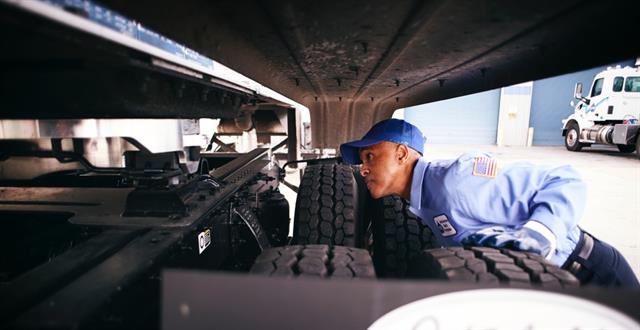
Now that fleets only have to have a driver vehicle inspection report form when a defect has occurred, it is much easier for safety auditors to see when drivers are and aren't doing their job when it comes to pre-trips. Photo: Dupre Logistics

">

Now that fleets only have to have a driver vehicle inspection report form when a defect has occurred, it is much easier for safety auditors to see when drivers are and aren't doing their job when it comes to pre-trips. Photo: Dupre Logistics

">

The Federal Motor Carrier Safety Administration recently announced that it is changing the process for performing compliance reviews. Specifically, they referred to expanded interviews with members within the organization. (The truth is, they have been doing this for a while, but recently completed all the training and therefore made the announcement.)

Does this mean that compliance reviews have changed?

Yes and no. FMCSA had already trended from full reviews to focused reviews. However, there are some things that we are seeing with regards to compliance reviews. From our perspective, here are five items that we are seeing:

1. Many reviews are occurring due to complaints vs. CSA scores.

Historically, complaints were considered a lower priority by FMCSA in deciding to perform a compliance review. CSA scores that had BASICs on alert were the primary determining factor for a compliance review. However, recently the complaints are taking a much higher priority than previously. There are a couple of reasons for this:

Related: 3 Things to be Ready for in a Coercion Complaint Investigation

• Driver coercion rule: In 2016, the DOT released the final rule regarding driver coercion (different from harassment, which is tied to electronic logging devices). As a result, most complaints are being treated as if coercion has occurred. Thus, the visit. What is interesting is that little if any cases of coercion are being found. What is happening is during the investigation the inspector is “discovering” issues that now result in a compliance review being performed while the inspector is at that location. We have seen several carriers ...Read the rest of this story

Analysis: Mining for Economic Gold

<img width="150" src="http://www.automotive-fleet.com/fc_images/articles/m-march-graph-1.jpg" border="0" alt="

This graph shows the comparative performance of the Transportation Services Index (blue) and Gross Domestic Product (orange) over each quarter in the last three years.

">

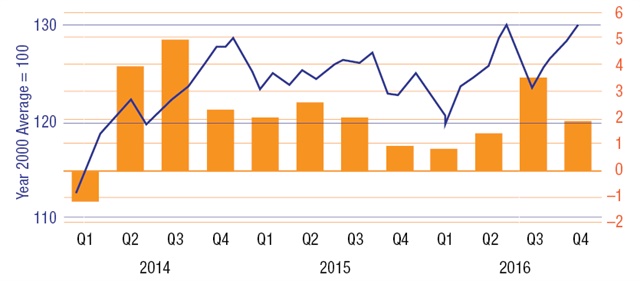
This graph shows the comparative performance of the Transportation Services Index (blue) and Gross Domestic Product (orange) over each quarter in the last three years.

">

Every once in a while, there are largely overlooked nuggets of information buried in the numbers about the economy and trucking that could be the most telling sign of where conditions are headed. Some of those recent nuggets make it almost impossible not to reasonably hope this year will be a good one.

U.S. for-hire freight movements – including trucking, rail, inland waterways, pipelines and air freight – were up during the fourth quarter of 2016 by 2.9% from the third quarter. It's a perfect example of how the health of trucking is tied to the overall economy.

This increase in for-hire shipments took place as growth in the gross domestic product – the widest measure of economic activity – slowed to an annual rate of 1.9% in the fourth quarter, down from 3.5% in the third quarter, in the first of three estimates released in late January.

The fourth quarter slowdown in GDP growth was preceded by a third-quarter dip in for-hire freight movement of 1.1%. And the rapid GDP growth in the third quarter was preceded by a strong increase in freight movements in the second quarter of 2.5%.

In other words, when for-hire freight movements are good in any given quarter, like they were in the final quarter of 2016, it helps set the stage for improvements in the GDP for the following quarter, in this case, the first quarter of 2017.

When you consider the fourth-quarter increase in for-hire freight movements was the largest gain since the final quarter of 2011, that's reason for optimism for first-quarter GDP numbers.

Going the other way, however, GDP doesn't always tell the whole story when it comes to trucking. Take imports. ...Read the rest of this story