Diesel Prices Fall; U.S. Crude Production Slipped in 2016

Diesel Prices Fall; U.S. Crude Production Slipped in 2016

<img width="150" src="http://www.automotive-fleet.com/fc_images/news/m-diesel-prices-m20-1.jpg" border="0" alt="

Source: EIA

" >

Source: EIA

" width="250" height="343">

The price of diesel fuel continued to slide last week, as the latest numbers from the Energy Department show a two-week trend of falling fuel prices.

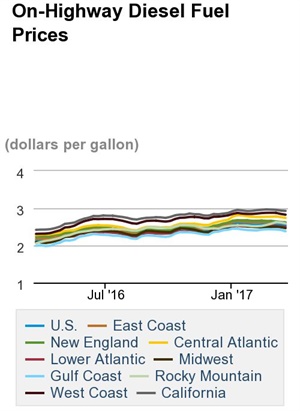
The average price of on-highway diesel fuel fell by 2.5 cents last week, falling to $2.539 per gallon at the pump. The price is now 42 cents more expensive on average than it was in same week of 2016.

Prices were down in all regions of the country with the largest decrease coming to the Gulf Coast, dropping 3.9 cents. The smallest decline was found in New England where prices were down only 0.6 cents for the week.

The average price of regular gasoline was also down last week, though only by 0.2 cents per gallon with the price hovering around $2.32. The price is now 31.4 cents higher than it was in the same week a year ago.

Prices varied up and down by region, with the largest drop occurring in the Lower Atlantic at 0.8 cents per gallon. The largest increase in prices was a similarly small 0.4 cents per gallon in the Midwest.

Meanwhile, the Energy Department released its analysis of U.S. crude oil production in 2016, which showed that it decreased for the year overall. Despite the decline, U.S. crude production began to rise in the last few months of 2016 and total production for the year was still above the five-year average.

Crude prices increased from a low of around $31 per barrel to $52 per barrel, which was the largest annual increase in prices since 2009. An agreement by OPEC countries to cut production and increase prices had the intended effect on the crude oil market at the end of the year, but it has since remained flat in 2017, largely thansk to increased U.S. oil production.

Related: Trucking Engineers ...Read the rest of this story

Commentary: See the Light…and Everything Else

<img width="150" src="http://www.automotive-fleet.com/fc_images/articles/m-rolf-lockwood-16-1.jpg" border="0" alt="

Rolf Lockwood

" >

Rolf Lockwood

" width="185" height="244">

I've long held that North American headlight standards are inherently dangerous because they don't allow brightness levels to match the speeds we travel. It's just too easy to “over-drive” your lights, meaning you can't see as far ahead as it will take you to stop. You just don't see obstructions until it's too late.

Until a decade or two ago, my own first step upon getting a new car was to make lighting upgrades, but modern cars – and most trucks – make that very difficult and/or expensive. There's nowhere to find a solid mount for driving lamps when “bumpers” are plastic, for example, but long-range driving lamps are essential for me. Nowadays I'm outta luck.

Headlamp bulb changes are easier, and I usually go the H4 halogen route. I have yet to try the LED option, but I recently asked for comment on it and several folks chimed in.

“Poor headlights have been a sore point for me for all of the 37 years I have been in this industry as a fleet manager,” one fellow told me. “Unbelievable how you buy new trucks and the headlights do not give adequate lighting.

“About 15 years ago I discovered all the common lights in semis can be upgraded from the standard halogen to ‘high-output' halogen for about $5 per light. They made a huge difference.

“In the last two years I've purchased 15 Navistar trucks with LED headlights. Wow! Every driver had positive comments. Less fatigue and less eye strain. The lights are brighter and there's much more side visibility. I'm also testing LED replacement lights on my older units.

“The bad news is it now costs about $500-600 a truck for the sealed beams. I think this cost will go down as demand increases. The only negative on LED lights is that ...Read the rest of this story

FR8Star Calculator Determines Heavy-Haul Costs on State Level

<img width="150" src="http://www.automotive-fleet.com/fc_images/news/m-fr8star-1.jpg" border="0" alt="

Image via FR8 Revolution

">

Image via FR8 Revolution

">

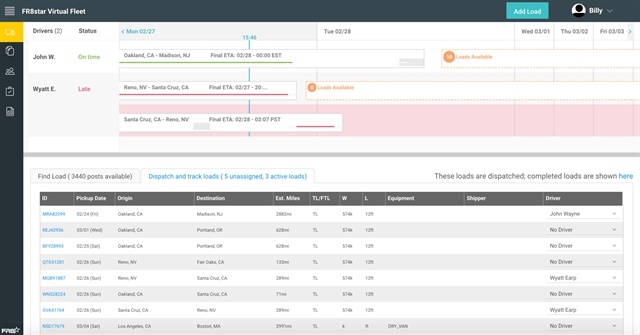
FR8 Revolution has developed the free, cloud-based FR8Star Heavy Haul Marketplace, which offers a rate calculator for oversize/overweight loads.

FR8Star's calculator tool provides oversize/overweight shippers with pricing estimates that include up-to-date state permit fees and escort costs, optimal shipping routes, and the ability to request quotes directly from the carrier.

The calculator tool also allows carriers bidding for loads to submit competitive and educated quotes.

Each state has its own permit structure, which can cause confusion when estimating costs and selecting optimal routes. Some states base fees on size and weight while others charge flat fees. FR8Star's calculator factors in these various fees to recommend the best routes and improve quote accuracy.

FR8Star is not a broker; instead it facilitates a transaction for a transparent fee. The shipper and the carrier must complete their contract directly with one another using the platform. Oversize/overweight freight can be defined by weight, length, width or height.

“We have a problem today because many brokers don't have a good sense of what the price of overweight or oversize freight should be, so they underbid to carrier or overprice to shippers. This causes inefficiency in matching shippers to qualified carriers and hurts carrier's profit margins,” said Matthew Kropp, FR8 Revolution CEO. “Ultimately, shippers end up paying too much while carriers struggle to turn a profit. It's time to level the playing field for carriers and shippers.”

For more information, click here.

Related: FR8 Revolution Launches Online Freight Management Platform

Follow @HDTrucking on Twitter

...Read the rest of this story

Two Peterbilt Models Eligible for HVIP

<img width="150" src="http://www.automotive-fleet.com/fc_images/news/m-peterbilt-model-320-1.jpg" border="0" alt="

Image of Peterbilt Model 320 courtesy of Peterbilt. 

">

Image of Peterbilt Model 320 courtesy of Peterbilt. 

">

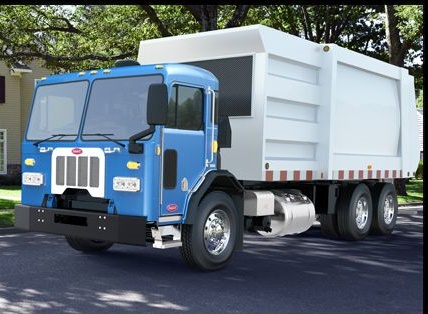
The Peterbilt Models 520 and 320 equipped with the Cummins ISL-G Near Zero engine have been granted eligibility for the California Air Resources Board (CARB) Hybrid and Zero-Emission Truck and Bus Voucher Incentive Project (HVIP).

HVIP encourages the commercialization of low-emitting hybrid and zero-emissions trucks by assisting fleets with the purchase of these advanced technology vehicles.

Peterbilt introduced the Cummins Westport ISL-G Near Zero NOx emissions natural gas engine in the Models 520 and 320 in 2016. NOx emissions in the ISL-G Near Zero engine emissions are 90 percent lower than the current EPA limit.

The ISL-G Near Zero engine emissions are 90% lower than the current EPA NOx limit through the introduction of a three-way catalyst in the after-treatment, advanced engine calibration, and a closed crankcase ventilation system (CCV).

The new engine's performance and efficiency match the current ISL-G, with 320 hp and 1,000 lb.-ft. torque available. Industries that will most benefit from the new option include linehaul, vocational, and refuse applications.

Similar to the currently available ISL-G engine, the ISL-G Near Zero operates on 100% natural gas, which can be carried on the vehicle as either compressed natural gas (CNG) or liquefied natural gas (LNG). The new ISL-G Near Zero can also run on renewable natural gas (RNG).

“Peterbilt is a leader in environmentally-friendly solutions for the industry,” said Robert Woodall, Peterbilt Assistant General Manager of Sales and Marketing. “Eligibility for the HVIP voucher will allow customers participating in the program to benefit from the advanced technology and rugged durability of the Models 520 and 320."

The 2018 Models 520 and 320 will be eligible for HVIP when spec'd with the Cummins ISL-G Near Zero engine with a GVWR of 33,000 – 80,000 pounds.

For more details, visit https://www.californiahvip.org/.

Related: Peterbilt Reduces Weight on Updated Model ...Read the rest of this story

NTEA Names New President

<img width="150" src="http://www.automotive-fleet.com/fc_images/news/m-keane-1.jpg" border="0" alt="

KEANE

">

Adam Keane, executive vice-president of Allied Body Works Inc. (Seattle, Washington), was installed as the 53rd president of NTEA – The Association for the Work Truck Industry. He accepted this position from immediate past president Matt Wilson, chairman & CEO of Switch-N-Go, AmeriDeck & Bucks Divisions of Deist Industries Inc., at the President's Breakfast & NTEA Annual Meeting held in conjunction with The Work Truck Show® 2017.

“The work truck industry has so much to offer, and I'm extremely proud to be involved,” said Adam. “Taking on the role of 53rd Association president, I'm eager to work with the membership to keep NTEA's mission moving forward.”

KEANE

">

Keane joined Allied Body Works in 2004. In his current position, he bridges the gap between sales and operations, utilizing industry resources to find solutions when technical issues arise. He manages strategic alliances with business partners to expand company product lines. In 2010, he became chairman of NTEA's Young Executives Network (now known as Generation Next).

Founded in 1947 as a small garage shop, Allied Body Works is a fourth-generation, family-owned business, offering everything from light-duty truck accessories and cargo van interiors to medium- and heavy-duty flatbeds, dump bodies, contractor bodies, service bodies, van bodies, cranes, electrical and lighting accessories, liftgates, and more.

Also serving on the Board's Executive Committee are: First Vice President Todd Davis, vice president of Phenix Enterprises Inc. (Pomona, California); Second Vice President Ross L. Haith Jr., president of Masterack – A Division of Leggett & Platt Inc. (Decatur, Georgia); Third Vice President/Treasurer Peter Miller, executive vice president business development at Pro-Tech Industries (La Vergne, Tennessee); and Secretary Steve Carey, executive director of NTEA (Farmington Hills, Michigan).

Distributor Trustees are:

Paul Kokalis, president of Fontaine Modification (Charlotte, North Carolina)Shane McDermott, president of Carco Industries Inc. (Tualatin, Oregon)David Miller, president/CEO of American Midwest Fleet Solutions (Lone ...Read the rest of this story