Electric Trucks Charge Ahead

Electric Trucks Charge Ahead

<img width="150" src="http://www.automotive-fleet.com/fc_images/blogs/m-scania-2.jpg" border="0" alt="

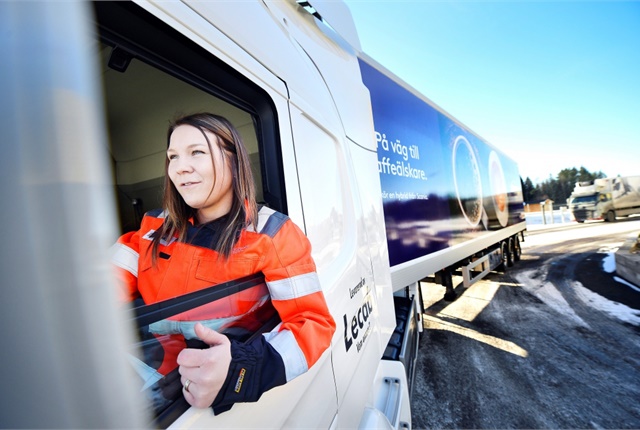
Ann-Christin Landman drives a Scania P320 in Karlstad, Sweden, powered by a hydrotreated vegetable oil-electric drivetrain. Photo: Värmlands Folkblad

" >

Ann-Christin Landman drives a Scania P320 in Karlstad, Sweden, powered by a hydrotreated vegetable oil-electric drivetrain. Photo: Värmlands Folkblad

" width="640" height="430">Autonomous trucks get all the headlines these days. But it's starting to look like your first, hands-on exposure to all the new transportation technology emerging today may just be with an electric truck.

Oh, stop it. I can hear you grumbling from here in Alabama – and I've got Tom Petty & The Heartbreakers cranked up loud, too.

If you're yearning for a simpler time in terms of truck tech, I understand. Until very recently, “cutting edge” was a term not usually associated with American truck fleets. Even in the hallowed halls at the ATA's Technology & Maintenance Council, discussions on emerging technology are often sprinkled with a great deal of caution or even outright pessimism. The technology in and of itself is often fascinating, they'll often tell you. But they get paid to make sure freight gets delivered and trucks keep running. And new technology can get really scary fast then you're looking at things through that particular prism.

Still, the trend lines are plainly visible. There is a lot happening in the electric commercial vehicle space right now, with Nikola to Tesla here in the States, Mitsubishi Fuso and Hino in Japan, Mercedes-Benz in Germany and now Scania in Sweden. Electric trucks are already here in small numbers. And it seems reasonable to assume that electric trucks will be attempting to break into the American market in an even bigger way soon – quite possibly within the next couple of years.

Scania is the other Swedish truck manufacturer over in Europe: The one that doesn't sell trucks over here in the States. But its approach to electric trucks is interesting because the company is not limiting itself to ...Read the rest of this story

Consumer Group Crafts New Terminology to Describe Emerging Autonomous Vehicle Technology

<img width="150" src="http://www.automotive-fleet.com/fc_images/news/m-self-driving-car.jpg" border="0" alt="

Damiler Trucks North America and Waymo were among 34 leading automotive companies that helped CTA craft new terminology for emerging automotive technology. Photo: Tom Z

" >

Damiler Trucks North America and Waymo were among 34 leading automotive companies that helped CTA craft new terminology for emerging automotive technology. Photo: Tom Z

" width="640" height="430">With new technology comes new terminology to describe it. Which is why the Consumer Technology Association, working in conjunction with leading automotive and trucking industry OEMs and suppliers, has worked out a “common lexicon” to help consumers better understand the terms and concepts associated with autonomous vehicle technologies.

CTA bills itself an organization that promotes innovation and advocates for the entrepreneurs, technologists and innovators who mold the future of the consumer technology industry.

Among the terms and concepts addressed within the self-driving vehicle terminology:

Advanced Driver Assistance Systems (ADAS) or "Driver-Assist" Features: Onboard systems developed to improve safety and performance. Examples include lane departure warnings, collision avoidance, adaptive cruise control and automatic brakingAftermarket Technology: Technology services or upgrades provided by companies – unaffiliated with the vehicle manufacturer – added after a vehicle is sold or leasedDriving Environment Sensing: The capturing, processing and analysis of sensor data (e.g., cameras, radar, LIDAR) to enhance or replace what a human driver sensesMaaS (Mobility as a Service): The shift from personal ownership of transportation modes to shared transportation systems and servicesPlatooning: Synchronous operation of multiple vehicles, often in a convoy, to increase road capacity and efficiencySelf-Driving Vehicle: A vehicle capable of fully modeling its environment through an array of sensors, maps and other data in order to navigate and drive without human interactionUrban Mobility: The ability for people in urban and suburban areas to access all modes and forms of transportation.

"From developments in advanced driver-assist systems to new mobility models, we are together leading a revolution in the transportation sector," said Jessica Nigro, manager, Outreach and Innovation Policy at Daimler and chair of CTA's Self-Driving Working Group. "A common lexicon will ...Read the rest of this story

2018 Ford F-650, F-750 Receive Performance and Service Updates

<img width="150" src="http://www.automotive-fleet.com/fc_images/news/m-ford-650-1.jpg" border="0" alt="

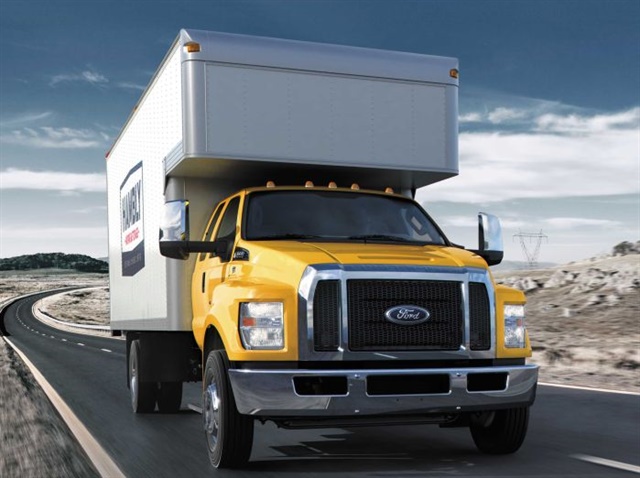
2018 F-650 Photos: Ford

">

2018 F-650 Photos: Ford

">

Ford has updated its Class 6-7 F-650 and F-750 trucks for 2018, adding performance and service improvements to its medium-duty trucks.

Electronic stability control and traction control brakes are now standard on all 2018 F-650 and F-750 tractor models. The system will initially be optional on certain F7-50 diesel air-braked straight trucks with high-center-of-gravity-body upfits.

Also added for 2018 is a new high-output 240 –amp alternator available with the 6.8-liter V10 gasoline powertrain. Designed for applications with high electrical demands, the higher output alternator eliminates the need to specify a second alternator or generator to power auxiliary lights and equipment.

An optional automatic regeneration inhibitor is being offered on 2018 diesel trucks to give the operator more control over when the engine goes into regeneration to clean the diesel particulate filter. The soot trap regeneration inhibitor allows a driver to postpone incinerating trapped soot until it can be performed in a preferred location.

To limit potential hood wear and front-end collision damage, a new bumper extension moves the full-width front bumper from flush with the grille to three inches in front of it. It provides added protection to the grille and components behind it in the case of a collision, potentially reducing repair costs.

Lastly, the oil and transmission fluid dipstick has been relocated on 2018 F-650 and F-750 diesel trucks to be accessible from ground level. The transmission fluid dipstick has also been moved to provide ground-level access on gasoline models.

“The success of our new truck design is apparent from our growing sales and the fact it was named Medium-Duty Truck of the Year by Work Truck magazine in 2016 and 2017,” said Kevin Koester, Ford medium-duty truck and Super Duty fleet marketing manager. “For 2018, we're enhancing this successful platform based on customer feedback.”

Related: Ford F-650/F-750 Repeats Medium-Duty ...Read the rest of this story

New Refrigerants on the Way

<img width="150" src="http://www.automotive-fleet.com/fc_images/articles/m-refrigerants-1.jpg" border="0" alt="

Photos: Carrier Transicold

">

Photos: Carrier Transicold

">

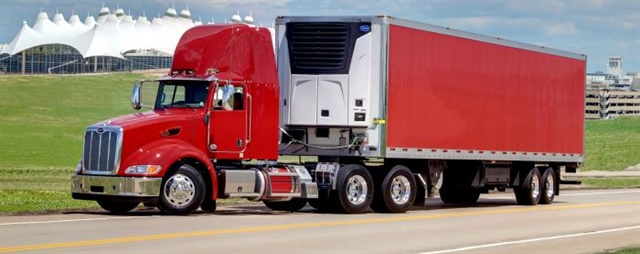
Transport refrigeration units as we know them will not disappear anytime soon, but alternatives to traditional refrigerants and diesel power systems are already proving themselves in some markets around the world.

Manufacturers are using low-impact, natural refrigerants such as carbon dioxide and liquid nitrogen to reduce the units' global warming potential in the event of an unplanned release. And diesel power systems are being scaled to accommodate hybrid-electric systems with high-efficiency heaters and direct-drive compressors that are said to be more energy-efficient and quieter.

Last October, at a conference in Kigali, Rwanda, negotiators from nearly 200 nations hammered out a legally binding agreement that will scale back the worldwide use of hydrofluorocarbons, or HFCs, used in air conditioners and refrigeration units. The agreement is structured so the world's hottest countries and emerging economies will come into compliance over a longer period with less stringent reductions. The richest countries, including the United States and the European Union, will freeze production and consumption of HFCs by 2018, eventually reducing them to about 15% of 2012 levels by 2036, the New York Times reports.

The Kigali agreement will put pressure on TRU producers to develop new refrigerants as well as the blowing agents used in the foam insulation between the trailer's inner and outer walls.

Some manufacturers are already pursuing alternatives to the current HFC refrigerant, R-404A, including carbon dioxide.

If it sounds counterproductive to use CO2 as a refrigerant while trying to reduce the output of greenhouse gases, consider that CO2 has a “global warming potential” of 1, while R-404A's GWP is 3,922 (both Thermo King and Carrier in Europe offer R-452A as an alternative with a GWP of 2,140 – 45% lower than R-404A. R-452A is awaiting approval from the U.S. Environmental Protection Agency for use in the United States.)

Last April in Great Britain, ...Read the rest of this story

Stoughton to Install TopKit Aero System on Rental, Lease Trailers

<img width="150" src="http://www.automotive-fleet.com/fc_images/news/m-smart-truck-top-kit-1.jpg" border="0" alt="

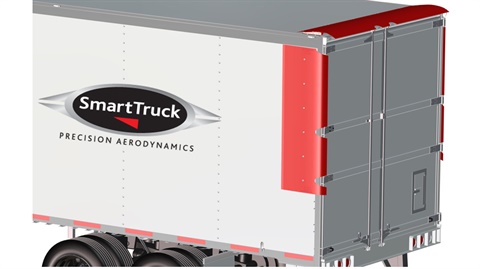
The TopKit Aero System Image: SmartTruck

" >

The TopKit Aero System Image: SmartTruck

" width="350" height="196">

Stoughton Lease will begin installation of SmartTruck TopKit Aero Systems on across its entire fleet of rental and lease trailers.

The SmartTruck TopKit Aero System is an aerodynamic solution for trailers that doesn't require undertrailer components like side skirts. Named an HDT Top 20 Product, the TopKit is available for dry vans and reefers with swing or rollup doors as well as straight trucks.

"We chose SmartTruck as our aero partner for several important reasons," said Paul Sulewski, Stoughton lease president. "The proven durability of the TopKit, combined with SmartTruck's limited lifetime warranty, gives our customers peace of mind that they will not have to contend with costly damages at the end of the rental or lease period."

The TopKit Aero System drag-reduction solution is EPA SmartWay Verified and California Air Resources Board compliant.

Related: 7 Ways Aerodynamics Save Fuel

Follow @HDTrucking on Twitter

...Read the rest of this story

Nexiq First-Link App with Blue-Link Provides Mobile Diagnostics

Nexiq Technologies has announced the Nexiq First-Link mobile app and Blue-Link connected device, designed to give drivers and technicians access to diagnostic and vehicle information for vehicles and equipment.

The First-Link app is designed to be used with Nexiq's Blue-Link device to monitor a vehicle's health status to improve uptime. Drivers can use the app to understand the cause of vehicle fault codes so that they can seek assistance if needed.

In the shop, service technicians can use the information gathered by the app to aid in vehicle service and repair. The First-Link app is available on the App Store or Google Play.

The Nexiq Blue-Link Mini is a mobile vehicle interface that plugs into a vehicle's diagnostic connector and communicates with a vehicle to provide wireless access to basic diagnostic information. It comes with an integrated 9-pin Deutsch connector.

Follow @HDTrucking on Twitter

...Read the rest of this story