Commentary: Get Ready for Trucking’s Future

Commentary: Get Ready for Trucking’s Future

<img width="150" src="http://www.automotive-fleet.com/fc_images/articles/m-jack-roberts-1-1.jpg" border="0" alt="

Jack Roberts

" >

Jack Roberts

" width="185" height="246">

A century ago, the fledgling U.S. trucking industry helped transform an agrarian nation into an industrial one. And as the industry gained strength, it played a major role in transforming that newly industrialized country into the world's first superpower. Today, it seems, trucking is preparing to transform the globe — with technology leading the way.

Historically, our industry has never been much of a technology leader. For one thing, trucking took most of its technology cues from the passenger car side of the automotive industry. For another thing, technology costs money. And trucking has always been (and always will be) about efficiently moving freight at the lowest possible cost. Historically, most fleets weren't willing to pay for new tech unless there was a proven cost benefit. And let's face it — for most of the past century, it was possible to largely ignore new technology and still remain competitive. Simply run older equipment and let somebody else work all the bugs out of the new stuff, the thinking went.

Those days, however, are gone.

For one thing, government regulations are forcing fleets to adopt new technology, whether it's electronic logging devices or emissions reduction equipment.

And then there are the original equipment manufacturers. Once, vehicle makers designed trucks for specific counties and regions, with North America arguably the most important market on the planet. Today, OEMs are global companies with vehicle platforms and powertrains that must perform well anywhere on the planet and meet a host of emissions and safety regulations. It's never been cheap to design a truck and put it into production, and today it's more expensive than ever. So, increasingly, American trucks are being built with advanced technologies sourced from all over. So if truck fleets in China or Europe want platooning and autonomous and automated technologies, it ...Read the rest of this story

Chicago Clean Cities Fleets Reduces 230K Tons of GHG

<img width="150" src="http://www.automotive-fleet.com/fc_images/news/m-bimbo-1-2.jpg" border="0" alt="

Companies such as Alpha Baking Company (pictured), Ozinga and Testa Produce are examples of companies in the Chicago area that are using clean-burning alternative fuels. Photo courtesy of CACC.

">

Companies such as Alpha Baking Company (pictured), Ozinga and Testa Produce are examples of companies in the Chicago area that are using clean-burning alternative fuels. Photo courtesy of CACC.

">

The Chicago Area Clean Cities Coalition (CACC) and its member fleets helped to displace nearly 26.5 million gasoline-gallon equivalents of petroleum in 2016, and reduce greenhouse-gas emissions by 230,000 tons.

This represents a 6% increase in fuel savings over 2015 and a 2% improvement in emissions, according to the coalition. Members of CACC include commercial fleets and municipalities throughout the six-county Chicago area.

The coalition made the announcement at the annual Green Drives Conference and Expo. Companies such as UPS, Ozinga, and Alpha Baking Company were featured at the conference as examples of companies that are using cleaner vehicles.

The United States is 92% dependent on petroleum to transport our goods, services and people, according to the U.S. Department of Energy. In 2016, the U.S. imported 3.6 billion barrels of oil at a cost of $154 billion, according to the CACC.

CACC's membership is comprised of federal, state and local governments, auto manufacturers, dealerships, fuel suppliers, conversion companies, environmental organizations, corporations, small businesses, and individuals.

Related: Clean Cities Honors Alt-Fuel Fleets

Follow @HDTrucking on Twitter

...Read the rest of this story

DTNA president does not expect NAFTA, GHG changes

Roger Nielson meets with media for first time since promotion

MADRAS, OR. The new president and CEO of Daimler Trucks North America (DTNA) said he does not expect any shake-up of the North American Free Trade Agreement (NAFTA) or Phase 2 greenhouse gas rules.

“I don't anticipate any major changes in the NAFTA trade agreement,” said Roger Nielson. “I think there are so many other discussions going on with government priorities right now, I don't see this as coming up to the top of the list.”

read more

...Read the rest of this story

Duke Energy to Test Truck Stop Electrification

<img width="150" src="http://www.automotive-fleet.com/fc_images/news/m-2011-02-10-idleairlot1-1.jpg" border="0" alt="

Photo courtesy of Duke Energy

">

Photo courtesy of Duke Energy

">

A Duke Energy project to fund electrification at a N.C. truck stop is projected to save 25,000 gallons of truck fuel annually.

Big Boy's Truck Stop in the town of Kenly, will soon have 24 truck electrification stations where drivers can pay to plug in their vehicles, offering an economical way to provide electricity and hot or cold air during overnight stays that avoids idling engines. Additionally, four plugs will provide standby power for refrigerated cargo to avoid the need to run diesel compressors.

On an annual basis, the project should reduce carbon dioxide emissions by almost 500 tons and reduce volatile organic compounds (VOCs) and nitrogen oxide (NOx) emissions by more than 2 tons. Duke Energy will spend $300,000 on the project.

The plug-in stations are expected to be installed before this summer. IdleAir, located in Knoxville, Tenn., will be tasked with installation and maintenance.

"This is a common sense feature that helps truckers get a cleaner, quieter night's sleep, while saving them money and sparing the community from significant emissions," said Mark Miller, president of Convoy Solutions, provider of IdleAir, in a statement.

Each year, more than 2 billion gallons of diesel are wasted by overnight idling, according to a study from Argonne National Labs. Idling is the industry standard method of providing overnight comfort to the more than 1 million drivers who sleep in their trucks each night.

This program was part of a 2015 settlement between Duke Energy and the U.S. Environmental Protection Agency and environmental groups after allegations that some of the utility's coal-fired plants violated the Clean Air Act.

Related: Duke Energy to Install 200 EV Charging Stations

Follow @HDTrucking on Twitter

...Read the rest of this story

Finnish Companies to Develop Hybrid Powertrain For Heavy Trucks

<img width="150" src="http://www.automotive-fleet.com/fc_images/news/m-koeajosisu-1.jpg" border="0" alt="

The new hybrid-electric drive system is designed to work with Mercedes Benz diesel-powered Sisu Polar truck models. Photo: Sisu Auto

">

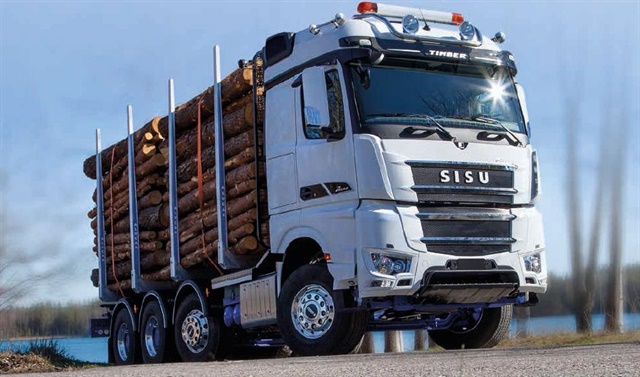
The new hybrid-electric drive system is designed to work with Mercedes Benz diesel-powered Sisu Polar truck models. Photo: Sisu Auto

">

Finland is not usually associated with being a hotbed of cutting-edge automotive design. But Europe is leading the charge on a wide range of new transportation technologies. And the Finns are certainly playing their part in the tech wave sweeping trucking today.

Two Finnish companies, Visedo and Sisu Auto, have developed a hybrid-electric parallel power system they say produces 1,140 horsepower and 3,687 lbs.-ft. of torque. Sisu is a Finnish truck manufacturer. Visedo is a Finnish manufacturer of heavy-duty hybrid and electric power systems that says it developed the electric power system as a proof-of-concept vehicle that integrates the parallel hybrid drive, which draws power from both an electric motor and a diesel engine connected via the same axle.

The new system is designed to work with Mercedes-Benz OM471 and OM473 diesel engines. Diesel is the primary power source, with the electric motor kicking in during peak energy demand periods. When needed, auxiliary power is delivered by a Visedo permanent-magnet electric motor, while the mechanical powertrain is controlled by a Visedo inverter and PowerBoost DC-DC converter. Excess energy is stored in a supercapacitor, with the entire system designed to be customizable with simple vehicle integration to meet customer needs. Additional power and charging requirements are initiated automatically, allowing the driver to concentrate on the road, although an in-cab monitor allows the driver to track of the system's functions and take control of it if needed.

The main objective for Visedo and Sisu was to reduce fuel consumption and reduce emissions, the companies said. However, they noted that the hybrid system also boosts available low-speed torque for heavy duty trucks and also enables the use of the vehicle with or without electric power since the drive ...Read the rest of this story