Peterbilt Adds Three Model 520 Configurations, Shows Electric Demo

Peterbilt Adds Three Model 520 Configurations, Shows Electric Demo

<img width="150" src="http://www.automotive-fleet.com/fc_images/news/m-model-520-new-1.jpg" border="0" alt="

Photo by Peterbilt.

">

Photo by Peterbilt.

">

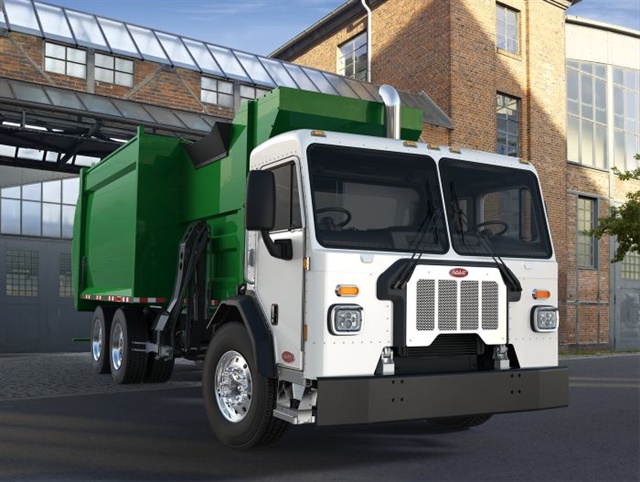
Peterbilt showcased three new cab configurations of the Model 520 refuse truck and displayed a battery-electric demo version at the WasteExpo 2017 show in New Orleans.

The Model 520 is now available in left-hand drive, right-hand drive, and right-hand stand-up drive configurations in addition to the existing dual-seated drive configuration. The left-hand drive and right-hand drive configurations are designed to provide a comfortable seated driving position for the driver while in transit or performing curbside operations. The redesigned right-hand stand-up cab configuration provides easier ingress and egress for those applications that require the driver to exit the cab multiple times during a route.

"The Model 520 provides superior performance and adaptability in rugged operating environments," said Robert Woodall, Peterbilt's assistant general manager of sales and marketing. "Offering a full lineup of cab configurations for the refuse market further enhances the versatility of this vocational vehicle for our customers' operations."

The company also displayed a Model 520 refuse truck demo with an advanced battery-electric drive system. The truck was equipped with a Transpower ElecTruck drive system that uses high-power electric motors, inverters, and batteries to power commercial trucks weighing as much as 80,000 pounds.

"Peterbilt is working closely with its partners to explore the capabilities and performance of battery-electric drive systems," said Scott Newhouse, Peterbilt chief engineer. "Customers in urban environments and applications such as drayage and refuse collection stand to benefit from the zero-emissions performance of these advanced vehicles."

The version of the drive system developed for the Model 20 uses a 300-kilowatt-hour battery pack that offers up to 65 miles or eight hours of operation on a single charge during urban refuse use. The ElecTruck system also features a 70-kilowatt onboard battery charger that can fully charge the truck's lithium-ion battery pack in two to four hours.

"Powering heavy refuse trucks is a logical ...Read the rest of this story

Peterbilt Offers Wide Steer Axle for Vocational Lineup

<img width="150" src="http://www.automotive-fleet.com/fc_images/news/m-paccar-vocational-axle-1.jpg" border="0" alt="

Photo courtesy of Peterbilt.

">

Photo courtesy of Peterbilt.

">

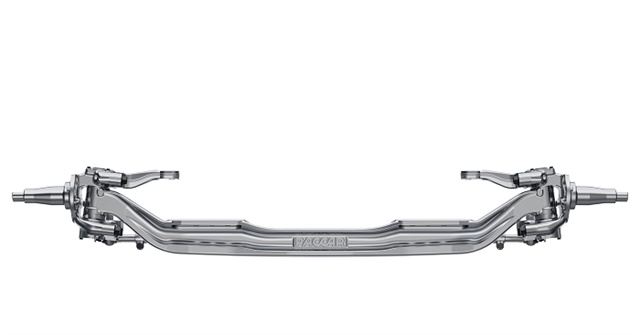
Peterbilt has added the Paccar 20,000- and 22,000-pound wide track steer axles to its vocational lineup, the company announced.

The Paccar steer axle is available with standard front air disc brakes or optional drum brakes as well as suspensions and wheel end options to meet the application's demands. Both axle ratings will be available in the Models 567, 520, 389, 367, 365, 348, and the 389 glider kit.

The axle is designed for demanding vocational applications such as refuse, construction, and heavy-haul, featuring a combination of weight savings technology and durability. The steer axle is also designed for high maneuverability with a turn angle of up to 50 degrees.

“The Paccar steer axle continues the Peterbilt tradition of innovative and rugged products for our vocational customers who demand maximum performance,” says Kyle Quinn, Peterbilt general manager and Paccar senior vice president. “Whether we're reducing total cost of ownership or increasing payload, Peterbilt is continuously looking for solutions that maximize our customers' uptime and profitability.”

Related: Peterbilt Adds Three Model 520 Configurations, Shows Electric Demo

Follow @HDTrucking on Twitter

...Read the rest of this story

Seven GOP Lawmakers Signal Support for Hair-Testing Truckers

<img width="150" src="http://www.automotive-fleet.com/fc_images/news/m-fmcsadriverstalking-6-1.jpg" border="0" alt="

Photo: FMCSA

">

Photo: FMCSA

">

A letter signed by seven Republican Congressmen lays out their unequivocal support of a petition calling for the Federal Motor Carrier Safety Administration to allow hair testing in lieu of urinalysis to meet federal drug testing requirements for commercial truck driver applicants.

The signatories, Reps. Rick Crawford; R-AR; Don Bacon, R-NE; Bruce Westerman, R-AR; Martha McSally, R-AZ.; Steve Womack, R-AR; French Hill, R-Ark., and Ted Budd, R-NC, contend that hair testing is “more reliable in identifying lifestyle drug users than the less expensive and less reliable urine exam” and that carriers should be allowed to use only hair testing, rather than being required to test applicants also via urinalysis.

The lawmakers acknowledged that the FAST Act highway bill had directed the Department of Health and Human Services to issue hair-testing guidelines, a necessary first step before FMCSA can start a rulemaking to allow hair testing alone, but they pointed out that bringing about such a rule “could take years.”

That's why the signers said they “support the granting of this petition for exemption as soon as HHS issues its guidelines and before the FMCSA subsequently completes its rulemaking process that will formally adopt HHS guidelines that these petitioners are already meeting.”

“Hair testing is more reliable (albeit twice as expensive in identifying lifestyle drug users than the less expensive and less reliable urine exam,” the Congressmen stated, reiterating the argument made by the more than a dozen major national truckload carriers that have petitioned FMCSA to allow it in place of urinalysis.

“The companies will be able to utilize a single hair test, rather than requiring a job applicant to complete two tests-- a hair test and a urine exam,” the lawmakers added. Conducting only one test, the more reliable hair exam, will enable the carriers to collectively save more than $2 ...Read the rest of this story

NATSO Urges Congress to Extend Biodiesel Tax Credit

The National Association of Truck Stop Owners has urged Congress to extend the biodiesel blenders' tax credit, saying that it is crucial to the competitiveness of the alternative fuel in the current market.

In letters to members of the Senate Finance Committee and the House Ways and Means Committee, NATSO asked lawmakers not to change the existing biodiesel tax credit structure, arguing that it helps displace traditional petroleum-based fuel with a cleaner-burning substitute.

NATSO was joined by the Advanced Biofuels Association, American Trucking Associations, National Association of Convenience Stores, Petroleum Marketers Association of America, and the Society of Independent Gasoline Marketers of America in signing the letter.

According to NATSO, there has been an effort in states that produce biodiesel fuel to change the current biodiesel blenders tax credit into a tax credit for producers. NATSO argued that because price competitiveness is so critical to the viability of biodiesel sales, taking away the tax credit would hurt sellers.

"A producer's credit would be horrible for consumers and the American economy," said Lisa Mullings, NATSO president and CEO. “The biodiesel tax credit helps fuel retailers to sell biodiesel at a cost that is competitive with traditional diesel. If the price of biodiesel is no longer on par with the price of diesel, consumers won't be inclined to buy it."

Since 20015, there has been a $1 per gallon biodiesel blenders' tax credit that has helped fuel retailers sell biodiesel at a competitive price. The tax credit expired at the end of 2016.

By converting the tax credit from a blenders' credit to a producers' credit, biodiesel prices would increase and consumer interest would decline, hindering the government's efforts to advance cleaner-burning fuels, according to NATSO.

While NATSO is urging Congress to extend the tax credit, it is also advocating for phasing it out over time and allowing the ...Read the rest of this story