Gorilla Safety Adds OBD-II Integration to ELD Solution

Gorilla Safety Adds OBD-II Integration to ELD Solution

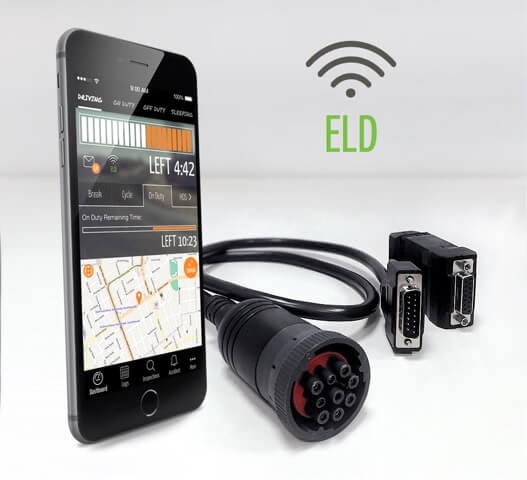
Gorilla Safety announced On-Board Diagnostic integration with its Electronic Logging Device, providing customers with OBD-II connections.

With the OBD-II functionality, Gorilla Safety's app is now compatible with light and medium-duty trucks. The OBD-II connection, combined with oil well waiting time exemption allows Gorilla safety to offer, among others, oilfield services companies a solution to prepare for and manage the impending ELD mandate. The solution is also aimed at utility companies, contractors, and other smaller operations.

OBD systems are in most cars and light trucks, providing complete engine control and monitoring of parts of the chassis, body and accessory devices, as well as the diagnostic control network of the car.

Adding OBD-II integration to Gorilla Safety's Electronic Logging Devices will add compatibility with these light and medium duty vehicles that use the OBDII standard.

Gorilla Safety's advanced fleet and safety technology platform can be accessed from iOS and Android smartphones and tablets as well as from an online dashboard. Using the solution, users can record hours of service, manage accidents through real-time reporting, perform electronic daily vehicle inspection reports, track fuel use and vehicle maintenance and other fleet management activities.

“Rather than only providing a solution for heavy and extra-heavy trucks, buses and equipment, Gorilla Safety is now able to help blended fleets,” said Mark Walton, Gorilla Safety co-founder and chief executive officer. “By providing the OBD-II solution in conjunction with a fleet's ability to choose between short- and long-haul, Gorilla Safety is now amongst the most flexible ELD provider on the market, well positioned to help any fleet, regardless of operational requirements.”

Follow @HDTrucking on Twitter

...Read the rest of this story


Uber Fires Self-Driving Head at Center of Legal Battle

<img width="150" src="http://www.automotive-fleet.com/fc_images/news/m-levandowski1-1-2.jpg" border="0" alt="

Anthony Levandowski speaking about the future of self-driving trucks at last year's ATA Managment Conference & Exhibition. Photo: Evan Lockridge

">

Anthony Levandowski speaking about the future of self-driving trucks at last year's ATA Managment Conference & Exhibition. Photo: Evan Lockridge

">

In the latest fallout from the legal battle between Waymo and Uber, Anthony Levandowski, who headed Uber's self-driving technology group, has been fired, according to a report in the New York Times.

Levandowski was the central figure in Waymo's lawsuit against Uber. That suit alleged that former Google employee Levandowski stole trade secrets related to lidar (light detection and ranging) technology when he left to form the self-driving truck company, Otto. Waymo is a subsidiary of Alphabet, the parent company of Google.

Otto was later purchased by Uber and Levandowski was made the head of its Advanced Technologies Group.

This latest news came out of an internal memo at Uber. The writing was on the wall for Levandowski who stepped down from his position as the self-driving head at Uber as a result of the lawsuit. This was seen as a preemptive move to protect Uber's self-driving technology development by diminishing Levandowski's role.

Levandowski pled the Fifth Amendment to avoid self-incrimination when a court ordered him to testify in the case. Uber was unable to convince Levandowski to cooperate with the investigation.

Waymo filed the suit against Uber in February of this year, accusing Levandowski of stealing files from a computer about Google's proprietary lidar radar sensors – a key component of self-driving technology. Lidar allows a vehicle to see the road and objects around it. However, a judge recently decided that Waymo was overreaching in its claims that the stolen information violated 120 patent claims.

In another related development, Uber quietly discontinued the Otto brand name, consolidating the company's activities under its Advanced Technologies Group.

Related: Uber Freight Launches for Owner-Operators, Small Fleets

...Read the rest of this story

DOT Formalizes Regulatory Reform Effort

<img width="150" src="http://www.automotive-fleet.com/fc_images/news/m-usflagwhitehouse-gov-1-2.jpg" border="0" alt="

Image: Whitehouse.gov

">

Image: Whitehouse.gov

">

The U.S. Department of Transportation announced on May 26 that Deputy Secretary Jeffrey Rosen will serve as DOT's Regulatory Reform Officer and chairman of the department's Regulatory Reform Task Force.

RRTF was formed earlier this year in accordance with President Trump's Executive Order 13777, which directs each federal agency to establish such a task force to make recommendations to alleviate unnecessary regulatory burdens.

According to DOT, Secretary of Transportation Elaine Chao has “directed the RRTF to consider ways to accomplish DOT's primary safety objectives in less burdensome ways and to further review ‘midnight rules' that were issued at the end of the last administration.”

DOT has provided no details as to which rules might fall under that description or even which subordinate agencies, such as the Federal Motor Carrier Safety Administration, might be home to such rules.

It should be noted that while the text of Executive Order 13777 indicates the president seeks reforms “regarding offsetting the number and cost of new regulations,” the directive also plainly states that, “Nothing in this order shall be construed to impair or otherwise affect: the authority granted by law to an executive department or agency…”

In other words, it would appear that the work of the Regulatory Reform Task Force is not to be directed at regulations that have been mandated by Act of Congress.

Asked to comment on the RRTF marching orders, Lane Kidd, managing director of the Alliance for Driver Safety & Security, a trucking-safety lobby backed by a group of major carriers, told HDT that he is “not aware of any so-called midnight rules that FMCSA adopted before the Trump administration took office.

“Congress required that all interstate trucks install electronic logging devices later this year and Congress also required the creation of the drug and alcohol clearinghouse and guidance regarding ...Read the rest of this story