UPS Inks Joint Venture with a Top Chinese Courier

UPS Inks Joint Venture with a Top Chinese Courier

<img width="150" src="http://www.automotive-fleet.com/fc_images/news/m-sfexpresschina-1.jpg" border="0" alt="

Photo: www.sf-express.com

">

Photo: www.sf-express.com

">

UPS has announced that it will join with one of the leading courier delivery services in China to develop and provide international delivery services initially from China to the U.S., but with expansion plans for other destinations.

The joint venture, subject to regulatory approval, between UPS and SF Holding, parent firm of Guangdong-based SF Express, will leverage the companies' netwroks and supply chain expertise, UPS said in a May 25 statement.

UPS called SF “a market leader in express delivery in China, with extensive China-wide network coverage, comprehensive service capabilities, and the highest brand recognition in the Chinese small package market.”

“This joint venture will support products that provide competitive benefits to our Chinese customers who trade or seek to trade internationally,” said Ross McCullough, President of UPS Asia Pacific. “Our combined efforts will result in new logistics products and services to simplify and accelerate B2B and B2C customers' cross-border trade.”

UPS said the joint offerings will combine the strengths of SF's extensive Chinese network with UPS's globally integrated network with coverage between more than 220 countries.

“China is leading the world in terms of e-commerce market size, growth, penetration, and mobile business usage,” said Alan Wong, SF group vice president. “Coupled with a rapidly growing and internet-savvy consumer base, it's imperative that SF and UPS collaborate to revolutionize the logistics sector.”

SF Express was established in 1993 and in 2012 it set up a U.S. service center in South San Francisco. It offers parcel delivery to all over Mainland China with more than 13,000 service points and approximately 15,000 operating vehicles. It also runs an air-cargo operation with 36 aircraft that provide service across China.

According to SF Express, it has been “aggressively expanding its worldwide express services” to where it now provides parcel delivery services in over 200 countries ...Read the rest of this story

Volvo: Class 8 outlook remains steady for 2017

OEM also believes a rebound in the long haul segment will occur by year's end.

WINSTON-SALEM, NC. Roughly five months into 2017, Volvo Trucks North America (VTNA) still thinks the North American Class 8 market will top 215,000 units for the year – truck production volume that is being driven in part by strong construction spending, which the OEM said is at its highest level since 2007.

read more

...Read the rest of this story

Rethinking the regional trucking market

Shifting freight patterns and driver demands may be positioning regional trucking for greater growth.

WINSTON-SALEM, NC. The main reason driving Volvo Trucks North America (VTNA) to introduce the new VNR family of trucks to replace its VNM model is a fairly simple one, according to Chris Stadler, the OEM's product marketing manager for regional haul: “The VNM is an aged truck; it was time for a refresh. We needed a more adaptable truck, too: one that can operate in the city and on the highway.”

read more

...Read the rest of this story

Senators Reintroduce Bipartisan Vehicle Technology Bill

<img width="150" src="http://www.automotive-fleet.com/fc_images/news/m-peloton-platoon-3-1.jpg" border="0" alt="

Photo: Peloton

">

Photo: Peloton

">

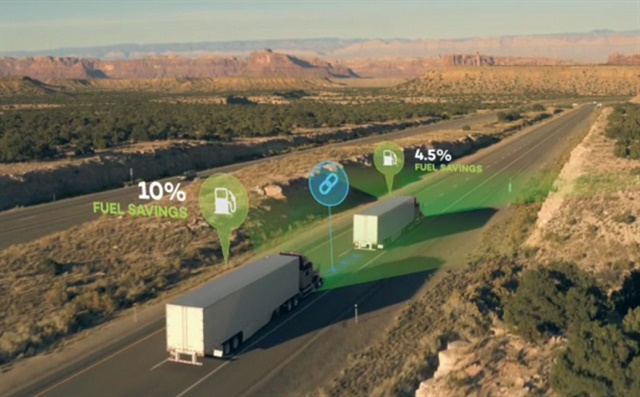
U.S. Senators Gary Peters (D-MI), Lamar Alexander (R-TN), and Debbie Stabenow (D-MI) have announced that they are reintroducing the Vehicle Innovation Act, which is aimed at encouraging investment, research, and development in clean vehicle and advanced safety technologies.

The authors of the bill argue that it could help Americans by increasing vehicle fuel efficiency and reducing our dependence on foreign oil. The three senators introduced similar legislation, the Energy Policy Modernization Act, in 2016, which was approved by the Senate. The House of Representatives then approved a version of that bill that included changes that were not in the Senate version. The changes between the two bills were never resolved so the legislation was never passed

The new Vehicle Innovation Act would strengthen and streamline the Department of Energy's Vehicle Technologies Office. The Vehicle Technologies Office promotes public-private partnerships to conduct technology-neutral research and development on a range of new technologies to improve fuel efficiency in light-, medium- and heavy-duty vehicles. The bill supports domestic research and development, growing the advanced manufacturing industry in the U.S., and reducing dependence on foreign oil.

“Michigan and the United States are leading the way in developing innovative technologies that will make the next generation of cars and trucks safer and more efficient than ever before,” said Sen. Peters. “This bipartisan bill will help ensure that American manufacturers remain internationally competitive by encouraging the development of cutting-edge clean vehicle technologies that improve fuel efficiency, save consumers money and help support American jobs.”

The legislation would authorize resources for the Vehicle Technology Office to encourage research, including $313.6 million in funding for fiscal-year 2018 with a 4% increase each year through 2022.

The money could be used to advance potential fuel –saving technologies such as vehicle-to-vehicle and vehicle-to-infrastructure communications, hybrids, engine downspeeding, power pack modeling and testing, advanced ...Read the rest of this story

IdleAir Not Letting Lower Diesel Prices Stop Idle Reduction Growth

<img width="150" src="http://www.automotive-fleet.com/fc_images/articles/m-idleairlot1-1.jpg" border="0" alt="

A partnership with Duke Energy is allowing a truck stop facility to be installed in Kenly, N.C. Photo courtesy Duke Energy.

">

A partnership with Duke Energy is allowing a truck stop facility to be installed in Kenly, N.C. Photo courtesy Duke Energy.

">

As temperatures heat up around the country, IdleAir is working to expand the number of fleets using its idle reduction technology to keep trucks cool and provide power for cab comforts.

IdleAir offers heat and air conditioning, power, TV, Internet and other services at truck stops, terminals and other locations to reduce overnight truck idling. But low fuel prices have made it harder for truck owners to justify the investment in idle reduction services and technologies, whether that be APUs or electrification.

When Convoy Solutions bought the defunct Idle Aire and resurrected it as IdleAir in 2010, diesel fuel was running about $3 a gallon retail. Last year it averaged about $2.30. If idling takes a gallon of fuel per hour, and the charge for Idle Air at truck stops is $2.19 per hour, that's not a lot of savings (although bundles are available that can get that cost down to as low as $1.75 per hour.)

“We've had to be more competitive on a price basis because diesel prices are 40% lower than they were in 2014,” IdleAir CEO Ethan Garber told HDT in an interview.

Last year, Idle Air said it was responding to the challenge of lower diesel prices by offering more value, locking in long-term electricity rates when possible, streamlining internal operations to reduce costs — and focusing more on building its facilities at fleets.

Fleets and IdleAir

IdleAir's traditional market is owner-operators at truckstops. But today, major fleets such as Covenant Transport and Western Express are tying IdleAir usage to their fuel cards on a seasonal basis, allowing them to turn on the access to the service only in the summer months, relying on more-efficient bunk heaters ...Read the rest of this story