Rethinking the regional trucking market

Rethinking the regional trucking market

Shifting freight patterns and driver demands may be positioning regional trucking for greater growth.

WINSTON-SALEM, NC. The main reason driving Volvo Trucks North America (VTNA) to introduce the new VNR family of trucks to replace its VNM model is a fairly simple one, according to Chris Stadler, the OEM's product marketing manager for regional haul: “The VNM is an aged truck; it was time for a refresh. We needed a more adaptable truck, too: one that can operate in the city and on the highway.”

read more

...Read the rest of this story

Senators Reintroduce Bipartisan Vehicle Technology Bill

<img width="150" src="http://www.automotive-fleet.com/fc_images/news/m-peloton-platoon-3-1.jpg" border="0" alt="

Photo: Peloton

">

Photo: Peloton

">

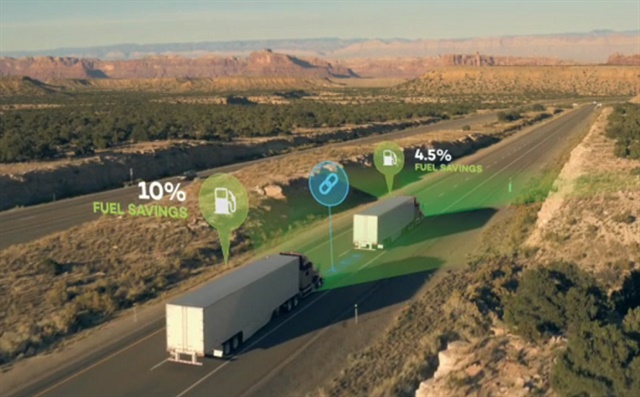
U.S. Senators Gary Peters (D-MI), Lamar Alexander (R-TN), and Debbie Stabenow (D-MI) have announced that they are reintroducing the Vehicle Innovation Act, which is aimed at encouraging investment, research, and development in clean vehicle and advanced safety technologies.

The authors of the bill argue that it could help Americans by increasing vehicle fuel efficiency and reducing our dependence on foreign oil. The three senators introduced similar legislation, the Energy Policy Modernization Act, in 2016, which was approved by the Senate. The House of Representatives then approved a version of that bill that included changes that were not in the Senate version. The changes between the two bills were never resolved so the legislation was never passed

The new Vehicle Innovation Act would strengthen and streamline the Department of Energy's Vehicle Technologies Office. The Vehicle Technologies Office promotes public-private partnerships to conduct technology-neutral research and development on a range of new technologies to improve fuel efficiency in light-, medium- and heavy-duty vehicles. The bill supports domestic research and development, growing the advanced manufacturing industry in the U.S., and reducing dependence on foreign oil.

“Michigan and the United States are leading the way in developing innovative technologies that will make the next generation of cars and trucks safer and more efficient than ever before,” said Sen. Peters. “This bipartisan bill will help ensure that American manufacturers remain internationally competitive by encouraging the development of cutting-edge clean vehicle technologies that improve fuel efficiency, save consumers money and help support American jobs.”

The legislation would authorize resources for the Vehicle Technology Office to encourage research, including $313.6 million in funding for fiscal-year 2018 with a 4% increase each year through 2022.

The money could be used to advance potential fuel –saving technologies such as vehicle-to-vehicle and vehicle-to-infrastructure communications, hybrids, engine downspeeding, power pack modeling and testing, advanced ...Read the rest of this story

IdleAir Not Letting Lower Diesel Prices Stop Idle Reduction Growth

<img width="150" src="http://www.automotive-fleet.com/fc_images/articles/m-idleairlot1-1.jpg" border="0" alt="

A partnership with Duke Energy is allowing a truck stop facility to be installed in Kenly, N.C. Photo courtesy Duke Energy.

">

A partnership with Duke Energy is allowing a truck stop facility to be installed in Kenly, N.C. Photo courtesy Duke Energy.

">

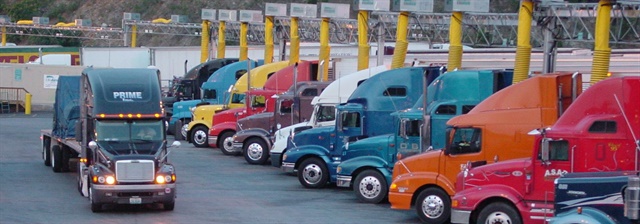
As temperatures heat up around the country, IdleAir is working to expand the number of fleets using its idle reduction technology to keep trucks cool and provide power for cab comforts.

IdleAir offers heat and air conditioning, power, TV, Internet and other services at truck stops, terminals and other locations to reduce overnight truck idling. But low fuel prices have made it harder for truck owners to justify the investment in idle reduction services and technologies, whether that be APUs or electrification.

When Convoy Solutions bought the defunct Idle Aire and resurrected it as IdleAir in 2010, diesel fuel was running about $3 a gallon retail. Last year it averaged about $2.30. If idling takes a gallon of fuel per hour, and the charge for Idle Air at truck stops is $2.19 per hour, that's not a lot of savings (although bundles are available that can get that cost down to as low as $1.75 per hour.)

“We've had to be more competitive on a price basis because diesel prices are 40% lower than they were in 2014,” IdleAir CEO Ethan Garber told HDT in an interview.

Last year, Idle Air said it was responding to the challenge of lower diesel prices by offering more value, locking in long-term electricity rates when possible, streamlining internal operations to reduce costs — and focusing more on building its facilities at fleets.

Fleets and IdleAir

IdleAir's traditional market is owner-operators at truckstops. But today, major fleets such as Covenant Transport and Western Express are tying IdleAir usage to their fuel cards on a seasonal basis, allowing them to turn on the access to the service only in the summer months, relying on more-efficient bunk heaters ...Read the rest of this story

13 agencies join CTA in bid to get border woes fixed

OTTAWA -- Members of the Canadian Trucking Alliance (CTA) and other members of the supply chain have experienced delays and other challenges bringing goods into Canada from the U.S. because of recurring Canada Border Service Agency (CBSA) system degradation issues. In response to the high frequency of these outages, CTA has invited a host of business associations on both sides of the border to join a coalition calling on federal cabinet ministers to deal with the growing problem by providing more funds to fix the system and increase CBSA's staffing budget. ...Read the rest of this story

Trailcon's Foss is one of Brampton's Top 40 Under 40

BRAMPTON—Trailcon Leasing's executive manager, national accounts, John S. Foss, is doing “amazing work in [his] respective job, company and out in the community” and because of that, he has been named one of Brampton, ON's Top 40 Under 40 by that city's Board of Trade. The Board initiated the event in the hopes of recognizing and mentoring and encouraging these individuals “to climb to greater heights.” ...Read the rest of this story

Report: Autonomous Trucks Could Kill Millions of Jobs by 2030

<img width="150" src="http://www.automotive-fleet.com/fc_images/news/m-driverless-trucks-report1-1.jpg" border="0" alt="

Photo via International Transport Forum report. 

">

Photo via International Transport Forum report. 

">

LEIPZIG, GERMANY— Autonomous trucking might solve the driver shortage problem, save money and reduce emissions, but the massive job losses and other problems caused by the shift over the next 13 years might well lead to serious social disruption. Regulating agencies, industry, and governments in North America and Europe should start planning for the change now.

That's the gist of a new broad-sweeping report released today by the European Automobile Manufacturers' Association (ACEA), the International Transport Workers' Federation and the International Road Transport Union (IRU), the road transport's industry's global body, in a project led by the International Transport Forum, a Paris-based intergovernmental organisation linked to the OECD.

Despite the ungainly title “Managing The Transition to Driverless Roadfreight Transport,” the extensive report doesn't pull punches. Autonomous trucks will lead to huge layoffs. And if regulating bodies don't start working together now to adopt driverless technology, chaos could ensue.

“Automated trucks could reduce the demand for drivers by 50-70% in the US and Europe by 2030, with up to 4.4 million of the projected 6.4 million professional trucking jobs becoming redundant, according to one scenario,” the report says.

Even if the rise of driverless truck dissuades newcomers from trucking, over two million drivers in the U.S. and Europe could be directly displaced, the report says.

The report has four main recommendations for stakeholders and regulators involved in the transportation industry:

Consider a temporary permit system to manage the speed of adoption;Set international standards, road rules and vehicle regulations for self-driving trucks;Continue pilot projects with driverless trucks to test vehicles, network technology, and communication protocols.

To download the entire report, click here.

Related: The Dark Side of Autonomous Tech Nobody Wants to Talk About

Follow @HDTrucking on Twitter
...Read the rest of this story