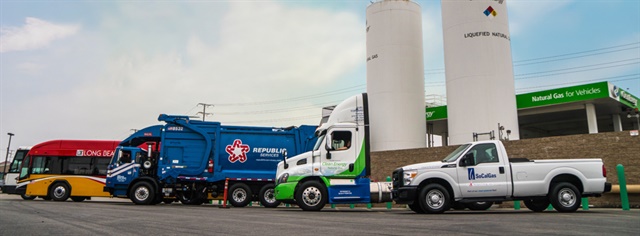
Natural Gas Road Rally Kicks Off In Long Beach

Natural Gas Road Rally Kicks Off In Long Beach

<img width="150" src="http://www.automotive-fleet.com/fc_images/news/m-ngv-rally-1.jpg" border="0" alt="

Photo: Clean Energy Fuels

">

Photo: Clean Energy Fuels

">

The Natural Gas Road Rally Across America has kicked off in Long Beach, Calif., sending several heavy-duty trucks and other vehicles powered by natural gas on a coast-to-coast road trip to Washington, D.C.

The event was attended by representatives from the California Natural Gas Vehicle Coalition, which is calling for the adoption of low nitrous oxide emission heavy-duty truck technology powered by renewable natural gas in the Clean Air Action Plan of the San Pedro Bay Ports.

The rally is a 4,825-mile cross country trip sponsored by NGVAmerica. It aims to demonstrate the benefits of clean trucks and cars fueled by natural gas. Many vehicles powered by natural gas will participate in the two-week trek across America, stopping at various locations such as Albuquerque, N.M., Tulsa, Okla., Salisbury, N.C., and Newport News, Va., among others. At each stop, advocates for natural gas vehicles will give educational demonstrations highlighting the importance of natural gas as a clean fueling source.

The Rally's spotlight on natural gas trucks is relevant to the Long Beach area where heavy-duty diesel trucks regularly haul goods from the ports of Los Angeles and Long Beach every day. Around 80% of the region's smog is estimated to come from the transportation sector, with the largest contributor of the pollution being heavy-duty trucks moving in and out of the ports complex, according to CNGVC. Replacing some of these vehicles with cleaner-burning natural gas trucks could have a significant impact on local air quality.

“NGVAmerica and its membership, including companies like Clean Energy and SoCalGas, believe that natural gas-fueled vehicles are the best and most immediate solution for eliminating the negative impacts of diesel and combatting climate change,” said Chad Lindholm, vice president of sales for Clean Energy and representative of NGVAmerica. “By putting on this rally, we hope to draw ...Read the rest of this story
Transponder-free scales clearance arrives in California

DALLAS, TX– Drivewyze has been awarded the contract to operate its Drivewyze PreClear weigh station bypass service in the state of California. The installation work, which includes integrating the Drivewyze service with existing weigh-in-motion scales, is now underway at all 37 locations where the state has chosen to operate bypass services. Drivewyze expects to be fully operational in the state within the next 60 days. ...Read the rest of this story

Last Legs for Long-Haul Trucking?

<img width="150" src="http://www.automotive-fleet.com/fc_images/news/m-vnr-2.jpg" border="0" alt="

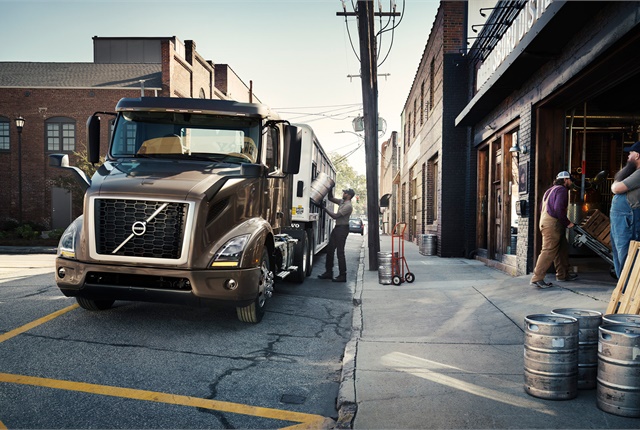
Magnus Koeck says a new industry emphasis on regional haul routes was a prime design driver for Volvo's new VNR tractor.

Photo: Volvo 

">

Magnus Koeck says a new industry emphasis on regional haul routes was a prime design driver for Volvo's new VNR tractor.

Photo: Volvo 

">

The long-haul model has been the dominant model for moving freight in North America for decades, but there are signs that could be changing, according to Magnus Koeck, vice president, marketing and brand management for Volvo Trucks North America.

The long-haul model for freight distribution developed organically after the Second World War in an age of cheap diesel fuel, a large driver pool, and infrastructure limitations at the time: The Panama Canal was not able to accommodate larger freighters and a new class of container ships. This placed an emphasis on East and West Coast ports, with corresponding long-haul truck routes becoming the norm.

A lot of the pieces that set the long-haul freight model in place have changed dramatically over the past several years, however. The size of the driver pool has not kept pace with the rise in freight volumes. Moreover, a new generation of potential drivers sees the isolation and long periods away from home associated with long-haul routes as a distinct negative.

At the same time, the widening of the Panama Canal (with a new, Chinese-funded canal across Nicaragua under construction now) has made it easier for larger container vessels to reach Gulf Coast ports.

Industry experts tracking these trends have predicted they could lead many truck fleets to adopt short-haul, regional, or super-regional routes, leveraging port expansions on the Gulf Coast to get drivers home sooner, while still maintaining increasingly important efficient freight deliveries.

While there is still some ways to go before trucking sees a full-blown shift away from long-haul routes, Koeck sees signs the shift is underway. “We actually don't see that happening yet in a larger scale as there are still some work to ...Read the rest of this story