The spec’ing process has evolved, and you must too
Toshiba Corp shares jumped by nearly a fifth on Tuesday after a U.S. hedge fund said it had added a stake and the Japanese conglomerate avoided an immediate court injunction on a planned $18 billion sale of its chip business. Toshiba is scrambling to complete the sale of its chip unit to help cover billions in losses at its now-bankrupt Westinghouse nuclear unit. U.S. hedge fund Greenlight Capital, run by David Einhorn, said on Friday the stock may be worth as much as 400 yen once the company resolves its dispute with Western Digital and clears uncertainties around Westinghouse.
U.S. President Donald Trump intends to nominate Senate Democratic aide Rostin Behnam to become a member of the Commodity Futures Trading Commission, the White House said on Monday. Behnam is senior counsel to Senator Debbie Stabenow, the top Democrat on the Senate Agriculture Committee.
Photo: Accuride
">Photo: Accuride
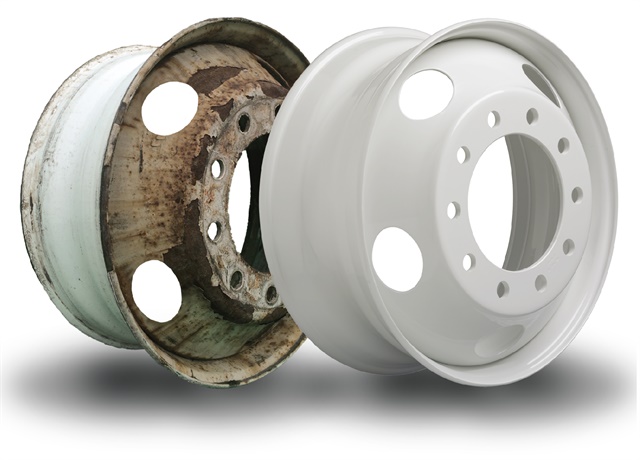
">Accuride has introduced the ProFinish steel wheel refinishing service for the North American commercial vehicle market. Now in full operation, ProFinish will refinish all steel wheel makes with Accuride's Steel Armor coating that protects the wheel from corrosion and comes with a 12-month warranty against rust damage.
The wheel-coating process is critical to ensuring the correct paint thickness on the mounting surfaces of wheels because of a correlation between wheel nut torque loss and excessive paint thickness, according to Accuride.
The ProFinish process achieves consistent filiform coating thickness under the 3.5 mils required by OEM standards, said Accuride. The wheel-refinishing service operates at the company's Henderson, Ky., steel wheel production facility using the same coating line that applies the Steel Armor powder coating to its original-equipment wheels.
The company said there is demand from large fleets for a standardized wheel refinishing process that is more consistent.
“Accuride launched ProFinish in response to the concerns fleet and aftermarket customers had with the coating quality and durability of their refinished wheels,” said Scott Hazlett, Accuride Wheels president. “ProFinish gives them the advanced corrosion protection of Steel Armor coating on their refinished steel wheels. Our ProFinish refinished wheels will stand up to the toughest road environments in North America and deliver a level of quality and performance other wheel refinishers simply can't match.”
The ProFinish refinishing process begins with a quality inspection to weed out wheels containing cracks and other flaws that compromise structural integrity. The wheels then undergo a shot-media blast that removes all the paint, regardless of coating type.
The clean wheels then undergo Accuride's proprietary three-phase Steel Armor coating process:
Zinc Phosphate – The process begins with the application of tri-metal zinc phosphate to prepare the metal for maximum adhesion.Epoxy E-coat – Next, Accuride applies its proprietary formula ...Read the rest of this story