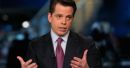
Trump wants Scaramucci to be White House communications chief, but top staff pushes back
Reince Priebus and Steve Bannon are pushing back against Scaramucci as White House communications chief, NBC reports.
Reince Priebus and Steve Bannon are pushing back against Scaramucci as White House communications chief, NBC reports.

Sales in Honeywell's aerospace business, its biggest, fell about 3 percent to $3.67 billion in the second quarter ended June 30, smaller than the company's forecast of a decline of 5 to 7 percent. Margins in the unit rose to 22.3 percent from 20.9 percent, Honeywell, which makes products ranging from aircraft engines to handheld barcode scanners, said. The unit, which makes jet engines and provides spare parts, repair, overhaul and maintenance services, benefited from strength in its commercial aviation after-sales business and growth in U.S. defense volumes, Honeywell said.

The U.S. International Trade Commission refused to rescind its May 4 ruling that found Arista's switches infringed two Cisco patents and banned Arista from importing the infringing products into the United States. After the ITC released that decision, a different agency, the U.S. Patent and Trademark Office, said the two Cisco patents are invalid.
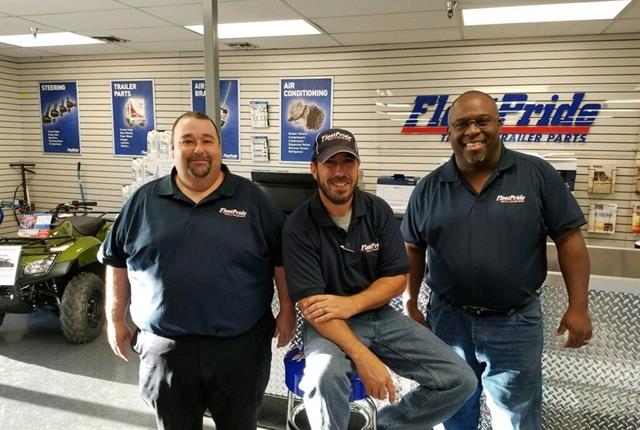
FleetPride employees celebrate the opening of the company's first New Orleans branch.
Photo: FleetPride
">FleetPride employees celebrate the opening of the company's first New Orleans branch.
Photo: FleetPride
"> FleetPride has opened its first branch in the New Orleans metropolitan area. This branch is FleetPride's third location in Louisiana, bringing its southeastern U.S. network to 64 locations."Adding New Orleans to the FleetPride footprint represents our commitment to growth," said Jason Price, FleetPride senior vice president of operations. "The five team members at this location represent nearly 60 years of combined experience in the heavy-duty parts industry and are committed to serving the needs of the customer."
The new branch is located at 6500 Powell Street in New Orleans. An official grand opening ceremony is scheduled for Thursday, September 14.
Follow @HDTrucking on Twitter
...Read the rest of this storyPhoto: Double Coin/CMA
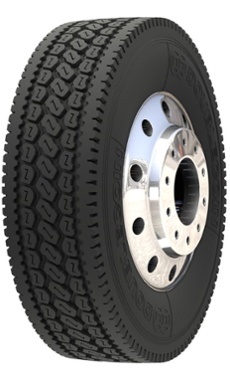
">Double Coin and CMA (China Manufacturers Alliance) has opened a new manufacturing facility in Thailand that will produce truck, bus, industrial, and off-road tires for the North American market.
Photo: Double Coin/CMA
">“This is Double Coin's first manufacturing plant outside of China and one of a total of six plants,” said Tim Phillips, vice president – marketing and operations for Double Coin. "This plant needed to be built in order to meet the growing demand for Double Coin tires as well as our continued plans to expand our product line.”Built on a 3.6-million-square-foot site, the new facility can annually produce more than 2.5 million truck, bus and radial tires, as well as 50,000 off-road tires.
It has also introduced a level of automation that halves the number of employees needed in a traditional tire factory.
This article by the staff of award-winning Canadian publication Today's Trucking appears here via a cooperative editorial-sharing agreement between HDT and TT.
Follow @HDTrucking on Twitter
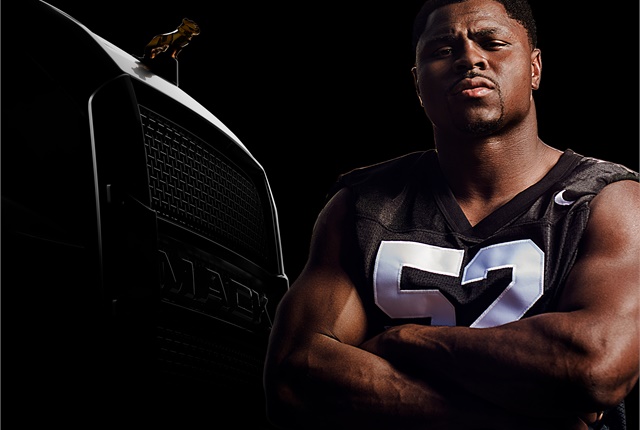
...Read the rest of this storyOakland Raiders defensive end Khalil Mack signed a sponsorship agreement with Mack Trucks to promote its next-generation highway model. Photo: Mack Trucks
">How many times have you heard someone compare a football player to a Mack truck? "Built like a Mack truck." "Hits like a Mack truck." It seems inevitable that at some point Mack's marketing team would think about teaming up with a football player. And when the football player also is named Mack? Well, how can you resist that?
Oakland Raiders defensive end Khalil Mack, the 2016 NFL Defensive Player of the Year, has signed a sponsorship agreement with Mack Trucks to promote the Sept. 13 debut of its next-generation highway model.
“This partnership makes sense on a number of levels,” explained John Walsh, vice president of global marketing and brand management for Mack Trucks, in the announcement. “We obviously share the same name, but what really brought us together was shared values – the fundamentally American values of hard work, honesty and humility. In fact, he reached out to us at the same time that we were talking about reaching out to him.”
Oakland Raiders defensive end Khalil Mack signed a sponsorship agreement with Mack Trucks to promote its next-generation highway model. Photo: Mack Trucks
">The deal even made ESPN, which reported that the idea actually started with Golden State Warriors power forward Draymond Green. "He just texted me one day and said, 'You should do a deal with Mack,'" Mack said.
Mack, originally from Fort Pierce, Florida, attended the University at Buffalo. In 2013, he was named the Mid-American Conference Defensive Player of the Year, becoming the first Buffalo football player to win the award in the school's history. He also set a number of school and NCAA records, including being tied for first in tackles for a loss and most forced fumbles.
He was selected by the Oakland Raiders with the fifth overall pick in the NFL draft in 2014, and ...Read the rest of this story

The maker of power plants, jet engines, medical scanners and other industrial equipment said its profit and sales declines largely reflected sale of its appliances business, and it affirmed its full-year forecast for cash flow, profit, revenue and operating margin. Analyst consensus 2018 estimate is $1.73, according to Thomson Reuters I/B/E/S. "Until this earnings reset plays out, the stock will essentially remain in a state of limbo," Deane Dray, an analyst at RBC Capital Markets, said in a note.