Commentary: Off-Peak Deliveries Can Make a Difference
Photo: U.S. DOT
“>
Photo: U.S. DOT
“>
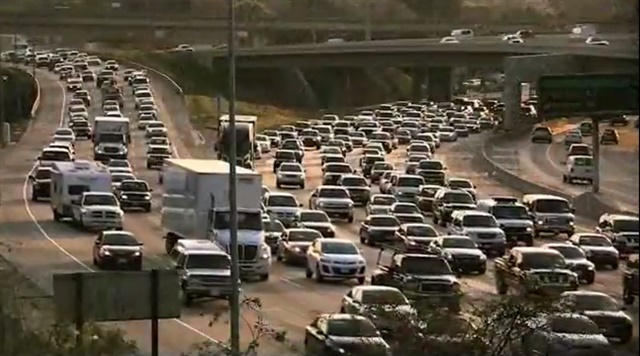
Suppose they had a rush hour and nobody came.
As strange as the concept sounds, this essentially describes the ultimate goal of off-peak deliveries – the route planning strategy that schedules shipments at times when there is less traffic on the road.
There are significant savings to be realized by those who embrace the idea. Fuel economy improves because of reduced idling in traffic; equipment is better utilized because of shorter transit times; Human Resources budgets can be eased when employees are not paid just to sit in traffic or wait for freight. Shippers, for their part, potentially realize savings through lower delivery costs. If enough companies embraced the strategy, congestion during other time periods would improve. The rush hours would ease.
Ontario’s Peel Region wants to measure exactly how extensive the savings can be, and is in the midst of recruiting carriers and shippers to participate in a related six-month research project.
Carriers have a lot to gain by participating in the study. The battle against congestion is particularly relevant in this locale. Indeed, calling the region a transportation hub would be an understatement. Peel roads and highways handled 24.2 million truck trips in 2012, and four out of every nine jobs in the region are linked to industries that depend on moving goods. This is the home of Pearson International Airport, two intermodal yards, and some of the busiest highways in the nation.
The results of Peel’s research will likely be positive, too, because off-peak deliveries have proven their worth before.
In 2009 and 2010, 25 New York City businesses and eight fleets embraced deliveries between 10 p.m. and 8 a.m. Trips during that period were twice as fast as those completed between 10 a.m. and 10 p.m. Trucks that traditionally faced $1,000 in parking fines per month were left without any …Read the rest of this story
