Category: Trucking News

California Carrier Builds Own ELD

<img width="150" src="http://www.automotive-fleet.com/fc_images/articles/m-best-yet-1.jpg" border="0" alt="

Photos: Best Yet Express

">

Photos: Best Yet Express

">

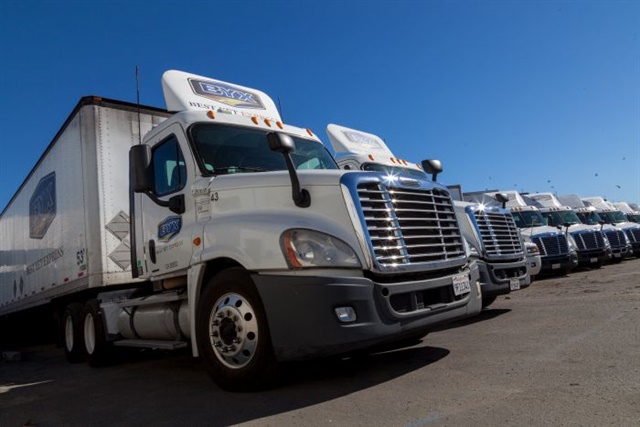
For Southern California carrier Best Yet Express, which operates within a 100-mile radius, log books are only required if drivers have to work more than 12 hours. So if drivers of its 43 trucks unexpectedly had to go beyond that 12-hour period, they had to pull over and fill out their log right away.

“We wanted to make sure our trucks were always moving,” explains Jay Newjahr, CEO of the family-owned, primarily less-than-truckload and warehousing company. “Whether we work one hour or 14 hours, we didn't want to make our drivers have to fill out those forms.”

None of the commercially available products really fit its needs, so the company decided to develop its own system, which would go beyond the electronic logging device mandate that kicks in this December and become a true productivity tool.

“We said, why does it have to stop at hours of service?” Newjahr says. “We want our HOS to develop in the background and run as the guys are doing their normal everyday shift.”

The project actually grew out of a desire to automate pretrip inspections, Newjahr explains. “I was having problems getting drivers to fill out vehicle reports accurately. So I said, why don't we find a way to do this electronically, and set it up so a driver has to do step one before he does step two,” and so forth. “It started getting very creative after that.”

In addition to electronic pre-trip inspections, Best Yet Express wanted its system to track not just city names, but the actual customer location. It wanted to be able to tell where drivers are, why they're there, and what they're doing.

The resulting system is a workflow application drivers can easily pull up on a Samsung 7-inch tablet.

“They used to have to fill out a paper form for ...Read the rest of this story
Researchers: Big Data Could Move Trucking Better

<img width="150" src="http://www.automotive-fleet.com/fc_images/news/m-congestion-1-2.jpg" border="0" alt="

Photo: U.S. DOT

">

Photo: U.S. DOT

">

Researchers at the University of Illinois contend that using real-time data collected by the U.S. Department of Transportation could help fleets save billions of dollars a year by avoiding congestion.

The university is working with the Iowa Department of Transportation to identify ways that fleets can increase productivity and improve safety. In doing so, they have determined that leveraging big data could play a pivotal role.

“The DOT has a lot of real-time data on the operating conditions of state highways and secondary roads, and it wants to make sure the data is of value to carriers,” said Dave Cantor, an associate professor of supply chain management at Iowa State. “With this data and information, we can improve on-time delivery performance, safe delivery of the freight and minimize idle time.”

While real-time data already being collected by DOT could help fleets refine routes and avoid idle time, the biggest problem that researchers found was that there is no easy way for all fleets to access the information. The data could relay up-to-date information on road conditions, traffic speeds, congestion, accidents and construction projects-- all of which can impede the flow of commerce.

Small fleets with fewer than 100 trucks were found to not have access to the technology or the manpower needed to receive and process DOT data. That puts these companies at a disadvantage compared to large fleets. Researchers surveyed around two dozen logistics and technology providers, large and small carriers and various types of haulers to collect data for the report.

“There's no sense in sending a truck into Des Moines at 4 o'clock in the afternoon if we know the driver is just going to sit in traffic,” said Neal Foster, a former trucking company owner who is part of the research team. “Every truck line that I know wants ...Read the rest of this story

Clean Fuels Ohio to Help Deploy 500 Workhorse Electric Pickup Trucks

<img width="150" src="http://www.automotive-fleet.com/fc_images/news/m-workhorse-hybrid-pickup-truck-1.jpg" border="0" alt="

Photo courtesy of Workhorse

">

Photo courtesy of Workhorse

">

Workhorse Group Inc., an original equipment manufacturer of battery-electric vehicles headquartered and manufactured in Cincinnati, Ohio, announced it has received a letter of intent from Clean Fuels Ohio to partner with Workhorse to help deploy 500 W-15 plug-in electric pickup trucks throughout the state of Ohio.

Having already received Letters of Intent from Duke Energy, Portland General Electric, the City of Orlando, and Southern California Public Power Authority, Clean Fuels Ohio is the latest Letter of Intent Workhorse has received from fleets and organizations. While not a fleet itself, Clean Fuels Ohio engages numerous fleets across Ohio on transitions to cleaner vehicle and fuel options.

With the goal of being the safest pickup truck in America, the W-15's safety features are expected to include an extra-large crumple zone and a lower center of gravity while still providing ground clearance. The W-15 is also expected to offer crash mitigation technologies that include automatic braking and lane centering. Powered using Panasonic 18650 Li-ion batteries, the truck's battery pack is expected to deliver all-electric 80 mile range, covering the majority of miles driven in a day by fleets. If needed, the on-board gasoline generator will then operate after battery power has been depleted, extending the range.

“As a U.S. Department of Energy Clean Cities coalition, Clean Fuels Ohio advocates a wide range of cleaner fuels and technology options such as natural gas, propane, electric drive, efficiency, biofuels, and hydrogen. The W-15 will be a key part of our efforts to engage fleets across Ohio in adopting electric vehicles,” said Sam Spofforth, executive director, Clean Fuels Ohio. “We feel the Workhorse W-15 will offer safety, efficiency, advanced technology and the sustainability measuring sticks that many Ohio business and government fleets are looking for when making fleet decisions.”

The Workhorse W-15 light-duty platform design is an ...Read the rest of this story

PeopleNet and Noregon Partner on Predictive Remote Diagnostics

PeopleNet and Noregon are extending a partnership to deliver a new, real-time solution for vehicle-performance and safety monitoring for all heavy-duty truck makes and models.

The two companies announced the deal this week at the American Trucking Associations Technology & Maintenance Council's annual meeting in Nashville, Tenn.

The initial focus of the collaboration will build on Noregon's experience in vehicle data and telematics technologies and PeopleNet's abilities in mobility and predictive analytics, as part of the ConnectedFleet platform.

“Predictive analytics applied to remote diagnostics has the potential to transform how fleets manage vehicle uptime and maintenance,” said Tom Fansler, president of transportation analytics for PeopleNet. “Our goal is to provide solutions that enable this transformation and change the way our customers think about monitoring their vehicles in real-time.”

The two companies have been collaborating since 2009 and the new venture is aimed at creating a robust set of fault guidance solutions for fleets running more than one model of vehicle.

“We routinely heard from fleets that the marketplace lacked a comprehensive solution to turn their vehicle data into valuable information,” said Bill Hathaway, founder and CEO at Noregon. “Noregon is extremely excited to work with PeopleNet to offer customers an unprecedented look into the real-time health and safety status of their vehicles.”

Related: Old Dominion Dominates Data

Follow @HDTrucking on Twitter

...Read the rest of this story
Doft Launches On-demand Truck Sharing Service

<img width="150" src="http://www.automotive-fleet.com/fc_images/news/m-doft-1.jpg" border="0" alt="

Image courtesy of DOFT

" >

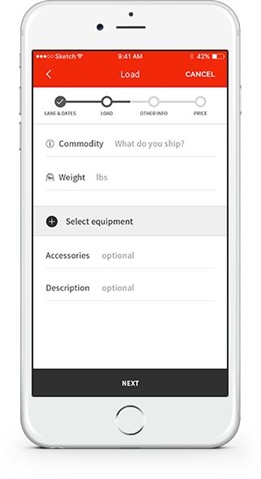
Doft, a new solution aimed at helping America's 400,000 or so freelance and owner-operator truckers find work, announced its official nationwide launch. Targeting a market worth $80 billion, Doft - which stands for “do freight transportation” - has set its sights on being the first Uber-like service for trucks.

Similar to ridesharing apps such as Uber and Lyft, Doft connects trucks and shippers within two minutes. Although available across the U.S., many of Doft's current drivers are based in California. The platform removes freight brokers and dispatchers and instead takes a transparent transport service fee of 4.99% from each side. This solves the dual problems of inefficiency and opaqueness which plague the industry and makes work better and more fulfilling for truck drivers who want to get out on the road.

“We are going to become a huge, twenty-first-century transportation company that will disrupt the whole logistics industry to make it more efficient,” says founder and CEO Dmitri Fedorchenko. “And, we won't be staying on the ground, either. We want to save people and companies money and time, as well as helping the environment.”

Check out this video on the new solution:

Image courtesy of DOFT

" width="192" height="352">

In the United States, there were 3.6 million ‘big rig' trucks in operation, transporting more than 10 billion tons of freight (2015), representing 70.1 percent of total domestic tonnage shipped. Doft is looking out for freelance and owner-operator truck drivers, who account for some 400,000 of America's truckers. These dedicated drivers generate some $80 billion each year. All too often they are ignored in favor of larger haulage companies.

The major problem that Doft solves is that, between 15-25% of the time, trucks are driving with no cargo. Not only is this bad for the environment - this causes needless emissions - but it ...Read the rest of this story