Category: Trucking News

The regulatory fights trucking expects to face

ATA's chief executive expects trucking to debate on a wide range of different topics in the coming year, even down to the assignment of radio channels by the FCC.

To the eye of Chris Spear, president and CEO of the American Trucking Associations (ATA) trade group, there are a lot of regulatory battles ahead for the industry over the next several years, encompassing everything from developing the protocols governing autonomous vehicle operation to fighting against a mandate for speed limiters, and making changes to

read more

...Read the rest of this story

Ormond Love’s to offer fuel-and-go only for Bike Week

Love's announced it will offer only fuel-and-go in Ormond Beach, FL, for Bike Week March 10-19.

Hundreds of thousands of motorcyclists will converge on the Daytona Beach/Ormond Beach area March 10-19 for Bike Week. Daytona Harley Davidson (DHD), located next door to Love's in Ormond Beach, is a major participant of the annual motorcycle event and rally.

read more

...Read the rest of this story

Roadrunner forms Roadrunner Temperature Controlled

Roadrunner Transportation Systems announced the formation of Roadrunner Temperature Controlled (RRTC). Roadrunner Temperature Controlled focuses on providing temperature controlled solutions for both large and small customers and is the result of combining two long-standing transportation providers, M. Bruenger and R&M Transportation into a single company to expand geographical market coverage and build upon an already strong group of approximately 400 drivers.

read more

...Read the rest of this story

Prepare Your Fleet Now for Higher Fuel Prices Later

<img width="150" src="http://www.automotive-fleet.com/fc_images/articles/m-opw-fuel-controls-hd-fleet-fueling-1.jpg" border="0" alt="

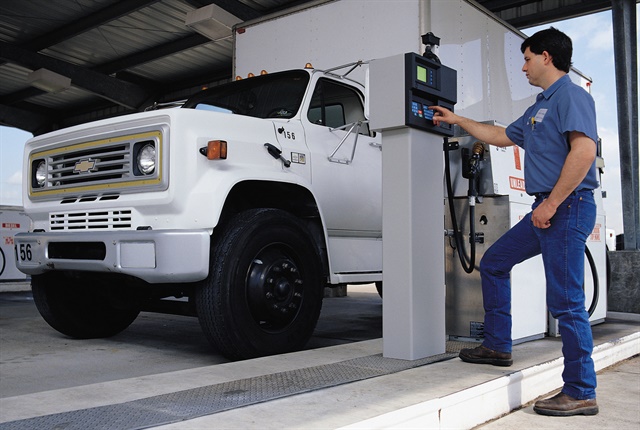
Cardlock systems help fleet administrators  manage their fuel assets by making it easier to authorize and provide accountability for fuel usage. Photo courtesy OPW

">

Cardlock systems help fleet administrators  manage their fuel assets by making it easier to authorize and provide accountability for fuel usage. Photo courtesy OPW

">

While fuel prices may not be as high as they were a few years ago, fleet managers continue to be challenged by an unpredictable fuel market that makes it difficult to budget for fuel expenditures. Strict oversight of fuel assets can help maintain a healthy bottom line over the long term.

The Department of Energy is projecting moderate increases in the price of crude oil and diesel fuel over the next year, but as always, unrest in the Middle East could wreak havoc with those gradual price projections. The best time to review the effectiveness of your site's fuel management equipment is before price spikes hit. Such an audit can help identify ways to cut costs through reduced fuel losses and streamlined operations.

Control Fuel to Reduce Expenses

Whether you're managing a large fleet of more than 1,000 tractor-trailers or a small fleet of 25 concrete trucks, aging equipment and fuel are two of the largest expenses. What's more, one expense (variable fuel costs) makes it difficult to fund the maintenance and equipment needed to overcome the other (aging equipment).

Cardlock systems, also known as fuel control systems, let fleet administrators carefully manage fuel assets by providing authorization and accountability of fuel usage. By tracking every gallon of fuel that goes into every fleet vehicle, fuel control systems help identify unauthorized fueling, prevent fuel theft, document fuel usage and create visibility into operating costs.

Related from the HDT archives: Fuel Buying Smarts (May 2009)

Today's fuel control systems also can help drive efficiencies in your operation. For example, many fleets still rely on manual statistical inventory reconciliation, which is inaccurate, inefficient, and expensive. Automated reconciliation programs eliminate hours ...Read the rest of this story

‘Encouraging sign’: Navistar finds turnaround in new LT tractor, A26 engine

While Wall Street prognosticators found Navistar's latest earnings report “disappointing,” for truck customers there are new products to be excited about (notably the International LT tractor and A26 engine) and, most importantly, the renewed viability of a major truck and engine manufacturer means more OEM competition—and that's good news indeed.

read more

...Read the rest of this story

Port Of LA Hosts Live Platooning Demonstration

<img width="150" src="http://www.automotive-fleet.com/fc_images/news/m-port-platoon-2.jpg" border="0" alt="

Photo via Port of Los Angeles Twitter

">

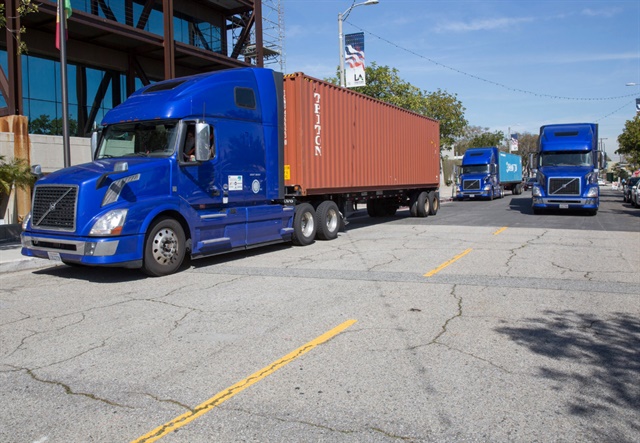
Photo via Port of Los Angeles Twitter

">

Private and public transportation partners conducted a partially automated truck platooning demonstration in California Wednesday at the Los Angeles Port complex and along the Interstate 110 freeway.

The Cooperative Adaptive Cruise Control system on display offered a first-hand look at platooning technology in a real-world setting. Platooning technology has the potential to impact safety, transportation system capacity and emissions reductions, note demo organizers.

In the demonstration, trucks used the technology to follow in closer proximity, using forward-looking sensors and vehicle-to-vehicle communication to maintain automated speed and spacing. CACC was developed by the University of California, Berkeley Partners for Advanced Transportation Technology (PATH), in coordination with Volvo Trucks of North America.

“Once again California is leading the nation in advanced technology,” said Malcolm Dougherty, Caltrans director. “Today we saw a demonstration of a truck technology that promises to improve California's existing freight system by enhancing truck safety and increasing capacity on existing highways.”

The demonstration simulated real world conditions with three trucks driving 50 feet apart at 55 mph while hauling cargo containers, similar to those used at the port and at industrial centers throughout Los Angeles County. The demonstration also included vehicles cutting in front of the platooning trucks to demonstrate how the system can handle traffic.

CACC is an enhanced version of Adaptive Cruise Control, capable of closer and more accurate control of the gap and differences between trucks than conventional ACC. In addition to improving fuel economy for the platooning vehicles, CACC could also reduce congestion and increase the capacity of dedicated truck lane facilities, according to CalTrans.

“Our technology planning and traffic simulation work suggests connected vehicle and truck platooning technologies may eventually facilitate the ability to operate up to 50% more trucks on these lanes – essentially giving the capacity equivalent of a third ...Read the rest of this story