Category: Trucking News

5 Trends in FMCSA Compliance Reviews

<img width="150" src="http://www.automotive-fleet.com/fc_images/articles/m-dupre-driver-inspection-jamieorillion-018-1.jpeg" border="0" alt="

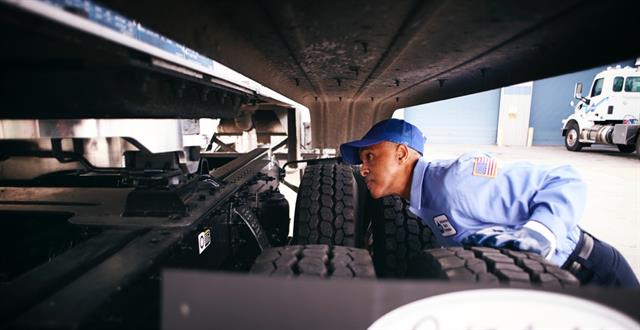
Now that fleets only have to have a driver vehicle inspection report form when a defect has occurred, it is much easier for safety auditors to see when drivers are and aren't doing their job when it comes to pre-trips. Photo: Dupre Logistics

">

Now that fleets only have to have a driver vehicle inspection report form when a defect has occurred, it is much easier for safety auditors to see when drivers are and aren't doing their job when it comes to pre-trips. Photo: Dupre Logistics

">

The Federal Motor Carrier Safety Administration recently announced that it is changing the process for performing compliance reviews. Specifically, they referred to expanded interviews with members within the organization. (The truth is, they have been doing this for a while, but recently completed all the training and therefore made the announcement.)

Does this mean that compliance reviews have changed?

Yes and no. FMCSA had already trended from full reviews to focused reviews. However, there are some things that we are seeing with regards to compliance reviews. From our perspective, here are five items that we are seeing:

1. Many reviews are occurring due to complaints vs. CSA scores.

Historically, complaints were considered a lower priority by FMCSA in deciding to perform a compliance review. CSA scores that had BASICs on alert were the primary determining factor for a compliance review. However, recently the complaints are taking a much higher priority than previously. There are a couple of reasons for this:

Related: 3 Things to be Ready for in a Coercion Complaint Investigation

• Driver coercion rule: In 2016, the DOT released the final rule regarding driver coercion (different from harassment, which is tied to electronic logging devices). As a result, most complaints are being treated as if coercion has occurred. Thus, the visit. What is interesting is that little if any cases of coercion are being found. What is happening is during the investigation the inspector is “discovering” issues that now result in a compliance review being performed while the inspector is at that location. We have seen several carriers ...Read the rest of this story
CVSA Roadcheck to Emphasize Cargo Securement

<img width="150" src="http://www.automotive-fleet.com/fc_images/news/m-roadcheck2011-cr-cvsa-3-1.jpg" border="0" alt="

Photo: CVSA

">

Photo: CVSA

">

The Commercial Vehicle Safety Alliance will put a special emphasis on cargo securement in this year's International Roadcheck, scheduled for June 6-8.

During the three-day event, CVSA-certified commercial vehicle inspectors around North America will conduct inspections of commercial vehicles and their drivers. Each year a category of violations is given specific attention, and this year's focus is on cargo securement.

While checking for cargo securement is always part of a roadside inspection, the CVSA is highlighting the issue as a reminder of its importance on highway safety.

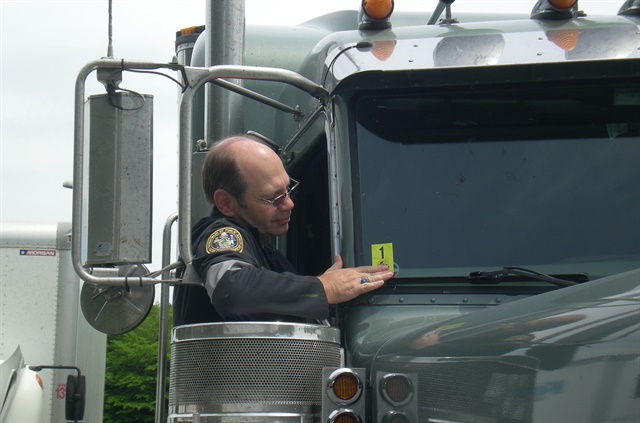
Inspectors will primarily be conducting the North American Standard level 1 Inspection, which is the most thorough roadside inspection. The inspection is a 37-step procedure that includes an examination of both drivers and vehicle fitness. Drivers must provide items such as a driver's license, hours-of-service documentation, motor carrier registration, and shipping documentation. They will also be checked for seat belt usage and drug or alcohol use.

The vehicle portion of the inspection will include checking brake systems, cargo securement, coupling devices, driveline/driveshaft, exhaust systems, frames, fuel systems, lighting devices, steering mechanisms, suspensions, tires, van and open-top trailer bodies, wheels, rims and hubs, and windshield wipers.

CVSA says the International Roadcheck is the largest targeted enforcement program on commercial motor vehicles in the world, with nearly 17 trucks or buses inspected, on average, every minute in Canada, the U.S., and Mexico during a 72-hour period. Since its inception, more than 1.5 million roadside inspections have been conducted during International Roadcheck campaigns.

Roadcheck is a CVSA program with participation by the U.S. Federal Motor Carrier Safety Administration, Canadian Council of Motor Transport Administrators, Transport Canada, and the Secretariat of Communications and Transportation in Mexico.

For more information on the program, click here.

Related: Tread Depth Violations Highlight Tire-Focused Roadcheck

Follow @HDTrucking on Twitter

...Read the rest of this story

Intel Acquires Self-Driving Tech Firm Mobileye

Intel will acquire Israeli autonomous driving technology provider Mobileye for $15 billion under an agreement announced March 13 that brings the Silicon Valley chipmaker into the emerging autonomous-driving sector.

Intel will spend $63.54 per share in cash for Jerusalem-based Mobileye, which specializes in collision detection and mapping technology. Santa Clara-based Intel will bring to bear its expertise to create automated cloud-based driving solutions.

Together the companies will combine efforts around connectivity, computer vision, data center, sensor fusion, high-performance computing, localization and mapping, machine learning and artificial intelligence.

With the merger, Intel will combine its Automated Driving Group with Mobileye. The new organization will be based in Israel and led by Amnon Shashua, Mobileye's co-founder, chairman and CTO. Doug Davis, Intel's senior vice president, will oversee the combined organization's engagement across Intel's business groups. He will report to Shashua.

The organization will support both companies' existing production programs and build upon relationships with automotive OEMs, Tier-1 suppliers and semiconductor partners to develop advanced driving assist, highly autonomous and fully autonomous driving programs.

The market for vehicle systems, data, and services supporting autonomous driving could reach $70 billion by 2030, according to an Intel estimate. By 2020, automated vehicles should generate 4,000 GB per day.

Intel and Mobileye began collaborating in July under a three-way partnership with BMW to develop a fleet of 40 autonomous vehicles by the second half of 2017 using Intel's GO solution and Mobileye's EyeQ5.

The Intel GO solution offers a platform for functions such as sensor fusion, driving policy, environment modeling, path planning and decision making. Mobileye's EyeQ5 is responsible for processing and interpretation of input from the 360-degree surround view vision sensors as well as localization.

Mobileye formed a partnership with Delphi Automotive in August to develop a fully autonomous vehicle system by 2019. Mobileye ended its partnership with Tesla in July ...Read the rest of this story

Swift Transportation Joins the Trucking Alliance

<img width="150" src="http://www.automotive-fleet.com/fc_images/news/m-swift-trailer-1.jpg" border="0" alt="

Photo: Evan Lockridge

">

Photo: Evan Lockridge

">

Swift Transportation has accepted an invitation to join the Alliance for Driver Safety & Security, also known as the Trucking Alliance. The Phoenix, Arizona-based Swift is one of the largest trucking companies and full truckload carriers in the U.S.

“The Trucking Alliance is advancing safety reforms that we support,” said Richard Stocking, Swift's president and CEO, “and we believe the Alliance's operating principles are setting a new safety standard for our industry.”

The Alliance supports technologies and procedures such as electronic logging devices, truck speed limiters, hair testing for driver pre-employment drug screening, and forward collision warning/mitigation systems, and recently expressed support for the development of autonomous trucking technologies.

Stocking will join the Alliance board of directors, and Swift's vice president, David Berry, will join the Alliance's Advisory Group that analyzes legislative and regulatory proposals and assists with the organization's advocacy efforts.

With the addition of Swift, the Trucking Alliance now includes companies that collectively employ 68,000 drivers, management, and logistics personnel and own 52,000 trucks and 175,000 trailers.

“Swift Transportation is the largest full truckload carrier in the United States and its leadership team is one of the best in the business,” said Steve Williams, chairman and CEO of Maverick USA and Trucking Alliance president. “It's gratifying that Swift will be part of the Trucking Alliance going forward, as we work to lower the number of truck accidents and improve highway safety, for our drivers and the general public.”

The Trucking Alliance is a coalition of transportation companies working to reduce large truck accidents, injuries and fatalities on U.S. highways. Affiliation in the Trucking Alliance is by invitation and the group currently includes, Cargo Transporters, Dupré Logistics, JB Hunt Transport Services, KLLM Transport Services, Knight Transportation, Maverick USA, Swift Transportation, and US Xpress.

Related: Trucking Alliance Endorses Developing Autonomous Trucks

...Read the rest of this story