Skip to content
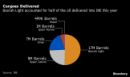
(Bloomberg) -- Some oil from China’s swelling storage tanks is finding its way back into the international market as traders jump at the opportunity to source cheap crude for resale to regional refiners.The shipments in question, so far just 1 million barrels, have been procured by trading houses via the Shanghai futures exchange, and loaded from the bourse’s numerous storage tanks that dot the country’s eastern coast. From these Chinese ports, the cargoes were then shipped to international buyers who would have otherwise sourced such supplies from producers across the Middle East and Africa.While China will never compete with the likes of Saudi Arabia as a supplier in the long run, the trickle of crude out of the world’s No. 1 importer underscores how fragile oil’s recovery remains. China went on a record buying spree to fill its reserves with low-cost supplies, helping prices double from April lows. Now the purchases...
(Bloomberg) -- A relatively low-tech stock trade is making Tesla Inc.’s dizzying rally look like an under-performance.In Southeast Asia, makers of rubber gloves are attracting more investor fervor than even the electric cars and flame throwers of Elon Musk. Top Glove Corp. is up 389% this year in Kuala Lumpur, the most on the MSCI Asia Pacific Index, while Supermax Corp. has leaped more than 1,000%, compared with Tesla’s 259%. That’s due to the boom in glove demand thanks to the coronavirus pandemic, aided by a short-selling ban in Malaysia till year-end.The meteoric rise has been unprecedented by Malaysian standards, with the top three glove makers adding about 109 billion ringgit ($26 billion) in combined market value this year. More than $1 of every $10 invested in the nation’s stock market right now is a bet on gloves -- a feat that makes the Southeast Asian nation a play on global...
Jul.19 -- European Union efforts to agree on a 750 billion-euro stimulus package ran into trouble late Sunday as leaders were unable to reconcile differences over how much of the recovery fund should be distributed through grants versus low-interest loans. Bloomberg’s Kathleen Hays reports on “Bloomberg Daybreak: Asia.”...
(Bloomberg) -- Global real estate investment fell by 33% in the first half as the coronavirus pandemic battered economies and disrupted deals.The Asia-Pacific region took the biggest hit, with volumes down 45% from the year-earlier period, because it was the first struck by the outbreak, according to a report from broker Savills Plc. Investment dropped by 36% in the Americas and 19% in Europe, the Middle East and Africa.With the tourism industry shut down for months by government lockdowns, hotels saw investment decline by 59% in the first half of the year, followed by a 41% drop for retail properties, according to the Savills report. Industrial and residential properties fared better.Investment is “expected to remain well below pre-pandemic levels for the rest of 2020 as investors wait for market clarity,” Simon Hope, Savills head of global capital markets, said in a statement on Monday. “However, certain sectors are expected to outperform...
Stock futures opened higher Sunday evening as investors looked ahead to a packed week of earnings, stimulus talks and congressional testimony from Covid-19 vaccine developers....