Author: Vitaliy Dadalyan

TrailerTail Covered Links Deployment to Door Operation

Stemco says its new TrailerTail Covered rear trailer fairing will be deployed more than current designs simply because drivers must open the panels to get at doors' locking handles to close trailer doors. When used more often, the device will increase fuel efficiency and return on investment for fleets.

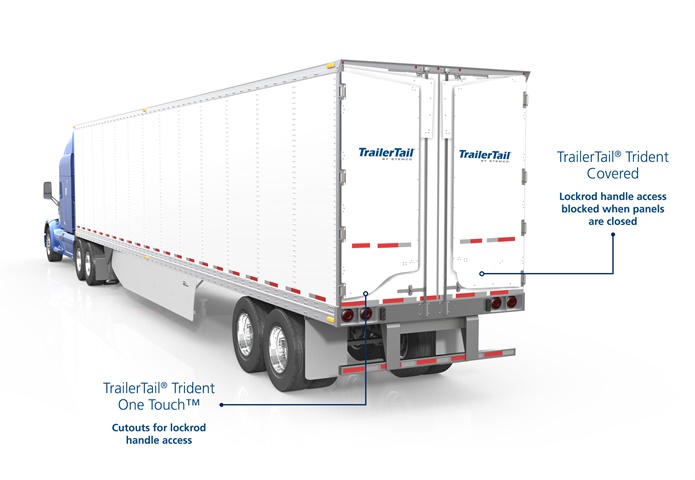
TrailerTail Covered's side panels are slightly wider so they obstruct access to handles and locking rods, the company explained. With current designs, drivers can forget to deploy TrailerTail panels, but now they can't.

“We've seen tremendous improvements over the past two years in the number of TrailerTail fairings open while on the road, saving fleets an additional 5% percent or more on their fuel bill, but we continue to develop solutions to increase the odds drivers will open their TrailerTail before driving,” said Bob Montgomery, vice president of Stemco Innovative Tire and Mileage Solutions.

“TrailerTail Covered makes opening and closing the TrailerTail an integral part of a driver's process by linking it to operating the trailer doors.”

Panels must be away from the doors to access handles for both opening and closing. So panels are deployed as a driver departs from a pickup or delivery. Drivers would have to intentionally push the panels back against the doors for them to be undeployed.

By streamlining airflow at the back of the trailer, TrailerTail fairings not only reduce fuel consumption but also improve safety, reduce driver fatigue and lessen equipment wear and tear by increasing vehicle stability, Montgomery said. To date, over 50,000 TrailerTail units have been sold in North America, saving companies over $150 million and reducing their carbon footprint.

The Covered option is available for no additional charge for Trident and 4x4 manual deployment systems. Customers may also choose AutoDeploy, which features a built-in speed sensor that automatically unfolds TrailerTail panels when the vehicle reaches ...Read the rest of this story
LED Headlamps Reduce Eye Fatigue with Natural Color Temperature

Optronics International has released its new Opti-Brite LED Headlamps, featuring retroflective LED technology designed to emit a wider, brighter beam for increased visibility and safety.

The Opti-Brite LED Headlamps were designed with a distinct look and feel to set them apart from other LED headlamps. The Headlamps feature unique centralized lens elements that house LED conspicuity arrays and rear-facing LEDs.

The rear-oriented LEDs interact with metallic parabolic reflectors to create a beam patter designed to be bright, with broad, smooth, photometric characteristics that approximate the color temperature of natural sunlight, improving visibility and reducing eye fatigue.

Optronics' new LED headlamps come in three formats that cover a wide range of vehicle makes and models. The HLL93HLB series fits a seven-inch round format and has both high and low beam functions built in. The HLL79HB high-beam lamps and HLL78LB low-beam lamps fit four- by six-inch rectangular formats and are compatible with four-lamp systems with separate, dedicated high-beam and low-beam lamps.

The lamps use standard H4 three-blade connectors for converting any vehicle with compatible headlamps to the new LED technology. All lamps are engineered to accommodate both 12- and 24-volt electrical systems. The new lamps have an expected service life of 30,000 hours.

Follow @HDTrucking on Twitter

...Read the rest of this story

Earnings Watch: Swift Profit Up 4.7%, Paccar Down Nearly 20%

At a time when many trucking companies are reporting lower third quarter earnings, Swift Transportation (NYSE: SWFT) bucked the trend with a 4.7% increase driven by its dedicated operations, while truck and engine manufacturer Paccar (NASDAQ: PCAR) saw earnings fall by 19.7%.

Arizona-based Swift reported net income increased to $38 million, or 28 cents per share, up from $36.3 million, or 25 cents per share, a year earlier. This includes the $7.1 million retirement package for President CEO Jerry Moyes, who is set to leave at the end of the year. The company's adjusted earnings of 34 cents per share beat a consensus estimate from analysts.

Total revenue moved lower, to $1.01 billion from $1.06 billion a year ago. Revenue minus fuel surcharge fell to $929.7 million from the year-ago $955 million.

"Excess industry capacity, excess customer inventories, and sluggish demand have combined to cause persistent pressure on freight volumes and pricing,” the company said in its letter to shareholders.

According to the company, during the quarter its average operational truck count declined by 110 trucks from the second quarter and by 581 trucks compared to a year ago, “to drive improvements in asset utilization as the truckload market continued to be challenging throughout the third quarter.”

Swift's dedicated operation saw a 8.9% year over year increase in revenue minus fuel surcharges, hitting $234.4 million. Weekly revenue less fuel surcharges per tractor improved 8.1% year over year, due to improvements in pricing and freight mix, Swift said. Its average operational truck count increased 130 trucks over the second quarter, due to growth with its existing dedicated customer base.

Swift's truckload segment, however, saw lower revenue compared to a year ago. Revenue minus fuel surcharges for the third quarter of 2016 was $469.1 million, down from $489.5 million in the third quarter of 2015.

Total loaded ...Read the rest of this story

Otto, Budweiser Announce First Shipment Using Autonomous Truck

<img width="150" src="http://www.automotive-fleet.com/fc_images/news/m-otto-bud-viewfromsleeper-1.jpg" border="0" alt="

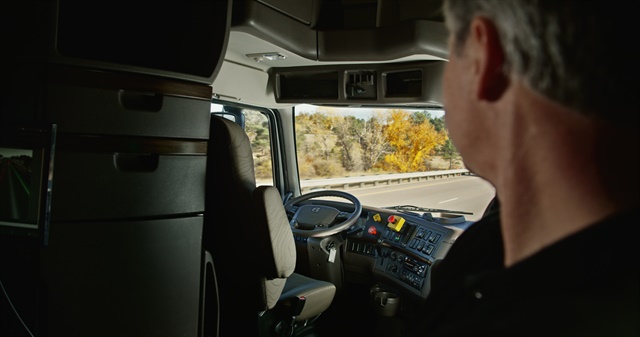
The driver monitored the 120-mile trip on I-25 from the sleeper. Photo courtesy Otto.

">

If you're in Colorado Springs, you might buy a can of beer that was shipped by a self-driving truck.

Otto and Budweiser announced Tuesday that they have reached a major milestone on the road to autonomous trucking with the completion of the world's first shipment using a self-driving truck.

Otto, which is now owned by Uber, teamed up with Anheuser-Busch to haul 51,744 cans of Budweiser from Fort Collins, through downtown Denver, to Colorado Springs. By using cameras, radar, and lidar sensors mounted on the vehicle to “see” the road, Otto's system controlled the acceleration, braking, and steering of the truck to carry the beer exit-to-exit without any human intervention.

Walter Martin, a professional truck driver since 2007, monitored the 120-mile journey down I-25 on October 20 from the sleeper berth in the back. Otto says the project had full support from the State of Colorado.

“We are always looking for new innovations and technology,” explained Anheuser Busch's James Sembrot in a video posted by Otto. “Otto's trucks are the next area of transportation innovation.”

The driver is still involved in picking up the load, making sure the freight is secured in the trailer. Once the truck is on the Interstate, he flips a switch and the truck drives itself down the road.

As HDT's Rolf Lockwood reported earlier this year, Otto hardware and software is tuned for the consistent patterns and easy-to-predict road conditions of highway driving. Sensors are installed high atop the truck, which offers an unobstructed view of the road ahead. With highways making up only 5% of U.S. roads, Otto says this allows a tight testing focus on a specific set of trucking routes critical for the American economy.

The driver monitored the 120-mile trip on I-25 from the sleeper. Photo courtesy Otto.

">

Related: Self-Driving Trucks ...Read the rest of this story

Fleetmatics: Tracking tech and driver screening desired for school buses

Fleetmatics Group recently commissioned KRC Research to conduct a survey to examine U.S. confidence in school bus safety, and identify the top areas for improvement.

The results find that close to three fourths of Americans (71 percent) are confident in the current state of school bus safety. In fact, nearly 8 in 10 Americans (79 percent) are confident in the timeliness of their school buses, suggesting a high level of trust that parents and students will not be left waiting.

read more

...Read the rest of this story