Author: Vitaliy Dadalyan

Trailer orders rebounded in June

FTR said orders for trailers reached a nearly two-year high last month, according to its data.

Trailer orders reached 18,900 units in June, according to data tracked by research firm FTR Transportation Intelligence, rebounding from May with a month-over-month improvement of 12% and posting a 58% increase over June 2016 order levels.

Overall, trailer orders now total 261,000 units for the past twelve months with production rising a “surprisingly” 5% from May primarily for dry van and refrigerated units, noted Don Ake, FTR's vice president of commercial vehicles.

read more

...Read the rest of this story

Report: State laws need changing to support platooning, AVs

Tailgating laws are a “direct impediment” to the deployment of self-driving vehicles and platooning efforts, group says.

One of the hurdles facing the wider deployment of autonomous vehicles (AVs) as well as efforts to develop platooning strategies for cars and commercial trucks alike are what's being called “outdated state laws,” according to a read more

...Read the rest of this story

Commentary: What Happens to SmartWay With EPA Under Fire?

<img width="150" src="http://www.automotive-fleet.com/fc_images/articles/m-rolf-lockwood-21-1.jpg" border="0" alt="

Rolf Lockwood

" >

Rolf Lockwood

" width="185" height="247">

Looks like SmartWay's days are numbered, if not those of the entire Environmental Protection Agency. These days Washington is being very unkind to anyone who believes that our shared environment matters, that our ecosystems need protection. Climate-change deniers are having a field day.

I'm no tree-hugger, and definitely no fan of the EPA, but it seems obvious to me that this is short-sighted idiocy that will cost money and jobs in the long run. Lots.

SmartWay was launched by the EPA in 2004. A voluntary government/industry partnership with fleet and vendor members, it aims to reduce the carbon footprint of trucking operations by accelerating the availability and adoption of fuel-saving technologies and practices. EPA says it has cut fuel costs by nearly $25 billion since it was formed.

Believe that figure if you like. The EPA's numbers have always been suspect in my view, but it doesn't much matter here. The fact is, fuel-saving technologies have been promoted and lots of people have benefited.

That said, I won't be especially sad if EPA budget cuts kill SmartWay. We have options. Like NACFE, the North American Council for Freight Efficiency, and Canada's PIT Group, working in conjunction with the ATA's Technology & Maintenance Council.

The problem is, SmartWay approval became the de facto spec'ing standard for all manner of gizmology. The California Air Resources Board built requirements around SmartWay approved devices. Big shippers bought in, demanding that carriers spec only SmartWay-approved componentry. Blackmail pure and simple. I know one carrier that emblazoned its trucks with SmartWay decals that they printed themselves, simple fakery that got them in some shippers' doors.

But SmartWay has never had any testing capacity of its own, so when product X claims official approval, it does so on the basis of the maker's own testing to meet SmartWay-mandated levels of ...Read the rest of this story
Getting Smart in the Warehouse

<img width="150" src="http://www.automotive-fleet.com/fc_images/articles/m-amazon-fulfillmentnlasd-1.jpg" border="0" alt="

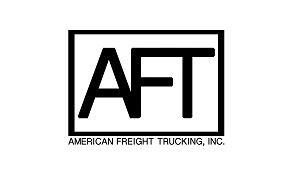
Amazon has been using these small orange warehouse robots for several years to make picking much faster, increasing their number every year. Photo: Amazon

">

Amazon has been using these small orange warehouse robots for several years to make picking much faster, increasing their number every year. Photo: Amazon

">

Peek inside the nearest warehouse and you may witness its metamorphosis from a largely static way station along the traditional supply chain into a “smart” staging area that is just one part of a digitally connected supply chain. It's part of a chain that fulfills shipments from all sorts of places holding goods, including regional warehouses, urban distribution centers, brick-and-mortar stores, and even right off assembly lines.

That's the vision of 21st century warehousing that is starting to emerge. Today to some degree, such as at Amazon, and increasingly tomorrow for all goods providers, a smart warehouse can be defined as one that deploys automation (and even robotics) alongside advanced warehousing management systems driven by big data to speed the movement and ultimate delivery of goods.

The latest State of Logistics Report, issued last month by the Council of Supply Chain Management Professionals and Penske Logistics, predicts that we're “moving toward a fully digital, connected, and flexible supply chain optimized for e-commerce and last-mile, last-minute delivery. The next-generation supply chain will enhance fulfillment capabilities and drive efficiencies through technologies ranging from big data and predictive analytics to artificial intelligence and robotics.”

The report, authored by consultancy A.T. Kearney, also holds that steadily rising package volumes are driving the trend toward more regional distribution centers, which will serve as “linchpins of advanced networks as retailers offering same-day delivery move goods closer to densely populated areas. Parcel carriers will follow suit with their own region-focused delivery networks.” Of course, those new distribution patterns will spawn – and already are spawning – new trucking routes, with volumes rebalanced between local and regional DCs. What's more, carriers will strive and in some cases ...Read the rest of this story