Author: Vitaliy Dadalyan

HDT’s 2017 Trailer Update

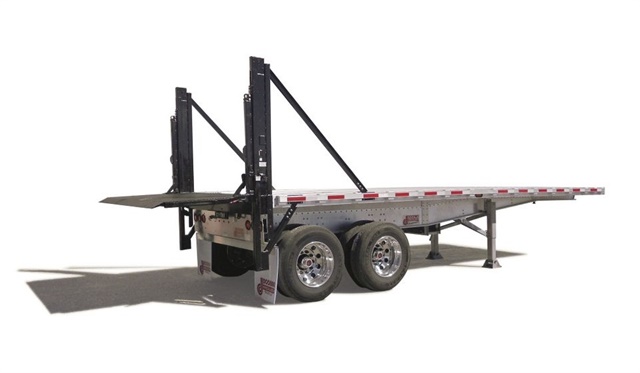
Trailers today come in a variety of shapes and sizes, all specialized or generalized to help fleets accomplish the job. Trailers these days need to be both light weight and capable of hauling huge loads and the design of most new equipment reflects this new yin-yang balance between the two — often competing — interests.

The newest trailers have been affected by a few new regulations, most notably in the refrigerated sector, where the Food Safety Modernization Act emphasizes cleanliness as much as temperature control. This has led to trailer manufacturers offering trailer linings that are easier to clean but can still store food at the desired temperatures.

“The FDA compliance of the lining is something that is very important for people who are choosing to haul FSMA food and products,” says Craig Bennett, senior vice president of sales and marketing for Utility Trailer. While FMSA only requires trailer manufacturers to offer a product that maintains the right temperature, the new rules have put the onus on shippers and carriers to keep these metal containers clean, offering a new selling point for trailer makers.

On the environmental front, manufacturers such as Great Dane are participating in the Environmental Protection Agency's SuperTruck 2 program, researching out-of-the-box ways to improve fuel economy. Lessons learned will help in the development of trailers that will meet 2027 GHG Phase 2 requirements and provide fuel savings for fleets. The company is also working with aerodynamic device makers to develop solutions for fleets to meet or exceed GHG regulations, according to Chris Lee, vice president of engineering for Great Dane.

Another interesting development has stemmed from recent tests by the Insurance Institute for Highway Safety showing the effect that side-impact guards can have on collisions with small vehicles. In those demonstrations, the guards prevented the test vehicle from sliding underneath ...Read the rest of this story

Demise of the Dumb Dump Truck

<img width="150" src="http://www.automotive-fleet.com/fc_images/articles/m-dump-story-1-1.jpg" border="0" alt="

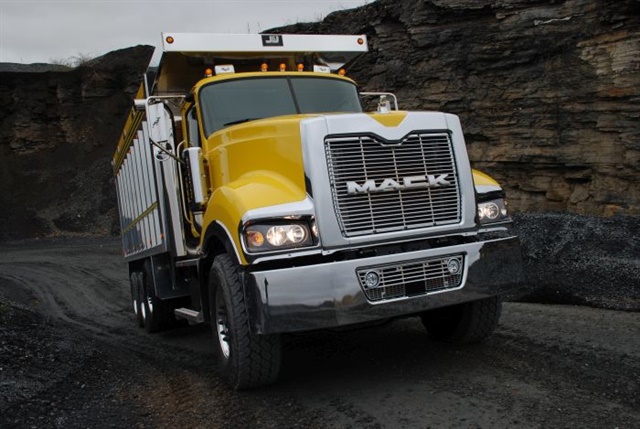
Dump trucks have always been tough. But today, they're getting increasingly smarter as well. Photo: Mack

">

Dump trucks have always been tough. But today, they're getting increasingly smarter as well. Photo: Mack

">

Technology tends to come late to Class 8 dump trucks. Usually, a new piece of technology has to spend a few years proving its value and durability on tractors spec'd for long-haul freight applications before it trickles down to vocational applications such as dumps.

That's changing. Technology is transitioning from the on-highway segment into dump trucks at an unprecedented rate. This is partly because the adoption rate for new technology is much faster today. And partly it is because of regulatory pressure on truck makers to meet pollution and fuel economy standards. And, increasingly, since many on-highway and vocational trucks share common bodies and components, the trucks are simply hard-wired and ready to seamlessly accept all of the new technology available today.

But mainly, it is because dump truck fleets today face many of the same real-world business struggles their on-highway counterparts do. And new technology can deliver real help.

The result is a new type of dump truck: A vehicle that remains tough enough to handle heavy hauls in tough working conditions, but is also a connected vehicle with an often surprising degree of fuel economy and an ever-increasing focus on safety.

Safety first and foremost

If fuel economy is a priority for long-haul fleets, dump truck fleets today are focused on safety, says Chad Semler, HX marketing manager for International. “In some vocational segments with larger fleets today, we're starting to see fleet managers who live and breathe safety. It's really become a top concern for construction fleets today, which is why we see these professionals studying a wide range of items to address those concerns.”

Semler says safety items can range from mundane offerings such as specialized step and grab-handle packages all the way up to highly sophisticated ...Read the rest of this story

Commentary: Finding a Good Fit When Selecting a Service Provider

<img width="150" src="http://www.automotive-fleet.com/fc_images/articles/m-denise-rondini-2013-3-33-1.jpg" border="0" alt="

Denise Rondini

" >

Denise Rondini

" width="185" height="222">

It seems to be an age-old quandary for fleets: keep maintenance and repair in house, or outsource it. According to MacKay & Company surveys, fleets consistently say they want to outsource more of their maintenance and repair — yet year after year they do not do so.

For outsourcing to be successful the fleet has to find a provider that is a good fit for its operation. There is no quick formula you can use to find the perfect company, be it dealer, independent repair garage or truck stop, to outsource service work to.

However, there are some actions you can take that will get you close to finding the service provider(s) that will mesh best with your operation.

A good place to start is with a list of expectations of not only the types of work you need to have completed, but also things like the hours in which you want work performed, how often and in what manner you want to be communicated with during the repair process, and even what types of reports you expect once the repair is completed. For a complete list of questions to ask service providers, see this issue's cover story.

While checking on service providers online is a good way to narrow the field, a visit to the service provider's location is one of the best ways to determine if the company is a good fit for you. Another is talking to other customers of the shop that run equipment similar to yours.

Going to the shop gives you an idea of the culture of the service provider. If its culture is similar to yours, it is more likely they will do what it takes to meet your needs, especially in crunch times.

Joe Laux, CEO of River States Truck and Trailer, says you should ...Read the rest of this story

ELDs Don’t Have to Be a Productivity Killer

<img width="150" src="http://www.automotive-fleet.com/fc_images/articles/m-utilization-truckdriver-1.jpg" border="0" alt="

It may turn out that the ELD mandate that hits in December will not have much further impact on driver productivity as so many fleets have already made adjustments to their operations.  Photos: iStockPhoto

">

It may turn out that the ELD mandate that hits in December will not have much further impact on driver productivity as so many fleets have already made adjustments to their operations.  Photos: iStockPhoto

">

You could argue that the federal mandate requiring the use of electronic logging devices for most trucks involved in interstate commerce could be the biggest shakeup the trucking industry has seen since President Jimmy Carter signed the Motor Carrier Act of 1980 37 years ago this month, which deregulated the interstate trucking industry.

Trucking companies large and small have expressed for quite some time their concerns that the ELDs to be required come December will cut productivity, meaning less revenues and profits. Yet while that may happen, especially for those waiting until the last minute to get on the ELD bandwagon, there are indications that negative productivity effects will be outweighed by other productivity gains fleets have made in recent years – and by other changes that can be made.

“My take on ELDs and productivity losses is that looking at the industry in total, you won't see much impact going forward,” says Chris Kemmer, consultant at CK Commercial Vehicle Research.

This spring, her firm conducted a fleet productivity survey of nearly 60 decision-makers from small, medium and large for-hire, private and municipal operations. She believes that for those required to add ELDs, there will certainly be some who lose productivity, at least in the beginning. However, Kemmer also found there have been so many other changes in trucking – improved vehicle performance, automated transmissions, and even shop management programs, for instance – that any loss of productivity from ELDs will be offset.

“There are so many other things that are counteracting that loss from ELDs, that, in my view, and it's only my opinion, that at the end of the day ...Read the rest of this story

Earnings Watch: C.H. Robinson Earnings Fall 22.4% from Year Earlier

Multi-modal freight transportation services and third-party logistics provider C.H. Robinson Worldwide Inc. reported its second quarter net income fell 22.4% from a year ago despite a 12.4% hike in total revenue.

Net income totaled $111.1 million, or 78 cents per share, during the period compared to $143.1 million, or $1 per share, a year earlier. Revenue totaled $3.71 billion compared to $3.3 billion for the second quarter of 2016.

“We were able to continue to achieve market share gains during the second quarter; however, our income and EPS (earnings per share) results were disappointing and finished below our expectations,” said John Wiehoff, chairman and CEO.

According to Wiehoff, the results were significantly affected by truckload margin compression as purchased transportation costs increased significantly during the quarter while much of the company's customer pricing is committed at relatively flat levels.

Part of the result was a drop of 22.2% in income from operations, totaling $181.8 million for the second quarter of the year.

The company's North American surface transportation (NAST) operation, which provides truckload, less-than-truckload and intermodal services across the continent, saw total revenue increase 10.3% to $2.4 billion during the quarter as freight volume increased.

However, income from operations fell 23.2% to $140.3 million as NAST net revenues decreased 9.8% to $359.9 million in the second quarter of 2017, primarily from a decline in truckload net revenues.

The global forwarding segment saw total revenue increase 48.2% to $528.8 million while income from operations improved 23.6% to $27.7 million due to increases in business from its ocean freight, airfreight and customs brokerage services.

Robinson Fresh, which primarily includes the buying, selling, and marketing of fresh fruits, vegetables and other perishable items from around the world, reported revenue was flat at $657 million while income from operations fell by nearly 48% to $14.2 million as it saw operating expenses jump ...Read the rest of this story

Southern California Ports Plan for Zero-Emission Trucks

<img width="150" src="http://www.automotive-fleet.com/fc_images/news/m-2017-caap-3.jpg" border="0" alt="

Screenshot via Clean Air Action Plan

">

Screenshot via Clean Air Action Plan

">

The Ports of Los Angeles and Long Beach have released a draft of a proposed 2017 Clean Air Action Plan Update, outlining a new set of aggressive near-term and long-term strategies to reduce air pollution from the ports.

The draft plan lays out how the ports plan to reach emissions targets that include the goal of transitioning to a zero-emission drayage fleet by 2035.

The draft 2017 CAAP sets new clean air goals focused on reducing greenhouse gas emissions to 40% below 1990 levels by 2030 and to 80% below 1990 levels by 2050.

The plan carries over previous 2023 targets for cutting other primary pollutants aimed at reducing diesel particulate matter 77%, sulfur oxides 93%, and nitrogen oxides 59% below 2005 levels.

Preliminary analysis on implementing the 2017 CAAP estimate the costs at $7 to $14 billion.

Recent emissions inventories show that the two ports have already surpassed the 2023 diesel particulate matter and sulfur oxide reduction targets and are close to the NOx goal.

“These ports are going where no port has gone before,” said Gene Seroka, Port of Los Angeles executive director. “Based on what we've already accomplished to promote healthy, robust trade through our gateway, we're ready to make history again, looking at a new array of technologies and strategies to further lower port-related emissions in the decades ahead.”

The 2017 draft was drawn up using feedback from two years of dialogue with industry, environmental groups, regulatory agencies, and neighboring communities. The ports conducted small group meetings and large public workshops before detailing its goals, priorities and strategies for public review and comment.

Since then, the ports have held more than 50 stakeholder meetings and another community workshop leading into the release of the draft 2017 CAAP Update. Updates to the plan include local, regional, state and federal ...Read the rest of this story