Author: Vitaliy Dadalyan

Q&A: Tips for taking care of tires

Maintaining proper inflation and regular visual checks for damage are just two simple ways to prolong truck and trailer tire life.

It's a well-worn cliché in the trucking business and yet it still holds true in the main: tires really are “where the rubber meets the road” in terms of productivity, uptime, and efficiency in the freight world. Tires are also one of the trucking industry's major expenses, representing about 2% of overall costs.

read more

...Read the rest of this story

Safety group calls fatigue an epidemic in U.S. workplaces

According to a National Safety Council survey, 43% American workers admit they may be too tired to function safely at work.

According to a new National Safety Council (NSC) survey, 43% of the American workers polled said they do not get enough sleep to mitigate “critical risks” that can jeopardize safety at work and on the roads, including the ability to think clearly, make informed decisions and be productive.

read more

...Read the rest of this story

Ford Celebrates 100 Years of Work Trucks

<img width="150" src="http://www.automotive-fleet.com/fc_images/news/m-chpr01059-100yrstruck-sp-c05-page-1-1.jpg" border="0" alt="

Timeline courtesy of Ford.

">

Timeline courtesy of Ford.

">

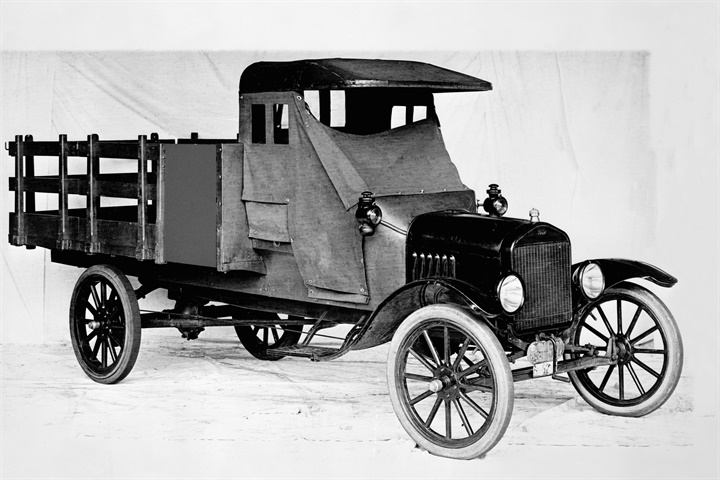
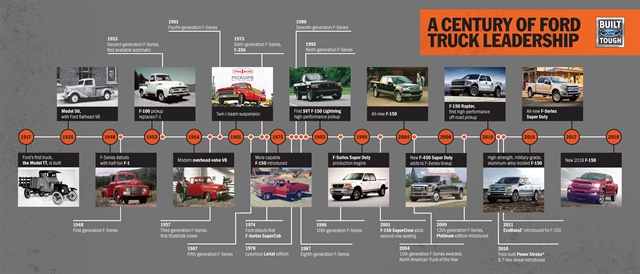
Ford is celebrating the centennial of its first purpose-built truck, the 1917 Model TT, which eventually led to the company producing many iconic work trucks, including the F-Series that has been the best-selling truck lineup for 35 years.

Henry Ford launched the Model TT nine years after his Model T sedan to provide a vehicle that could haul heavier loads and provide greater utility for work and deliveries, according to a Ford release. When it was introduced on July 27 of that year, it used the Model T cab and engine, but added a heavier-duty frame that could carry a 1 ton payload.

Ford sold 209 Model TT trucks in 1917 for $660 per vehicle.

At the time, Ford wanted a chassis that could accommodate third-part beds, cargo areas, and other add-ons that increased functionality for work. By 1928, Ford has sold 1.3 million Model TTs, when the company replaced the truck with the Model AA that offered a 1.5-ton chassis.

Henry Ford marketed his early trucks heavily in rural areas, said Bob Kreipke, Ford's historian.

"Model AA trucks in particular had a certain class to them," he said. "Customers could use them on the farm, yet still take them to church on Sunday."

In 1933, Ford replaced the Model AA with the Model BB that could be outfitted as a mail or freight vehicle, ambulance, or stake truck. Two years later, Ford introduced the Model 50 pickup that was powered by Ford's Flathead V-8 engine.

By 1941, Ford has sold more than 4 million trucks. The company shifted to war production and began building heavy-duty military trucks and four-wheel-drive personnel carriers.

Ford introduced its F-Series Bonus Built trucks in 1948, which offered vehicles with a range of capability from classes 2-7. The F-1 pickup was the entry model, while the F-8 arrived as a ...Read the rest of this story
Earnings Watch: In Face of EU Antitrust Probe, Daimler Earnings Rise 15%

<img width="150" src="http://www.automotive-fleet.com/fc_images/news/m-img-1035-1.jpg" border="0" alt="

Photo: David Cullen

">

Photo: David Cullen

">

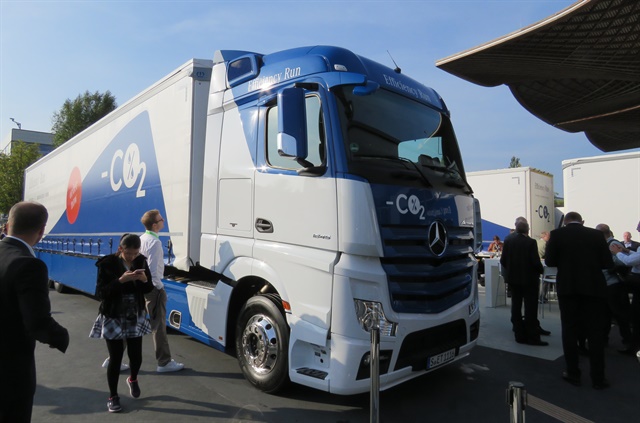
Germany's Daimler AG (Ticker symbol DAI), parent of Daimler Trucks North America and Mercedes-Benz Vans USA, reported on July 26 a 15% jump in profit for the second quarter, largely on the strength of its global Mercedes-Benz luxury car business.

That performance was dimmed by recent news that Daimler is among the targets of a probe by the European Union into alleged collusion among automakers.

On July 22, per a report by The New York Times, European antitrust authorities stated they are investigating allegations that Volkswagen, Daimler and BMW colluded illegally to hold down the prices of crucial vehicle technology, including emissions equipment. The alleged acts of collusion began in the mid-1990s and continued until recently, according to a report by the German magazine Der Spiegel.

In addition, earlier this month Munich-based newspaper Sueddeutsche Zeitung reported that Germany's federal minister of transport Alexander Dobrindt is investigating whether the exhaust-gas treatment systems of certain diesel-powered cars and vans built by Daimler have been manipulated by illegal software that eliminates emission measurements taken during testing and on the road.

Back to Daimler's financials: The OEM reported that Q2 earnings before interest and taxes (EBIT) increased to 3.75 billion Euros ($4.4 billion) from 3.26 billion Euros ($3.8 billion) for the same period the year before.

The Mercedes-Benz Cars division posted a 70% leap in second-quarter EBIT, but in the meantime, profit dropped 13% for the Daimler Trucks business-- the company's second-biggest earnings contributor, according to Bloomberg— and it dropped 11% for its commercial van operation.

From April through June, Daimler sold 822,500 cars and commercial vehicles worldwide (+8%), marking another record for unit sales. The company said contributions to the Group's best-ever unit sales came from all automotive divisions, in particular the records set by Mercedes-Benz Cars (595,200 vehicles, +9%) and Mercedes-Benz Vans (103,400 ...Read the rest of this story

Duke Energy Tackles Truck Idling at N.C. Distribution Facility

<img width="150" src="http://www.automotive-fleet.com/fc_images/news/m-shorepower-charging-1.jpg" border="0" alt="

Photo via Duke Energy

">

Photo via Duke Energy

">

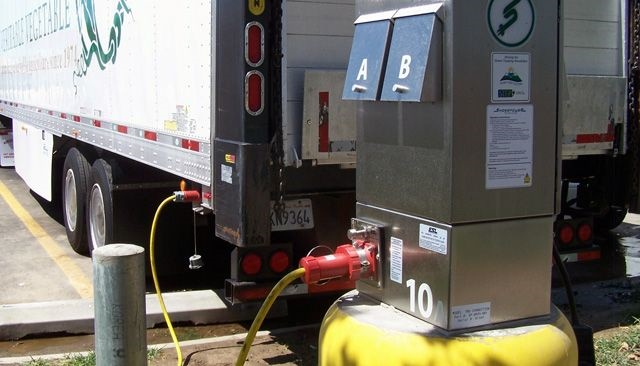
Duke Energy will be heading a $320,000 project to install a total of 36 electric power outlets for heavy trucks at a distribution center for Merchants Distributors in Hickory, N.C.

Transport refrigeration units at MDI will be able to plug into the power outlets at the facility, allowing vehicles to keep cargo cold without having to run the engine. By running off of shore power, the electrification project will lower exhaust emissions at the facility as well as save money on diesel fuel. Shorepower Technologies will install the power outlets.

Construction is currently underway at the Hickory installation and the project should be operational by this fall. This is Duke Energy's second project in North Carolina using electricity to power trucks instead of idling engines. In May, the company announced a 24-unit project at Big Boy's Truck Stop in the Johnston County town of Kenly. IdleAir is handling that installation and it is expected to be operational in August.

The two electrification projects are part of a 2015 settlement with the U.S. Environmental Protection Agency and environmental groups stemming from a legal case against the company for alleged violations of the Federal Clean Air Act at some of the company's coal-fired power plants in North Carolina. The agreement required the company to spend $4.4 million on environmental projects and donations.

Duke Energy is an electric power holding company serving 7.3 million electric customers in six states in the Southeast and Midwest.

“Most trucks can use electricity to keep cargo cold when not driving,” said Melisa Johns, Duke Energy's vice president, business development. “This project will make that technology available to trucks at MDI's facility – providing cost savings and an environmental benefit to the local community.”

EPA has found that long-duration truck idling results in over 1 billion gallons of wasted ...Read the rest of this story