Author: Vitaliy Dadalyan

Arrow Truck Sales Donates Volvo VNL to Women In Trucking

<img width="150" src="http://www.automotive-fleet.com/fc_images/news/m-wit-giveaway-1.jpg" border="0" alt="

Photo: Women In Trucking

">

Photo: Women In Trucking

">

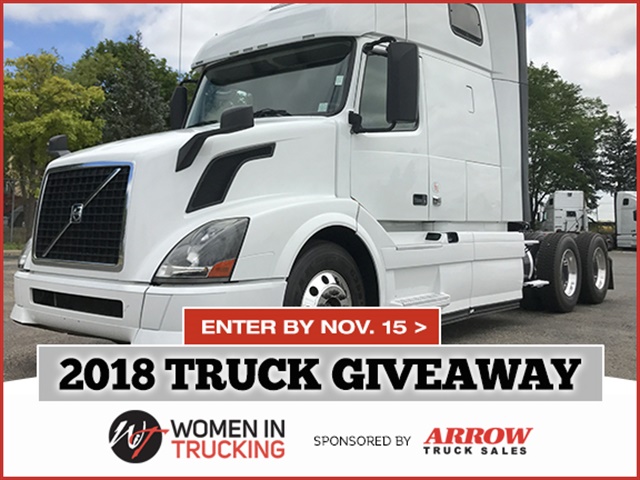
Arrow Truck Sales of Kansas City, Mo., has announced that it will donate a 2014 Volvo VNL 670 to the Women In Trucking Association for its 2018 Truck Giveaway.

Ellen Voie, president and CEO of WIT will give away the vehicle on March 24, 2018 during the 9th annual “Salute to Women Behind the Wheel,” at the Mid-America Trucking Show at the Kentucky Exposition Center in Louisville, Ky.

“We are thrilled to be able to give a truck to one of our members at our annual Salute to Women Behind the Wheel,” said Voie. “I am especially looking forward to handing over the keys to the Volvo to allow one deserving member the chance of a lifetime, thanks to Arrow Truck Sales and their very generous donation.”

Arrow Truck Sales is a source of used heavy- and medium-duty trucks with locations across the U.S. and Canada. It is a Gold Partner supporter of the WIT Association.

“Arrow has long been supportive of equality and diversity efforts within the trucking industry," said Jim Stevenson, Arrow's director of national accounts and WIT board member. "We look at this as an opportunity to help a WIT member by providing a 2014 Volvo VNL 670 to support his or her success as an owner-operator.”

The Women In Trucking Association is a nonprofit organization aimed at encouraging the employment of women in the trucking industry, promoting their accomplishments, and minimizing obstacles to women in the industry.

Applications for the 2018 Truck Giveaway are open until Nov. 15, 2017. The contestant must be at least 23 years old and hold a valid commercial driver's license and be a member in good standing of WIT before September 30, 2017.

To qualify, a driver must complete an application form to verify eligibility and write a short essay on why it ...Read the rest of this story

CVSA Sets Operation Safe Driver Week in October

<img width="150" src="http://www.automotive-fleet.com/fc_images/news/m-operation-safe-driver-picture-1.jpg" border="0" alt="

Image via CVSA

">

Image via CVSA

">

The Commercial Vehicle Safety Alliance's Operation Safe Driver Week has been scheduled for Oct. 15 to 21, with law enforcement across the country identifying unsafe driving behavior in commercial and passenger vehicles.

Law enforcement personnel will be issuing warnings and citations for drivers, targeting unsafe driver behaviors that make up the leading cause of crashes. The Federal Motor Carrier Safety Administration cites driver behavior as the critical reason for more than 88% of large truck crashes and 93% of passenger vehicle crashes.

The Operation Safe Driver Program was created to help reduce the number of crashes, deaths, and injuries involving commercial vehicles due to unsafe driving behaviors. During the week, there will be increased commercial vehicle and passenger vehicle traffic enforcement.

Dangerous driving behaviors targeted by the event will be speeding, distracted driving, texting, failure to use a seatbelt, following too closely, improper lane change, failure to obey traffic control devices and other similar violations.

Operation Safe Driver Week is sponsored by CVSA, in partnership with FMCSA and with support from industry and transportation safety organizations, and aims to help improve the behavior of all drivers operating in an unsafe manner – either in or around a commercial vehicle– through educational and traffic enforcement strategies to address individuals exhibiting high-risk driving behaviors.

Related: CVSA Releases Results from Unannounced Brake Safety Day

Follow @HDTrucking on Twitter

...Read the rest of this story

TSA Demonstrates How to Uncover Hidden Improvised Explosive Devices

<img width="150" src="http://www.automotive-fleet.com/fc_images/news/m-tsa-web1.jpg" border="0" alt="

A handful of FSC attendees were selected to find the above IEDs, which were hidden on two vehicles. Photo: Jim Park

">

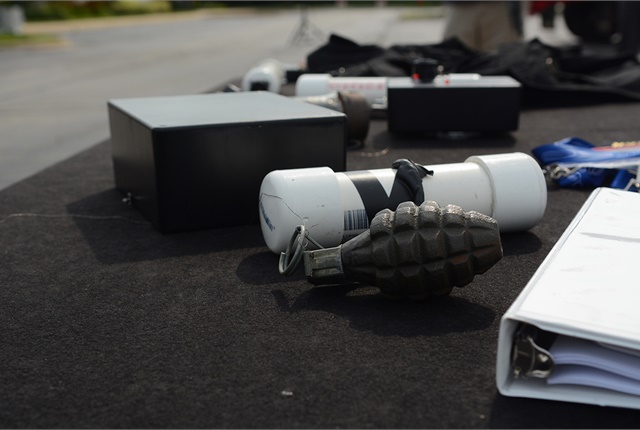
A handful of FSC attendees were selected to find the above IEDs, which were hidden on two vehicles. Photo: Jim Park

"> A team of experts from the Transportation Security Administration offered both classroom and hands-on presentations on improvised explosive devices (IEDs) on July 26 at this year's Fleet Safety Conference in Schaumburg, Illinois.

The team was led by David Cooper, highway and motor carrier manager at TSA, Daryn Frank, supervisory transportation security inspector, and Danny McGuire, transportation security specialist for explosives out of TSA's Chicago field office.

After brief introductions by both Cooper and Frank, McGuire took the stage and gave the audience an historical and technical overview of IEDs and their capabilities. He also presented a handful of videos demonstrating their destructive effects.

After briefing the audience, McGuire led them outside to a hands-on demo that included searching for IEDs on a mixer truck, provided by Ozinga Brothers, and a Ford Transit van.

Using vehicle inspection mirrors, two teams consisting of FSC attendees searched both vehicles for IEDs, finding devices that included pipe bombs, grenades set to explode when doors were open, both timed and remote devices, as well as devices that would be triggered by movement.

The presentation was adapted to improve the attendees' fleet security posture as part of TSA's Intermodal Security Training and Exercise Program (I-STEP).

TSA performs these exercises as part of I-STEP, which includes active shooter, hostage, and other similar demos.

Fleets may choosse to contact TSA to perform security assessments on their truck operations, free of charge. For more information, contact David Cooper at [email protected].

Follow @HDTrucking on Twitter

...Read the rest of this story

Purkeys Offers Solar Charging Solutions For Inactive Equipment

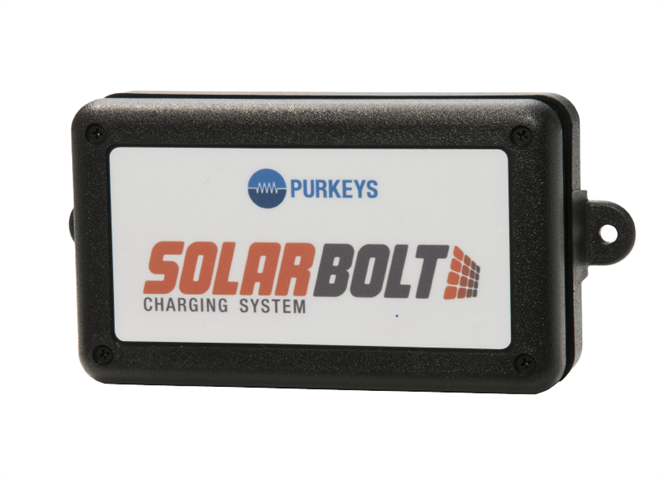
Purkeys has is offering two solar charging solutions, the Solar Bolt and Solar Dash, designed to help fleets keep batteries charged in inactive equipment.

The Solar Bolt is installed on the roof of a trailer to provide a constant charge to electrical accessories such as liftgate batteries and reefers. The Solar Dash is placed on the dash to help keep batteries charged over extended periods of inactivity.

These products are designed to complement conventional charging systems used by fleets to keep batteries in a high state of charge. These solar solutions are particularly useful during long summer days, according to Purkeys.

Follow @HDTrucking on Twitter

...Read the rest of this story

Driver Assistance Technology as a Co-Pilot

<img width="150" src="http://www.automotive-fleet.com/fc_images/articles/m-ntsb-roundtable1-1.jpg" border="0" alt="

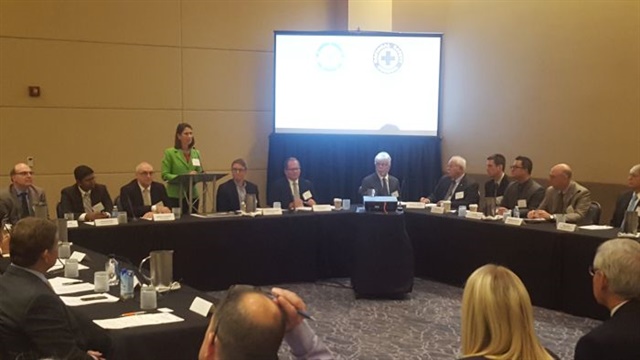
The roundtable discussion was hosted by the U.S. National Safety Council. Photo: Stephane Babcock

">

The roundtable discussion was hosted by the U.S. National Safety Council. Photo: Stephane Babcock

">

SCHAUMBURG, Ill. — Advanced driver assistance systems like the ones that sound an alarm if you're tailgating — or even apply vehicle brakes automatically — are proving themselves to be more than a novelty.

Schneider has already equipped 12,000 of its trucks with autonomous emergency braking systems that will act if a crash seems imminent. Related collisions have now dropped by 69% and their severity has plunged 95%, says Thomas DiSalvi, the fleet's vice president – safety and loss prevention. “This is ready for prime time.”

The underlying technologies have clearly come a long way, according to participants in a roundtable hosted this week by the U.S. National Safety Council.

In-dash and audible warnings give drivers a chance to react before automated brakes apply.

In-dash and audible warnings give drivers a chance to react before automated brakes apply.

Fred Andersky, director – customer solutions and marketing at Bendix Commercial Vehicle Systems, refers to early Eaton VORAD collision warning systems as “the old bridge detection system” because of false warnings that were triggered by more than surrounding hazards. But it all laid the groundwork for the idea that technology could generate safety-related responses, he said.

Gains have also been based on another longstanding equipment update in the form of Antilock Braking Systems (ABS). Those made possible the Electronic Stability Controls (ESC) that automatically apply selected brakes to help prevent rollovers. Meanwhile, the data from cameras and radar needed to monitor lane positions and following distance have built on such brakes and stability controls to create collision mitigation systems that keep a virtual foot hovering above brake pedals.

It's why Andersky is concerned by suggestions that the U.S. Federal Motor Carrier Safety Administration might sacrifice plans to mandate Electronic Stability Controls – answering a presidential order ...Read the rest of this story