Author: Vitaliy Dadalyan

ELD’s Can Open the Door to Big Data

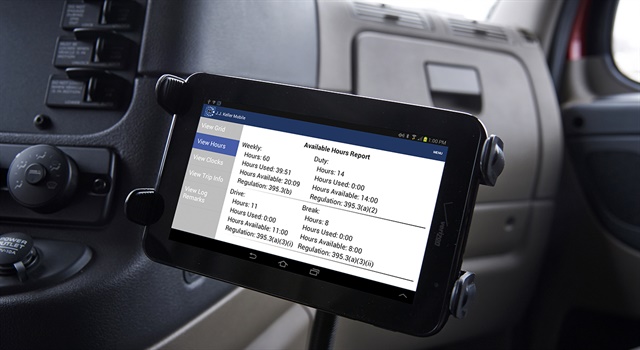
If knowledge is power, then Electronic Logging Devices (ELD) could be the most powerful device on the truck. Sure, the device at its most basic is responsible only for monitoring hours of service, but the potential of networking and integrating data is impossible to ignore.

Why settle for simple electronic logging when it can serve as a total fleet management solution in a box?

A friend of mine drives for a 10-truck floral distribution company and makes regular runs from Ontario's Niagara region to Chicago, Michigan, and western New Jersey. The picture he paints of his distribution manager would be amusing if it were not (most likely) true. The manager must be a fellow who grew up trucking in the '60s, and still listens to eight-track tapes of Red Sovine and Dave Dudley. The routes are badly planned, trucks are frequently diverted en route, the vehicles are always breaking down, and all communication with drivers is done over the -telephone. And he doesn't believe in ELDs. My friend says his boss will wait until the last possible moment to equip his fleet – and then only because he must.

Too bad. He's missing out on the predictive analytics that can be channeled through the device to deliver maintenance alerts that could forestall or outright prevent all those breakdowns. The manager is not even looking at the routing and scheduling potential because he thinks drivers will no longer be able to complete their routes within the -confines of legal hours of service, my friend suggests.

“While your ELD and telematic solution may not be a routing application per se, there's probably some routing features and functionality in there,” says Robin Kinsey, a training specialist with Oakville, Ontario-based Geotab. “You can optimize the route from the start and then compare arrival and dwell times to see ...Read the rest of this story

BCA Bearings Adds 627 New Parts to Product Line

NTN, the parent company of BCA Bearings, has announced the release of 627 new parts in its wheel hub assemblies, seals, and loose bearing lines.

The new part numbers cover more than 60,000 applications, according to NTN. BCA Bearingsis a long-time original equipment supplier to the automotive aftermarket. BCA offers a full line of wheel hub assemblies, seals, and loose bearings.

“We are pleased to be able to offer these additional SKUs to our customers as we continue to fill out our product line,” said Kevin Judge, vice president of sales and marketing, automotive aftermarket. “Continued expansion of our product offering will enable our customers to obtain the parts they need with coverage they can depend on, improving technician efficiency, thereby improving customer satisfaction.”

Follow @HDTrucking on Twitter

...Read the rest of this story

Swivel Gripper Helps Remove Oil Filters

The Lisle Corporation Truck Swivel Gripper is a filter wrench that is texture coated to prevent slipping while removing truck oil filters.

The wrench is designed for Cummins, Detroit, and Caterpillar engines and comes in three models for different filter sizes. The specialty tool features a stainless steel band and a handle made of tubular steel for increased strength.

A swivel grip handle is designed to allow for easier turning in tight spots.

Follow @HDTrucking on Twitter

...Read the rest of this story

Move over breathalyzer … here comes the textalyzer

A textalyzer captures taps and swipes to determine if a driver was using their phone while operating a vehicle. It would also be able to tell if the driver was using a phone legally, such as via hands-free technology.

Although it is not yet ready for everyday use, lawmakers in several states are writing or considering legislation to allow law enforcement officers patrolling the highways to connect a device known as a “textalyzer” to a mobile phone to instantly learn if the driver was texting prior to a crash.

read more

...Read the rest of this story

Trump Administration to Reconsider GHG Standards for Trailers, Glider Kits

<img width="150" src="http://www.automotive-fleet.com/fc_images/news/m-trailerwith-trailertailandskirts-2011-cr-atdynamics-1.jpg" border="0" alt="

Many fuel economy experts say trailers need to be part of the equation. Photo: TrailerTails

">

Many fuel economy experts say trailers need to be part of the equation. Photo: TrailerTails

">

Just months before new greenhouse gas and fuel efficiency rules affecting trailers and glider kits are scheduled to start taking effect, the U.S. Environmental Protection Agency says it plans to revisit those rules.

The EPA announced Thursday that it will revisit provisions of the Phase 2 Greenhouse Gas Emissions and Fuel Efficiency Standards, following concerns raised by stakeholders in the trailer and glider industry.

Learn more about trailer makers' concerns: Trailer Maker Says EPA ‘Overstepped' on GHG/Fuel Economy Proposal

“We intend to initiate a rulemaking process that incorporates the latest technical data and is wholly consistent with our authority under the Clean Air Act,” said EPA Administrator Scott Pruitt in an announcement.

In September 2011, EPA and the National Highway Traffic Safety Administration issued greenhouse gas emissions and fuel efficiency standards for medium- and heavy-duty vehicles for model year 2014-2018 (“Phase 1”). These standards applied to newly manufactured engines, tractors, vocational vehicles, large pickups, and vans. In October 2016, EPA and NHTSA updated the standards for medium- and heavy-duty vehicles MY 2021-2027 (“Phase 2”), and in addition to more stringent standards for tractors, also for the first time regulated trailers and gliders, with compliance deadlines beginning in 2018.

However, the trailer and glider kit sectors have argued that EPA lacks authority to regulate them under the Clean Air Act because their products are not self-propelled “motor vehicles.”

In addition, trailer makers contend that the agency overestimated the potential benefit, greatly overestimating average highway speeds for trailers and not taking into account how local and regional fleets would be affected.

According to InsideEPA.com, it is unclear how the Thursday announcement relates to a lawsuit filed against the EPA by trailer makers and the glider kit industry, Truck Trailer Manufacturers Association ...Read the rest of this story