Author: Vitaliy Dadalyan

TMW Introduces TMT Predictive Maintenance Software

TMW Systems introduced a predictive maintenance application, TMT Predict.Fault Code, that helps fleets anticipate and address potential vehicle breakdowns and other unscheduled service needs before they occur. The new application is the first tool to be offered under the company's new TMT Predict Series of maintenance analytics solutions.

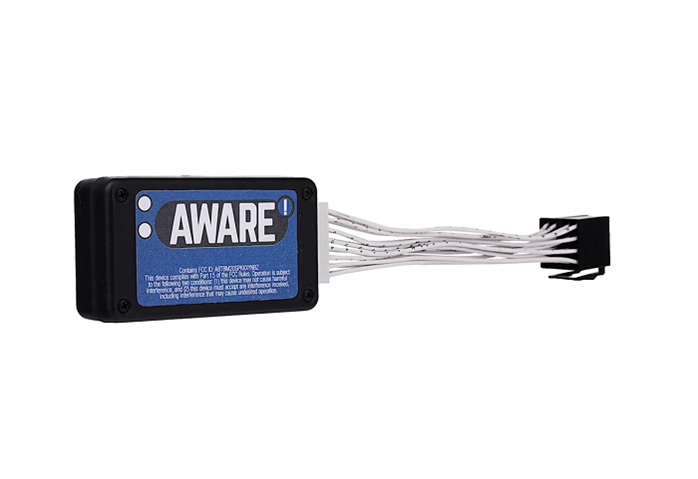
The TMT Predict.Fault Code application works in conjunction with the PeopleNet Mobile Gateway and Vusion data science to capture and analyze vehicle fault codes and more than 80 leading vehicle performance variables. When fault codes and other vehicle data indicate an increased probability of failure, a dashboard alert appears within the user's TMT Fleet Maintenance software. The alert identifies the fleet's assigned equipment number, vehicle identification number, probability of failure, diagnostic trouble code and description, the performance variables triggering the probability, and other key information.

This new predictive maintenance capability is available for vehicles equipped with PMG via factory or aftermarket installation. The feature is currently offered for a number of leading commercial vehicle nameplates.

“Preventing just 35% of unplanned repairs can save fleets thousands of dollars in hard costs alone,” said Renaldo Adler, principal, asset maintenance and fleet and service centers for TMW. “Many serious faults also can have a cascading effect on other vehicle systems if they aren't caught in time. Our new predictive maintenance capabilities can help the fleet manager pull the vehicle out of operation before a problem becomes extremely expensive.”

Follow @HDTrucking on Twitter

...Read the rest of this story

TMW Updates Billing, Planning, Business Tools

TMW Systems announced several updated fleet software tools for managing billing, maintenance, and business at the in.sight. User Conference + Expo hosted by PeopleNet and TMW in Nashville, Tennessee.

TMW.Suite Fuel Dispatch is now available with three additional features designed to help users improve planning and dispatch operations and make informed decisions about existing and new market opportunities.

The TMW.Suite Fuel Dispatch module now features a time-saving capability to simultaneously perform multiple commodity product code changes. Users can now select one or more sites and update the corresponding codes. This feature also automatically updates existing orders for each of the sites. Mass updates of commodities are particularly useful in regions where fuel formulations change by season, according to TMW. Commodity changes can be scheduled for future dates, as well.

Also new to Fuel Dispatch is an interactive re-forecasting feature that allows dispatchers to assess the overall effect on projected deliveries if a current available order changed. Dispatchers can use this feature to adjust for special market conditions or situations that require a change to one or more loads. Current-state and re-forecasted orders are displayed on a new order grid within the Dispatch Dashboard and Call On Demand Order Entry screen.

The company also expanded its Reveal Series business intelligence and data analytics tools for oilfield service and fuel delivery carriers. Reveal Series analytics can now be used to build solutions that isolate abnormal rack and delivery point dwell times; analyze driver and asset performance; develop time-based metrics to reduce delivery delays during peak traffic or busy seasons; and establish trip standards by time of day, week, month, or season. TMW's Reveal Series data warehouse aggregates all orders, stops, commodities, quantities, stop date times, freight volumes and other information for fuel delivery and oilfield gathering operations.

“Each of these new capabilities extends the breadth and value ...Read the rest of this story

TMW Introduces Portfolio of Transportation-Focused Apps

TMW Systems has introduced a portfolio of 11 mobile apps for professionals at every level of a transportation business – from operations to drivers and vehicle maintenance personnel – to complete a wide range of business-critical activities from their Android- or iOS-based devices.

The company's extensive new set of mobility tools supports users of the TMW.Suite, TruckMate and Innovative IES transportation management solutions, as well as TMT Fleet Maintenance software. Each app is available via the Apple App Store and Google Play marketplace.

“The transportation and logistics industry is undergoing a digital transformation that is being driven by mobile technology,” said Ray West, senior vice president and general manager, TMS solutions, TMW. “Each of our new mobile apps is designed to enhance business efficiency and competitiveness by providing the information and functionality users need to make the right decisions at the right time.”

Among the new tools are the following mobile apps for operations personnel, freight brokers, logistics managers and other professionals who want to access core TMS application data and complete a wide range of activities:

TMW Go Dispatch, for users of the TMW.Suite TMS. Key functionality includes adding/viewing check calls, updating stops, assigning resources, running reports, splitting trips, and more.TruckMate Dash Dispatch, for TruckMate TMS users. The app enables users to monitor status changes, manage exceptions, approve advance requests, track resources, visualize and map trips, and more.IES InMotion Dispatch, for the Innovative IES, IES Access and Access Plus TMS platforms. Capabilities include reviewing and accepting/rejecting EDI shipments, entering call checks, reviewing driver information, issuing advances to drivers, tracking and tracing customer orders, and more.

TMW also offers these new mobile apps providing drivers with access to key information and related capabilities:

TMW Go Driver enables vehicle operators to review trip, pay and appointment data using their Android or iOS device.TruckMate Dash Driver offers access ...Read the rest of this story

TruETA Tool Aimed at Helping Fleets Plan Better

<img width="150" src="http://www.automotive-fleet.com/fc_images/news/m-albrecht-1.jpg" border="0" alt="

Thom Albrecht discusses the disruption of ecommerce on the trucking industry during the in.sight User Conference + Expo. Photo: Jim Beach

">

Thom Albrecht discusses the disruption of ecommerce on the trucking industry during the in.sight User Conference + Expo. Photo: Jim Beach

">

TMW Systems introduced TruETA at the TMW Systems and PeopleNet in.site User Conference + Expo in Nashville, Tennessee. The trip planning and execution tool calculates estimated time of arrival for each stop along a commercial truck's route.

Available to users of TMW's Innovative IES, TMW.Suite, TMWSuite, and TruckMate transportation management solutions, TruETA is a cloud-based solution that automates the calculation of estimated time of arrival based on current vehicle position, PeopleNet driver hours of service, and real-time and predictive traffic patterns. The solution also generates red-yellow-green alerts indicating the likelihood of each vehicle to meet its customers' scheduled delivery times, reducing the need for dispatcher-driver phone calls and mobile communications messages.

Commercial and private fleets can use TruETA to help reduce operating costs while improving on-time delivery performance, according to company officials. The tool replaces the “local knowledge” and manual data entry with automated, fact-based calculations derived from current vehicle location, updated hours of service information, and the PC*Miler industry-standard commercial truck routing engine from ALK Technologies, which includes real-time and predictive traffic speeds along each assigned route. In addition, TruETA uses the ALK Maps commercial mapping platform to visualize live traffic flows, as well as weather overlays of current conditions including radar, cloud cover, alerts and road surface conditions, to quickly identify potential scheduling issues.

TruETA also accounts for required driver rest breaks and calculates remaining hours of service at each destination with PC*Miler's hours of service planning engine to support accurate, advanced plans.

“Hitting the customer's delivery window is no longer an aspirational goal for carriers – it is imperative from a customer service score and financial standpoint,” said Ray West, senior vice president and general manager, TMS solutions for TMW. “TruETA ...Read the rest of this story

ELD Mandate Tops ATRI’s Top Trucking Issues List

<img width="150" src="http://www.automotive-fleet.com/fc_images/news/m-brewster-3-1.jpg" border="0" alt="

Rebecca Brewster, president of ATRI, discusses recent research results at the in.sight user conference. Photo: Jim Beach

" >

Rebecca Brewster, president of ATRI, discusses recent research results at the in.sight user conference. Photo: Jim Beach

" width="350" height="242">

CSA, driver retention and the driver shortage fell out of the top 5 of the industry's Top 10 issues in 2016, with the ELD mandate moving up from 6 to 1, according to research by the American Trucking Research Institute's Rebecca Brewster. Speaking at the Trimble in.site user conference in Nashville Aug. 14, Brewster said it's the first time CSA has been ranked outside of the top 5 issues.

As reported by surveys of trucking companies and drivers, the top 10 issues were the ELD mandate, hours-of-service, the cumulative economic impact of trucking regulations, truck parking, the economy, CSA, driver shortage, driver retention, transportation infrastructure/congestion/funding and driver distraction.

The top issues differed for drivers vs. carries, however with drivers listing the ELD mandate as the number one issue while carriers listed the driver shortage as the key concern.

For commercial drivers, the top issues are: ELD mandate, hours-of-service, truck parking, cumulative impact of truck regulations, economy, CSA, driver retention, sleep apnea rulemaking, FMCSA mission and driver health/wellness.

For carriers, the list includes driver shortage, ELD mandate, cumulative impact of trucking regulations, economy, hours-of-service, driver retention, CSA, transportation infrastructure/congestion/funding, federal preemption of state regulation of commerce (F4A) and driver distraction.

Brewster said ATRI is exploring a young driver assessment tool to find a way to identify those young drivers who may have the behavioral characteristics and maturity to drive large trucks.

A recently completed survey of drivers regarding parking found that 36% reported parking in an unauthorized spot at least 3-4 times week. The average remaining hours of driving time a driver has before looking for a parking spot was about an hour, according to the survey, which comes out to an economic cost of about $4,600 per year ...Read the rest of this story

ATA: Message to California, Don’t Mess With Trucking

<img width="150" src="http://www.automotive-fleet.com/fc_images/news/m-chris-spear-1-1.jpg" border="0" alt="

ATA president and CEO Chris Spear. Photo: Jim Beach

">

ATA president and CEO Chris Spear. Photo: Jim Beach

">

State governments, especially California, need to understand they can't “mess with trucking,” said Chris Spear, president and CEO of the American Trucking Associations.

Singling out California's meal and rest break rules that are causing problems for truckers in California, Spear said that ATA would be “stepping out of our comfort zone” to help its state trucking association partners fight these kinds of rules that hurt trucking. Noting that trucking is interstate commerce, Spear said ATA would sue California over the issue which he argued compromised safety and only benefited “trial attorneys.” He also pointed out proposals in New Hampshire to charge tolls on bridges in the state only to trucks.

As for the federal governments, Spear said that ATA needed “under stand them. We have to work with them.” The roads and bridges we all drive on are “not political.”

The truck industry is too big and too important not to engage, Spear said, noting that trucks move 70% of domestic freight and over 70% of NAFTA freight. As for changes to the NAFTA or other trade agreements, he said, “if you tweak it and do it wrong, we'll be the first people to feel it.”

On autonomous vehicles, Spear said that while the technologies were promising, the media hype indicating driverless trucks are in the near future are “bunk.”

“We are not talking about driverless, it's not going to happen anytime soon.” After all he noted, jetliners are capable of taking off, flying and landing without anyone in the cockpit, “but we don't do it.”

With driverless trucks way off in the future, the industry still needs to find more drivers. Spear said the industry needs a way to get to 18-21 year-olds – not to let them drive, but to get them in the ...Read the rest of this story

User Conference Highlights the Fast Pace of Change

<img width="150" src="http://www.automotive-fleet.com/fc_images/articles/m-peoplenet-panel-1.jpg" border="0" alt="

Panel at PeopleNet presentation during the in.sight User Conference + Expo. Photo: Trimble

">

Panel at PeopleNet presentation during the in.sight User Conference + Expo. Photo: Trimble

">

Change and its quickening pace was an over-riding theme at Trimble's in.sight user conference for TMW Systems and PeopleNet customers that kicked off Aug. 14 in Nashville.

Connected trucks, e-commerce, autonomous vehicles and ELDs were singled out as potential change agents pushing the trucking industry's future. David Wangler, president of TMW Systems, noted pace of change over just the last few decades saying, “the pace of change is accelerating” and that businesses could no longer think “on a linear basis. We need to think exponentially.”

Brian McLaughlin, president of PeopleNet noted that the two companies, along with other Trimble business units in the transportation sector were there to help customers “solve the problems of an ever-changing supply chain.”

The good news, Wangler said, was that the transportation industry thrives on challenge. One of which is to acknowledge that in the industry, “what was fixed, is becoming more dynamic” as customer expectations continue to rise and shippers and transportation face greater pressure to meet these expectations.

That is why both companies say a focus on the “final mile” of a shipment has become more important. “Increasingly, carriers are developing local delivery units,” Wangler said. Carriers are also under increased pressure to provide real-time visibility of loads all along the supply chain. And, they must have a way to squeeze more costs out of the last mile since it accounts for about 50% of the total transportation costs. Carriers will be under pressure from shippers to help them reduce these costs.

Another positive of the changing nature of trucking is that “transportation is an amazing space for innovation,” McLaughlin said. The vision was for a connected supply chain including connected trucks, drivers, freight and business intelligence. It's moved from “vision to reality in record time.”

The ...Read the rest of this story