XL Hybrids introduces hybrid electric upfit for Ford F-250
read more
...Read the rest of this storyread more
...Read the rest of this storyPersio Lisboa talks to suppliers about the need to be leaders in technology to improve trucking productivity.
" >Persio Lisboa talks to suppliers about the need to be leaders in technology to improve trucking productivity.
" width="300" height="300">ATLANTA – Amidst a show where major topics of conversation included electrification of commercial vehicles and the path to autonomous trucks, one industry exec said the digital supply chain will be the next big breakthrough in trucking productivity.
Speaking to an audience of suppliers at the Heavy Duty Manufacturers Association Breakfast and Briefing at the inaugural North American Commercial Vehicle Show, Persio Lisboa, executive vice president and COO of Navistar International, predicted that data and analytics will drive advances in trucking industry productivity while imposing increasingly stringent design requirements for truck and component reliability.
The supply chain is changing rapidly, he noted, thanks in large part to the growth of e-commerce. “Customers' expectation are totally different today than they were five years ago; 48 hour delivery is starting to sound like a terribly long time.”
However, he said, this incredibly fast and efficient delivery system has a very inefficient back end. For every truckload of products that hit the front door of a customer, there are four other equivalent loads taking place to manage returns, transfers between PDCs, etc., he said – “an efficient system maintained by an inefficient supply chain.”
And who is paying for those inefficiencies? It's not the end consumer, he said, and it's not Amazon. Which means those in the supply chain are likely footing the bill.
Those inefficiencies are hardly news to fleets. As one customer told Navistar, “We don't need more drivers, we need more time driving." Large carriers typically report that drivers are only actually driving about 6.5 hours out of their 11 hours of available driving time. The rest is wasted on things like waiting to load and unload.
“The only answer that makes any sense is we need to ...Read the rest of this story
read more
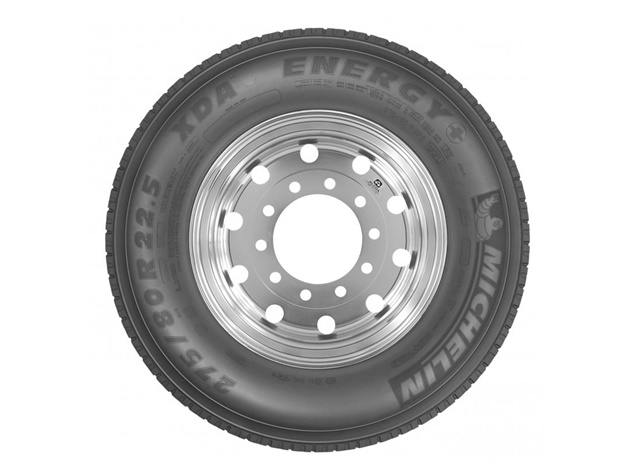
...Read the rest of this storyMichelin Americas Truck Tires has introduced its XDA Energy + dual drive-position tire for linehaul applications.
The XDA Energy + is our “latest and greatest fuel solution,” Adam Murphy, vice president of marketing, said Sept. 27 during the North American Commercial Vehicle show.
read more
...Read the rest of this storyRyder System Inc. said Sept. 27 it has signed an exclusive partnership with Aperia Technologies that will make the Halo Tire Inflator solution the standard specification for Ryder's heavy-duty rental fleet.
“We believe innovative automatic tire inflation solutions provide tremendous peace of mind for customers committed to on-time deliveries,” said Scott Perry, chief technology and procurement officer for Ryder Fleet Management Solutions.
read more
...Read the rest of this storyNeil McIrvin, vice president/OEM sales, trailer and municipal. Photo: Evan Lockridge
">Neil McIrvin, vice president/OEM sales, trailer and municipal. Photo: Evan Lockridge
">ATLANTA — Accuride Corp. introduced a new hub system for trucks and trailers on Wednesday at the North American Commercial Vehicle Show in Atlanta.
The Rolliant system is from the wheel end component supplier KIC, which Accuride acquired earlier this year and is reportedly the first long-life, low maintenance hub system to come with a 10-year warranty for trailer applications and a seven-year warranty for trucks.
The technology has been designed for North American commercial vehicle fleets seeking long-life hub performance, and truck and trailer OEMs who want to simplify wheel end installation and boost throughput during assembly, according to Accuride.
“We think it's a game changer, giving our customers a hub system for the life of their trailers,” said Neil McIrvin, vice president/OEM sales, trailer and municipal.
He said the Rolliant system was developed in response to industry demand for a more affordable hub system that was easy to install and maintain and could last the life of both trucks and trailers.
“Its patent-pending technology maintains tight wheel-bearing tolerances for safe, reliable performance and enables us to offer industry-leading warranties for truck and trailer applications,” said McIrvin.
Proper wheel bearing adjustment is critical to achieving safe, reliable performance that enables long-life truck and trailer operation, according to Accuride. A deviation in adjustment, even the width of a human hair, can mean the difference between safe, reliable hub system performance and premature tire wear, wheel seal failure, and premature bearing failure.
The Rolliant system's extended bearing cone technology improves on existing precision bearing systems to keep wheel bearings in tight, consistent alignment. It works with both straight-spindle and tapered-spindle hub designs and does not need specialized spindle nuts or extra parts.
Each hub is assembled with 100% endplay inspection and serialization for complete traceability ...Read the rest of this story
Michelin says its new XDA Energy + dual-position tire was designed with both fuel and maintenance costs in mind. Photo: Michelin Americas Truck Tires
">Michelin says its new XDA Energy + dual-position tire was designed with both fuel and maintenance costs in mind. Photo: Michelin Americas Truck Tires
">ATLANTA — Michelin Truck Tires unveiled its newest dual-position drive tire for line-haul operations today at the North American Commerical Vehicle Show (NACV) in Atlanta. The new XDA Energy + tire is designed for fleets and owner-operators who are focused on fuel savings to reduce their operating costs.
Adam Murphy, vice president of marketing for Michelin Americas Truck Tires, said the fuel savings generated by the new tire are driven by an innovative FuelSaver compound formula for ultra-low rolling resistance. The tire is compliant with SmartWay, California Air Resources Board, and can help fleets by being a significant contributor to Greenhouse Gas Phase II regulations and the tire supports fleet sustainability and green initiatives, Murphy added.
Murphy says the tire's design will also help fleets contain maintenance costs. The XDA Energy + features wide circumferential grooves for efficient water evacuation and grooved, angled walls to help resist stone retention that can lead to stone drilling that potentially damages the casing. The sidewall also features TW6 OzoneShield technology for increased protection against weathering. The tire features a durable Michelin casing capable of supporting multiple retreads while further reducing maintenance costs.
Confident in the tire's fuel-efficiency capability, Murphy said Michelin will offer a limited guarantee of $400 per truck in fuel savings. Fleets can contact their local Michelin representative to schedule a fuel evaluation of the XDA Energy+ versus a competitive product.
“Helping fleets to increase their competitiveness in the market is our goal,” Murphy said. “One of the main levers fleets have to improve their competitiveness is improving their fuel efficiency, and tires like the new Michelin XDA Energy + can play a key role. With rolling resistance accounting for approximately 35 ...Read the rest of this story