Should the pickup truck be the official vehicle of the United States?
read more
...Read the rest of this storyread more
...Read the rest of this storyWhat truck driver isn't familiar with this unpleasant feeling in the summer: back, thighs and buttocks sticking to the seat after hours behind the wheel. The air conditioning only keeps the head and front of the body agreeably cool.
read more
...Read the rest of this storyTruckstop.com, in partnership with FTR, introduced its Rate Forecasting tool during the FTR and CSCMP conferences in September. Rate Forecasting is a lane-by-lane rate forecast which projects spot market rates using more than 10 years' of paid rate data.
The rate forecasting service will enable customers to plan based on how rates are expected to fluctuate in the days, weeks and months ahead. It also can provide rate analysis for specific markets and down to the lane level.
read more
...Read the rest of this storyOrders for Class 8 trucks continued to soar in September, while demand for medium-duty trucks remained more muted. However, on the heels of the recent introduction of new models from Volvo Trucks North America (VTNA), Mack Trucks, and Navistar, a major market share war may be shaping up for 2018, noted one industry analyst.
read more
...Read the rest of this storyPrestolite Electric expanded its range of high-output, drop-in replacement alternators with the North American launch of the AC172 Series from Leece-Neville Heavy Duty Systems, a family of 24V, 155-amp alternators for bus, motor coach and transit operations, the company announced this week.
read more
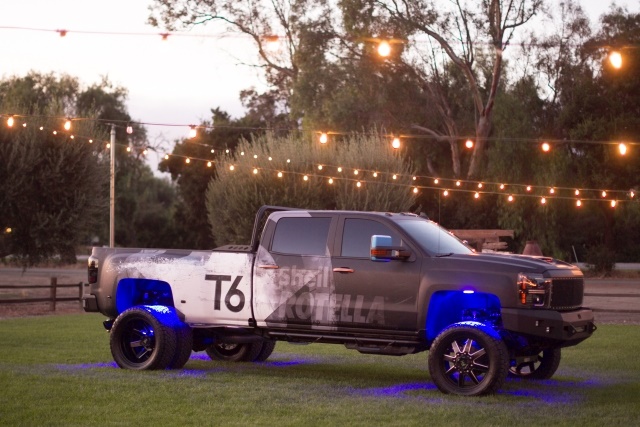
...Read the rest of this storyOne of the mascot trucks by Tommy Pike Customs courtesy of Shell Lubricants.
">One of the mascot trucks by Tommy Pike Customs courtesy of Shell Lubricants.
">The maker of Shell ROTELLA engine oil is leading the effort to have the U.S. White House formally recognize the pickup truck as the “Official Vehicle of the United States.” To pay homage to the substantial role pickup trucks play in shaping our nation and working their way into all parts of our society, Shell is honoring the vehicle by leading a national Shell ROTELLA campaign, entitled “Pickup Pride” which may forever change the way Americans view the pickup truck.
To pay homage to the substantial role pickup trucks play in shaping our nation and working their way into all parts of our society, Shell is honoring the vehicle by leading a national Shell ROTELLA campaign, entitled “Pickup Pride,” which may forever change the way Americans view the pickup truck.
“The campaign celebrates the achievements of hard-working Americans and highlights the pickup truck, which for almost a century, continues to support those who have given their blood, sweat, and tears to help build our country,” said Megan Pino, Global Brand Manager for Shell ROTELLA engine oil. “The pickup truck exemplifies America's resilience and the work it takes to continue to build our communities and support our farms, both which deserve to be recognized.”
There are milestones that need to be reached for the pickup truck to be recognized as the “Official Vehicle of the United States” including:
A formal petition must be submitted on Whitehouse.gov. along with 100,000 signatures.The signatures must be collected within a 30-day period (October 3, 2017 – November 2, 2017).After reaching the 100,000-signature goal, the petition will be placed into a queue for review by a standing group of White House staff and can still generate signatures from the American public while awaiting a response.As of today, the ...Read the rest of this story

Early numbers indicate a positive month for September's North American Class 8 truck orders as the market continues to gain momentum heading into the fall order season, according to preliminary reports from FTR and ACT Research.
Order volume for September met FTR's expectations, hitting 22,100 units for the month – an increase of 7% from August and 62% better than Sept. 2017. Orders from Canada were particularly strong, benefiting from a strong economy. ACT Research expects Class 8 orders to hit 22,600 units by their own projections, which represents the fourth straight month of order improvement since a dip in orders in May.
“The recovery in the Class 8 market is building, and we saw that with the orders through the summer,” said Don Ake, vice president of commercial vehicles at FTR. “Order totals never got that low and followed cyclical trends. This is a healthy, growing truck market, which is in excellent position for greater expansion in 2018. Class 8 order rates are expected to jump in Q4.”
“Stronger freight growth generated by a more vibrant U.S. economy will spur demand for additional trucks next year,” said Ake. “Factor in the loss of productivity from the ELDs, and fleets will have to expand capacity to haul the available freight.”
ACT Research also released its preliminary Class 5-7 medium-duty numbers, totaling 20,900 units for the month, hitting a three-month high. Combined medium- and heavy-duty order numbers are expected to hit a 27-month high when seasonally adjusted, according to ACT.
“September orders were positive month over month, improving 11% from August, and eked out a small 2.1% gain year over year,” said Kenny Vieth, president and senior analyst at ACT Research. “Seasonal adjustment generates a drag on MD orders in September, reducing the month's volume by 600 units to 20,300 units.”
Related: Hino ...Read the rest of this story