Author: Vitaliy Dadalyan

CVSA Transitions to New Leadership for 2017-2018

The Commercial Vehicle Safety Alliance has transitioned to new leadership for the 2017-2018 term, naming Capt. Christopher Turner of the Kansas Highway Patrol as its new president.

Capt. Scott Carnegie of the Mississippi Highway Patrol is the new vice president and Sgt. John Samis of the Delaware State Police is now secretary.

CVSA's most recent president, Julius Debuschewitz of Yukon Highways and Public Works, will be unable to serve his term as past president. Per CVSA bylaws, the board of directors shall be comprised of the three most recent past presidents able to serve. As a result, previous past presidents Sgt. Tom Fuller of the New York State Police and Deputy Chief Mark Savage of the Colorado State Patrol have each agreed to serve one more term as past president.

The organization's new president Capt. Turner has served in law enforcement for 20 years and manages the Kansas Highway Patrol's Motor Carrier Safety Assistance Program (MCSAP), motor carrier inspectors fixed/mobile weight enforcement, and crash reconstruction teams.

Capt. Carnegie has been with the Mississippi Highway Patrol for 24 years and is currently the director of the Motor Carrier Division. He leads multiple aspects of Mississippi's commercial motor vehicle enforcement and operations programs, which include: commercial driver's license, information technology, compliance investigations, safety audits, and outreach and enforcement operations.

Sgt. Samis has been with the Delaware State Police for 24 years and is currently the MCSAP supervisor of its Commercial Motor Vehicle Unit.

Related: CVSA to Take Phased-In Approach to ELD Mandate

Follow @HDTrucking on Twitter

...Read the rest of this story
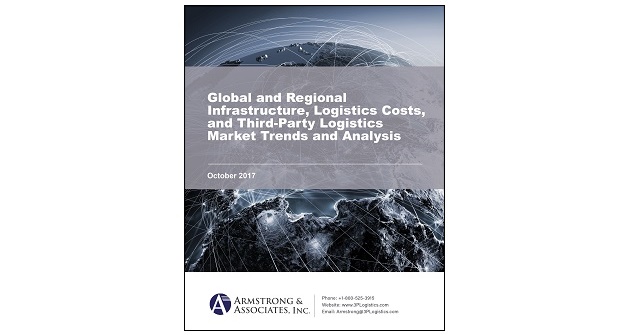
3PL Market Revenues Could Top $1.1 Trillion by 2022

<img width="150" src="http://www.automotive-fleet.com/fc_images/news/m-3pl-report-1-2.jpg" border="0" alt="

Cover via Armstrong & Associates

">

Cover via Armstrong & Associates

">

The global third-party logistics market could exceed $1.1 trillion dollars in the next five years as e-commerce and outsourcing fuels its growth, according to a report by Armstrong & Associates.

In 2016, the global 3PL market brought in $802 billion in revenue-- a number dwarfed by the total global logistics costs, which hit $8.2 trillion and could surpass $11.1 trillion by 2022.

The Asia Pacific region came in as the largest logistics market, making up 39% of the total logistics costs and 38% of the 3PL market's revenues.

In the past, logistics growth in the Asia Pacific region was primarily driven by outsourcing and offshoring manufacturing from wealthier nations. However, in recent years this growth has been driven by domestic consumption and demand for products within the region, according to the report. Specifically, China's Belt and Road Initiative has driven infrastructure spending across Asia.

By country, China alone is the largest spender on logistics at more than $1.7 trillion, followed by Europe and the U.S. at over $1.5 trillion.

E-commerce is a major driver of growth in the market. Growth in revenue from e-commerce alone is outpacing the overall marke,t but still makes up just 5.1% of the market. This percentage is expected to increase to 7.2% of total revenues by 2020.

These figures were projected in A&A's global logistics report “Global and Regional Infrastructure, Logistics Costs, and Third Party Logistics Market Trends and Analysis,” which covers the years of 2010-2022.

The report also covers: infrastructure's role with a focus on Brazil, India, and China; Fortune 500 Global 3PL revenues and growth by industry; e-commerce logistics costs, 3PL revenues, and growth rates; 3PL market segment revenues by country and region; and logistics spend by country and region and by mode and function. Global “Top 3PL” lists are also included.

The complete report, which is ...Read the rest of this story

AmeriPride Offers First-Aid Kit for Fleet Drivers

AmeriPride has begun offering a first-aid kit that's designed for vehicle fleets and can be purchased by any company with a fleet, the linen and uniform service provider has announced.

The motorist first aid kit has 70 pieces, including plastic strip bandages, adhesive tape, antiseptic wipes, burn gel packets, cotton top applicators, a first aid guide, a conforming gauze bandage, gauze pads, nitrile gloves, wound pad, triangular bandage, tweezers, triple antibiotic ointment packets, and a thermal blanket.

The kit is compliant with U.S. DOT regulations, according to AmeriPride.

AmeriPride is releasing the kit at the start of the Network of Employers for Traffic Safety (NETS) Drive Safely Work Week that runs from Oct. 5 to 9.

The kit can be purchased here.

AmeriPride has also begun offering a first-aid service for company workplaces. The company will provide first-aid supplies that meet ANSI and OSHA standards for $9 per week.

Related: Drive Safely Work Week Set for October

Follow @HDTrucking on Twitter

...Read the rest of this story
Capacity Tight as Spot Truckload Rates Trek Higher

The number of available loads on the spot truckload freight market jumped 5.4% for the week ending Sept. 30 while tight capacity moved freight rates higher, according to new numbers from DAT Solutions and its network of load boards.

Overall the number of available trucks dropped 3.2% last week which helped push load-to-truck ratios higher for all three equipment types:

Van: 7 loads per truck, up 10%Flatbed: 50.2 loads per truck, up 16%Refrigerated: 12.4 loads per truck, up 2%

National average spot truckload rates, which include fuel surcharges, continue to simmer at two-year highs:

Van: $1.97 per mile, up 3 cents compared to the previous week. That's 19 cents higher versus the same period in August and 35 cents higher year over yearFlatbed: $2.27 per mile, up 2 cents from the week before and up 8 cents month-over-monthReefer: $2.23 per mile, up 1 cent from last week and up 15 cents month-over-month

In the spot van market, the national average rate rose for the fifth straight week. Rates and volumes are coming back down to normal after the storms in the Southeast, but supply chains throughout the rest of the country are still feeling the ripple effects, according to DAT. Columbus and Chicago are key distribution points for the Midwest and Northeast, but van freight volume and rates to Southeast markets picked up due to strong seasonal demand and supply chain disruptions following Hurricanes Irma and Harvey.

Columbus-Allentown, surged 50 cents to an average of $3.86 per mileColumbus-Memphis climbed 37 cents to $2.28 per mileChicago-Denver added 38 cents at $3.05 per mileChicago-Buffalo was up 37 cents to $3.27 per mileChicago-Dallas rose 18 cents to $2.45 per mile

Reefer load posts increased 1% and truck posts declined 1% last week. The ratio of 12.4 reefer loads per truck is the highest in years. Likewise, flatbed freight is moving ...Read the rest of this story