Author: Vitaliy Dadalyan

Isuzu Announces Spanish Version of Commercial Website

<img width="150" src="http://www.automotive-fleet.com/fc_images/news/m-spanish-isuzu-website-1.jpg" border="0" alt="

Screenshot via Isuzucv.com

">

Screenshot via Isuzucv.com

">

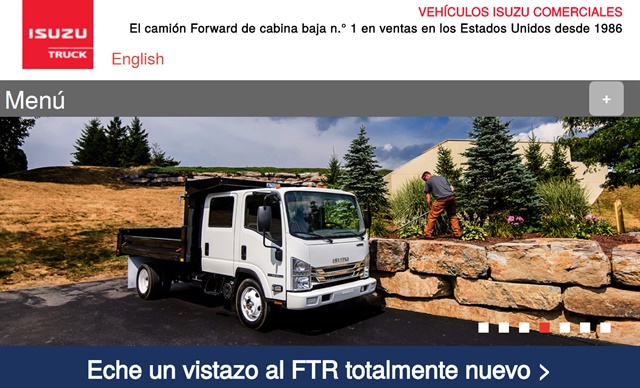
Isuzu Commercial Truck of America has announced that www.isuzucv.com is now available in Spanish as well as English.

“Spanish is the second most-spoken language in the United States,” said Shaun Skinner, president of Isuzu Commercial Truck of America. “Over fifty million Americans speak Spanish as a first or second language. In fact, there are more Spanish speakers in our country than there are in Spain. So it is only natural for us to want to offer information about our trucks to consumers in the language of their choice.”

Users can easily see each page in Spanish by clicking the link next to the Isuzu logo at the top of the page.

For nearly a year, Isuzu has posted Spanish-language driver orientation and emissions system informational videos on its site. Now, the entire site is available in Spanish. On the home page, users may simply click on the video link at the bottom of the home page for English, Spanish, and French.

The www.isuzucv.com website offers visitors product information and specifications about Isuzu N-Series Class 3 through 5 trucks and the all-new Class 6 Isuzu FTR. Functionality includes a dealer locator; comparison tool; “get-a-quote” feature; information about Isuzu parts, accessories and class-leading warranties; videos; an owners' section; details about available financing and leasing programs; and much more.

“Isuzu durability, economy, performance and low cost of ownership are universal,” Skinner said. “We're pleased that now we are able to deliver that message to our Spanish-speaking customers nationwide.”

Related: A Closer Look at Diesel Cabover Warranties

Follow @HDTrucking on Twitter

...Read the rest of this story

Tesla Delays Electric Truck Launch Again

<img width="150" src="http://www.automotive-fleet.com/fc_images/news/m-tesla-secret-semi-truck-1.jpeg" border="0" alt="

Telsa has opted to move the launch of its electric truck back two weeks in order to focus on fixing Model 3 production issues and assist with power grid repair efforts in Puerto Rico. Image via Tesla

">

Telsa has opted to move the launch of its electric truck back two weeks in order to focus on fixing Model 3 production issues and assist with power grid repair efforts in Puerto Rico. Image via Tesla

">

Tesla chief executive officer Elon Musk announced on Twitter late last week that the company was pushing back the launch of its new electric truck from Oct. 26 to Nov. 16. as it focuses on meeting production demands for its Model 3 sedan and assisting with recovery efforts in Puerto Rico in the aftermath of Hurricane Irma, according to a report by

The delay was caused by Tesla focusing on meeting production demands for its Model 3 sedan and assisting with recovery efforts in Puerto Rico in the aftermath of Hurricane Irma, according to a report by Electrek, a magazine covering the North American electric vehicle market.

Tesla is apparently working on correcting production “bottlenecks” that held Model 3 production to only 260 units in September bottlenecks”. Additionally, Musk said on Twitter that Tesla will “increase battery production for Puerto Rico & other affected areas.”

Tesla Semi unveil now Nov 16. Diverting resources to fix Model 3 bottlenecks & increase battery production for Puerto Rico & other affected areas.

— Elon Musk (@elonmusk) October 6, 2017

Electrek also reported that Musk and the governor of Puerto Rico, Ricardo Rossello have talked about ways for Tesla Energy to help rebuild the power grid destroyed by the two hurricanes that recently hit the Caribbean. Per reports, Musk was talking about a scalable energy storage and solar power solution with the governor on Twitter.

In an official statement released by Tesla, the company offered to refund any airfares already purchased for the Oct. 26 event and said, “The first Tesla Truck prototype is completed, but we're ...Read the rest of this story

Keep an eye on these disruptive technologies

The trucking industry is being bombarded with a host of technologies that could prove to be disruptive. At the recent NationaLease Annual Meeting, Matt Clark, COO of Corcentric, shared his thoughts on the Top 10 disruptive technologies. In order to be successful, you need to be aware of these technologies and stay informed of new developments.

Here's a look at Matt's Top 10.

read more

...Read the rest of this story

Four ways to reinforce fleet safety

All it takes is one crash. One crash to increase your insurance premiums, lead to possible civil action against your company, or adversely affect your ISS score. And if you have multiple crashes, you could find yourself labeled as an unsafe carrier, placing your business at risk.

While it is difficult to avoid all crashes — since some are not the truck driver's fault — there are many things you can avoid through a multi-pronged effort to maximize safety. Such an approach can go a long way toward ensuring your fleet operates in a safe manner.

read more

...Read the rest of this story

Mother Nature and fuel economy

Fleets can do a variety of things to control their freight efficiency. But one thing outside their control is weather especially wind and temperature. Both of those elements can impact how much fuel a truck consumes.

Headwinds and crosswinds reduce truck fuel economy by increasing aerodynamic drag. Drivers heading in an east-west direction are almost sure to run into crosswinds and headwinds. In fact most drivers will have to deal with wind of some sort because in the United States at any given time there is a 7-mile per hour wind in some direction.

read more

...Read the rest of this story

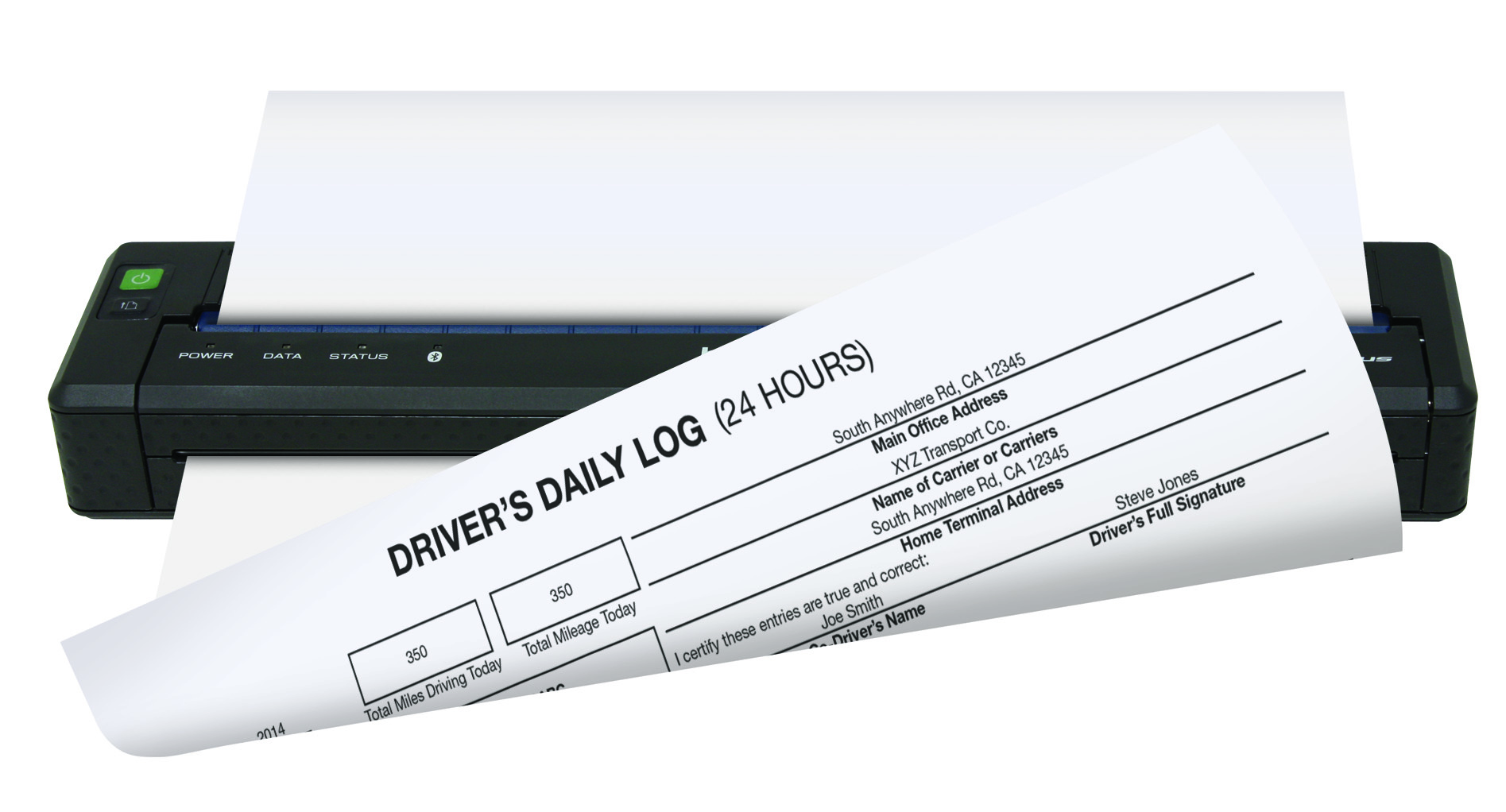
ELDs and the short-haul exemption: Two fleets’ perspectives

Two companies shed light on why they chose to implement ELDs across their entire fleets, even though a good portion of their operations fall in line with the short-haul exemption of the rule.

Even before the ELD mandate came down the pike, Lindenmeyr Munroe, an independent paper and packaging distributor in the U.S., was constantly on the hunt for ways to improve its fleet operations and to track driving behaviors for better fuel efficiency.

read more

...Read the rest of this story