Author: Vitaliy Dadalyan

Tenneco Highlights Waste-Heat Recovery, Ride-Improvement Solutions

<img width="150" src="http://www.automotive-fleet.com/fc_images/news/m-tennecopatelevan-2.jpg" border="0" alt="

Tenneco's Ben Patel Photo: Evan Lockridge

">

Tenneco's Ben Patel Photo: Evan Lockridge

">

ATLANTA. Tenneco Inc. showed off its latest array of emssions-related and ride-performance products at a press conference held here on Sept. 24, ahead of the North American Commercial Vehicle Show.

“Tenneco is pleased to showcase its global expertise in complete design, engineering and systems integration for the commercial vehicle market,” said Ben Patel, vice president and chief technology officer, He explained that the company's global range of commercial-vehicle “clean air solutions reduce emissions, contribute to improved fuel economy, and enhance vehicle performance” while its ride-related products range from coil and air spring dampers for cabs, rear axles and seat dampers to lightweight torque rods and elastomer suspension bushings.

According to Patel, the concept box is part of Tenneco's focus on developing waste-heat recovery systems for commercial vehicles. He explained that waste-heat recovery helps speed up chemical reactions and that allows captured and stored heat from a vehicle to be leveraged to enhance engine operating efficiency.

At NACV, Tenneco is also showcasing the newest member of its XNOx Liquid Urea Selective Catalytic Reduction product family-- an integrated dosing-control unit concept that integrates the pump, motor, injector, controller, sensors, water cooling, and control software in a single device.

Patel said that the company's current production XNOx urea-dosing system, first introduced in 2011, now offers “expanded thermal range,” which means the system can be placed closer to the turbocharger without compromising dosing quality and performance. “The return flow design provides superior thermal tolerance without added complexity.”

He said other enhancements include an optional controller that features a flexible engine interface design and can predict engine-out NOx and account for ammonia storage and catalyst degradation.

Moving onto thermal management solutions, Patel said that as efficiency improvements and new low-NOx standards continue to drive the need for ultra-high efficiency SCR, Tenneco's cold start thermal unit offers ...Read the rest of this story

Eaton Cummins releases Endurant AMT for linehaul trucks

New 12-speed automated manual transmission (AMT) goes into production October 16 and will be initially mated to the new 2017 Cummins X15 family of heavy-duty engines.

ATLANTA. The Eaton Cummins Automated Transmission Technologies joint venture, formed between Eaton Corp. and engine maker Cummins just last April, introduced its first product here at the inaugural North American Commercial Vehicle (NACV) show: a 12-speed AMT dubbed the “Endurant.”

read more

...Read the rest of this story

Saving fuel with Run on Less

A 17-day fuel economy test involving seven different tractor-trailers operated across the country overseen by the North American Council for Freight Efficiency (NACFE) delivered an average of 10.1 miles per gallon (mpg) using what Mike Roeth, NACFE's executive director, called "real trucks hauling real freight over real routes." That 10.1 mpg average also occurred despite higher winds and heavier traffic flows caused in part by hurricanes Harvey and Irma as well, the group said.

read more

...Read the rest of this story

Cummins Sees a Future with Many Truck Power Options

ATLANTA – Cummins continues to embrace a “buffet” of power sources for the marketplace as it prepares for a future that includes diesel, hybrids, electric powertrains, and fuel cells.

“We win in the marketplace by seeing the future first, and beating the competition to it,” proclaimed Srikanth Padmanabhab, president of the Cummins engine business, during a briefing at the inaugural North American Commercial Vehicle Show. “We will be there to provide that power of choice to our customers.”

Cummins itself will produce 1.3 million engines this year, bringing its worldwide total to 15 million engines overall.

But the underlying source of power is clearly evolving.

Future internal combustion engines could be fueled by diesel, natural gas, or gasoline, he said. Battery-electric systems will find a place depending on specific applications, particularly in regional and urban environments -– especially as batteries improve. Cummins expects range-extended electric vehicles in 2019 and 2020 to serve the bus market and urban pickup and deliveries, and it has also unveiled an electric Class 7 urban hauler.

“We've been in this electrified business for well over two decades,” he stressed. “The technology is viable, and it's economically viable in certain markets.”

Related: Cummins Electric Truck Explained in On the Spot Video

In selected cases, hybrids will combine electric and internal combustion power. And there will be a place for fuel cells, too.

Emissions-friendly technologies are rolling out in markets around the world, improving the quality of life in the urban environments from Amsterdam to New Delhi and Beijing, he added.

It isn't the only way the engines are evolving. Fifteen years ago, industry disruptors came in the form of globalization, emissions, and available power. Today, he said, the driving issues are diversity, connectivity, and automation.

As important as the fuel will be, connectivity is reshaping powertrains through the confluence of sensors, analytics, and artificial ...Read the rest of this story

Eaton Cummins Endurance Automated Transmission Designed to Save Fuel, Weight, Maintenance

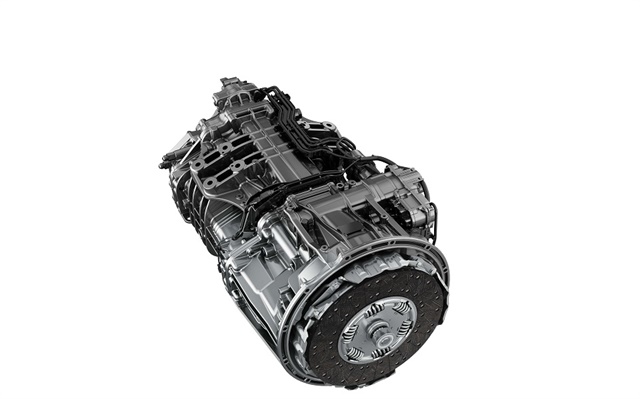
ATLANTA – Eaton Cummins Automated Transmission Technologies unveiled the first product from its joint venture, a lightweight, efficient automated transmission, at the North American Commercial Vehicle Show.

Company officials said the new Endurant 12-speed automated transmission is the lightest, most efficient 1,850 lb.-ft.-capable heavy-duty transmission. Designed for linehaul applications, it weighs up to 105 pounds less than competitive automated manual transmissions (AMTs).

“Fleets will find that Endurant has been intelligently engineered from the ground up with features that protect your investment and make it easy to maintain,” said Scott Davis, general manager, Eaton Cummins Automated Transmission Technologies. “With a sophisticated communication system between the engine and transmission software, Endurant promises to deliver industry-best performance and reliability, fuel efficiency, reduced maintenance, and driver comfort features.”

Company officials stressed that Endurant is not an automated version of a manual transmission “Endurant was designed, engineered and created from a clean sheet to be an automated transmission, not simply an update to an AMT, allowing us to optimize the transmission's weight, dimensions and features,” explained Gerard DeVito, vice president, Technology, Eaton Vehicle Group.

“The market demands have changed, and automated transmissions really are the future, they're what our customers are asking, what drivers are asking for,” said Jeff Bosscher, systems engineering manager, Endurant.

The Endurant shares many of the features of the new Paccar Automated Transmission, which was designed by Eaton to work with Paccar powertrains.

An extensive component and complete vehicle testing program put Endurant through extreme conditions at the Eaton Proving Grounds in Marshall, Michigan, as well as in the high heat of Death Valley, California, and minus 40-degree temperatures in northern Minnesota – more than 2 million equivalent field test miles in all, they said.

The joint venture got customer input throughout the process, not just from fleets, but from drivers, technicians, and others as well.

Features ...Read the rest of this story

Run On Less Drivers Average 10.1 mpg, Surpassing Goals

<img width="150" src="http://www.automotive-fleet.com/fc_images/news/m-runonlesstruck-nacv-eel-1.jpg" border="0" alt="

PepsiCo was one of the title sponsors and also one of the participating fleets. Photo: Evan Lockridge

">

PepsiCo was one of the title sponsors and also one of the participating fleets. Photo: Evan Lockridge

">

ATLANTA – Despite the challenges of two hurricanes, on top of the normal trucking challenges of high elevations, heavy loads, and crosswinds, seven drivers over 17 days and 50,000 miles managed to average 10.1 mpg overall in the Run on Less fuel-economy road show that concluded this weekend in Atlanta at the North American Commercial Vehicle Show.

Run on Less, put on by the Carbon War Room and the North American Council for Freight Efficiency, proved that 10 mpg is possible using efficiency technologies that are available on the market today. The results exceeded the original 9 mpg goal set by CWR and NACFE.

Using a variety of commercially available technologies, including 6x2 axles, trailer and tractor aerodynamics, engine accessories, tire pressure systems, automated transmissions, low viscosity oils and others, they demonstrated that it is possible to save fuel in real world operations.

If the 1.7 million trucks on North American highways today achieved the same level of efficiency as the trucks in the Run, they would save 9.7 billion gallons of diesel fuel, $24.3 billion and 98 million tons of CO2 each year.

The 17-day event kicked off on Sept. 6. The trucks—from fleets Albert Transport, PepsiCo's Frito-Lay Division, Hirschbach, Mesilla Valley Transportation, Nussbaum Transportation, Ploger Transportation, and U.S. Xpress— saved 2,877 gallons of fuel and $7,193 compared to the national average of 6.4 mpg. The highest mpg achieved in a single day was 12.8, and three different trucks had days over 12.5 mpg. The lowest mpg from a truck was 7.1 on one of the days, and the average for all lowest mpgs throughout the Run was 8.8. The average gross combination weight over the Run was 55,498 pounds, with 31 of the 99 ...Read the rest of this story

Thermo King Says New Electric APU Runs Longer

ATLANTA – Thermo King is unveiling its new all-electric TriPac Envidia auxiliary power unit, which it claims has the longest run-time in the industry, at the North American Commercial Vehicle Show in Atlanta this week.

Thermo King says Envidia is an environmentally clean, reliable APU that delivers the longest run-time in the industry, without tractor startup.

Historically, battery-powered APUs provided insufficient run-time and limited power, with fleets and drivers complaining they do don't provide enough cooling for drivers' full rest periods, especially in hot climates.

Because there is no diesel engine, the TriPac Envidia not only runs clean, but it is significantly quieter and requires minimal maintenance.

“The introduction of this emission-free technology is a significant milestone for Thermo King, and it reaffirms our commitment to sustainability through innovation,” said Dane Taival, vice president and general manager, Thermo King North America.

The unit's simple in-cab controller allows drivers to select the desired function of the system – cool, fan or heat modes. The controller also indicates the battery charge level, and allows drivers to adjust the fan speed and cab temperature.

The Envida's patented battery management technology also provides:

Individual charging and discharging management for each batteryThree-stage charging profile to optimize performance and extend the life of its NXT dry cell technology batteryFull discharge of the auxiliary power-pack batteries before switchover, to minimize depletion of tractor batteries during HVAC operation

Whether supplementing with solar, or using power options like battery or shore power, the TriPac Envidia offers choices for drivers to tap into the power they need to stay charged.

The TriPac Envidia by Thermo King meets anti-idle and anti-emission regulations nationwide, including California Air Resources Board (CARB) requirements. The all-electric APU will be available for purchase in early 2018.

Follow @HDTrucking on Twitter

...Read the rest of this story