Trump uses truckers to elevate tax reform push
read more
...Read the rest of this storyread more
...Read the rest of this story
Since the electronic logging mandate that kicks in on Dec. 18 was first released, Fred Fakkema, vp of compliance at Zonar Systems, and Annette Sandberg, former Administrator of the Federal Motor Carrier Safety Administration and currently principal at TransSafe Consulting, have heard a plethora of questions and concerns from customers and other stakeholders about the new and far-reaching rule.
They say that even at this late date, there is "still quite a bit to understand about the mandate and its impact on the industry and fleets." Here, they answer together in depth five pressing questions of concern to fleets as the ELD rule's initial compliance deadline looms ever closer:
1) Driver turnover is always a concern. Is there any way the ELD mandate can help?
Retention is a major issue for our industry and we're currently experiencing a shortage of qualified, experienced operators on the road. According to the American Trucking Associations, the driver turnover rate for large companies is at 90%-- even though so much of what we need and use each day, like food, medical supplies and other goods, is transported by truck drivers. There's no one solution because there's no one cause for why an operator will choose to leave a company or the industry as a whole.
That being said, good driving conditions are a major factor in why drivers will choose to stay. This means making certain processes easier and simpler for the people behind the wheel. The ELD mandate makes ELDs a requirement for almost every commercial driver on the road and the benefits of ELDs are apparent.
Authorized ELDs can help drivers avoid unintentional violations, help them stay compliant, and decrease the time it takes to file paperwork and other logs that can often cause confusion between the driver and safety or fleet ...Read the rest of this story
The first solar-powered transport refrigeration unit on a city delivery truck has been successfully tested over five months in California's San Joachin Valley, according to eNow, which supplied solar panels for the test.
Compared to a diesel truck reefer unit, the "Rayfrigeration" reduced nitrous oxide by 98%, carbon dioxide by 86%, and particulate matter by 97%, said Jeff Flath, president & CEO of eNow.
The 1,800-watt eNow solar system provided more than enough energy to maintain proper temperature throughout a typical day of opening and closing the doors while the refrigerated truck delivered fresh dairy products in California's summer heat. The Rayfrigeration system worked on a Johnson Truck Bodies refrigeration unit and an Emerson high-efficency compressor.
The unit's cold plates and batteries are initially charged from utility power overnight, but while on a delivery route, power is provided by eNow's solar photovoltaic (PV) panels mounted on the truck's roof.
The eNow team calculated that average emissions of CO2 were reduced from 2,525 lbs/week to 159 lbs. Nitrous Oxide emissions were reduced from 7162 grams to 1. This is after adjusting for the emissions from the power plant supplying grid electricity overnight; missions from solar are 0.
In addition to eliminating emissions, the Rayfrigeration unit is projected to reduce operations costs by up to 90%, Flath said.. The savings are achieved through eliminating diesel fuel and maintenance costs, and an increased battery life thanks to consistent charge maintenance by eNow solar.
"Rayfrigeration is an important step forward in reducing emissions while maintaining the highest levels of efficiency and customer satisfaction for companies delivering perishable goods," he said. "eNow's solar technology is powerful, reliable, and efficient, and provides emissions-free energy for critical tasks such as refrigeration. We are proud to be part of this important project."
The San Joaquin Valley Air Pollution Control District funded ...Read the rest of this story
Sharkey Photo: P.S.I.
">Pressure Systems International (P.S.I.) has announced that it has promoted Jim Sharkey to the position of vice president, Global Sales & Marketing.
“Jim is a respected industry leader, and with over 33 years in the heavy vehicle industry, he has the experience to help lead P.S.I. as we increase our product offering and expand our global markets,” said Tim Musgrave, president and CEO. “As we continue to gear up for the impact of GHG2 legislation to our business, add product lines, such as tire pressure monitoring and work on commercializing Plasma Stream technology, we are confident that we have the right leadership team in place.”
Sharkey Photo: P.S.I.
">Since joining P.S.I. in early 2013, Sharkey has held various roles, including in sales, product development, and business strategy.
His experience also includes positions at Tier 1 drivetrain suppliers and trailer OEMs as well as a leadership role with an industry startup.
San Antonio-based P.S.I. noted that it has been expanding its business through the acquisition of Truck Systems Technologies (TST), a provider of TPMS solutions; international distribution agreements; and development of automatic truck tire inflation systems as well as investing in groundbreaking aerodynamic solutions such as Plasma Stream vehicle-aerodynamic technology.
Follow @HDTrucking on Twitter
...Read the rest of this storyThe first solar-powered transport refrigeration unit on a city delivery truck has been successfully tested over five months in California's San Joachin Valley, according to eNow, which supplied solar panels for the test.
Compared to a diesel truck reefer unit, the "Rayfrigeration" reduced nitrous oxide by 98%, carbon dioxide by 86%, and particulate matter by 97%, said Jeff Flath, president & CEO of eNow.
The 1,800-watt eNow solar system provided more than enough energy to maintain proper temperature throughout a typical day of opening and closing the doors while the refrigerated truck delivered fresh dairy products in California's summer heat. The Rayfrigeration system worked on a Johnson Truck Bodies refrigeration unit and an Emerson high-efficency compressor.
The unit's cold plates and batteries are initially charged from utility power overnight, but while on a delivery route, power is provided by eNow's solar photovoltaic (PV) panels mounted on the truck's roof.
The eNow team calculated that average emissions of CO2 were reduced from 2,525 lbs/week to 159 lbs. Nitrous Oxide emissions were reduced from 7162 grams to 1. This is after adjusting for the emissions from the power plant supplying grid electricity overnight; missions from solar are 0.
In addition to eliminating emissions, the Rayfrigeration unit is projected to reduce operations costs by up to 90%, Flath said.. The savings are achieved through eliminating diesel fuel and maintenance costs, and an increased battery life thanks to consistent charge maintenance by eNow solar.
"Rayfrigeration is an important step forward in reducing emissions while maintaining the highest levels of efficiency and customer satisfaction for companies delivering perishable goods," he said. "eNow's solar technology is powerful, reliable, and efficient, and provides emissions-free energy for critical tasks such as refrigeration. We are proud to be part of this important project."
The San Joaquin Valley Air Pollution Control District funded ...Read the rest of this story
Preliminary net trailer orders for September totaled approximately 21,500 units, up 47% from August and up an impressive 84% year over year, according to a report from FTR.
Orders met expectations and support the FTR forecast of another strong commercial trailer market in 2018. Trailer orders have now totaled 275,000 units over the past twelve months, much in line with 2017 production numbers.
“This is great news for the trailer market in 2018,” said Don Ake, FTR vice president of commercial vehicles. “When fleets begin ordering more trailers in September, it indicates the market should be robust the following year.
“We expect ordering activity to accelerate in October and stay elevated throughout Q4. Production rates should stay at higher levels, rolling right into 2018.
“Freight expansion early next year will severely strain industry capacity, and fleets will need to add trailers to handle the added loads,” he continued. “Both the manufacturing and consumer sectors of the economy are healthy right now, and this should lead to increased demand for most trailer segments. Things look very positive for trailers right now.”
More information about the report and FTR's research are at here. Follow on Twitter @ftrintel, or call (888) 988-1699 Ext. 1.
Follow @HDTrucking on Twitter
...Read the rest of this storyPhoto: Virginia Tech Transportation Institute
">Photo: Virginia Tech Transportation Institute
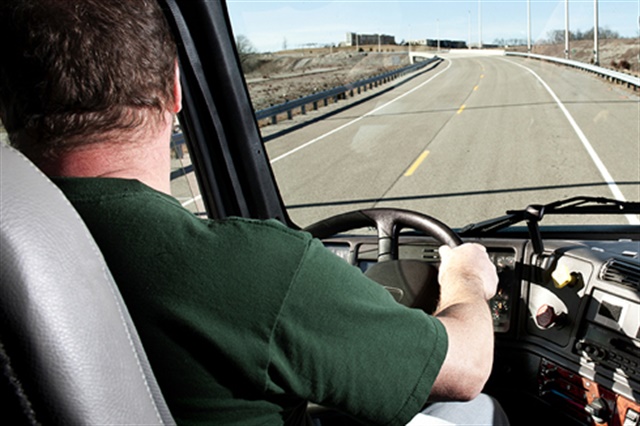
">The Commercial Vehicle Safety Alliance's Operation Safe Driver Week starts this Sunday, Oct. 15, and run through the following Saturday, Oct. 21. During that time, law enforcement personnel across the country will be focusing on identifying unsafe driving behavior by both truckers and motorists.
CVSA stated that because unsafe driver behaviors make up the leading cause of crashes, law enforcement will engage in “heightened traffic safety enforcement and educational outreach” during Operation Safe Driver Week, including issuing warnings and/or citations as warranted.
The Operation Safe Driver Program was created to help reduce the number of crashes, deaths, and injuries involving commercial vehicles due to unsafe driving behaviors. During the week, there will be increased commercial vehicle and passenger vehicle traffic enforcement.
Examples of dangerous driver behaviors that enforcement personnel will be tracking throughout Operation Safe Driver Week are speeding, distracted driving, texting, failure to use a seatbelt while operating a CMV or in a passenger vehicle, traveling too closely, improper lane changes, and failure to obey traffic control devices, as well as other offenses.
Operation Safe Driver Week is sponsored by CVSA in partnership with FMCSA. CVSA said the effort “to help improve the behavior of all drivers operating in an unsafe manner – either in or around a CMV – through educational and traffic enforcement strategies to address individuals exhibiting high-risk driving behaviors.”
Related: CVSA Releases Results from Unannounced Brake Safety Day
Follow @HDTrucking on Twitter
...Read the rest of this story